
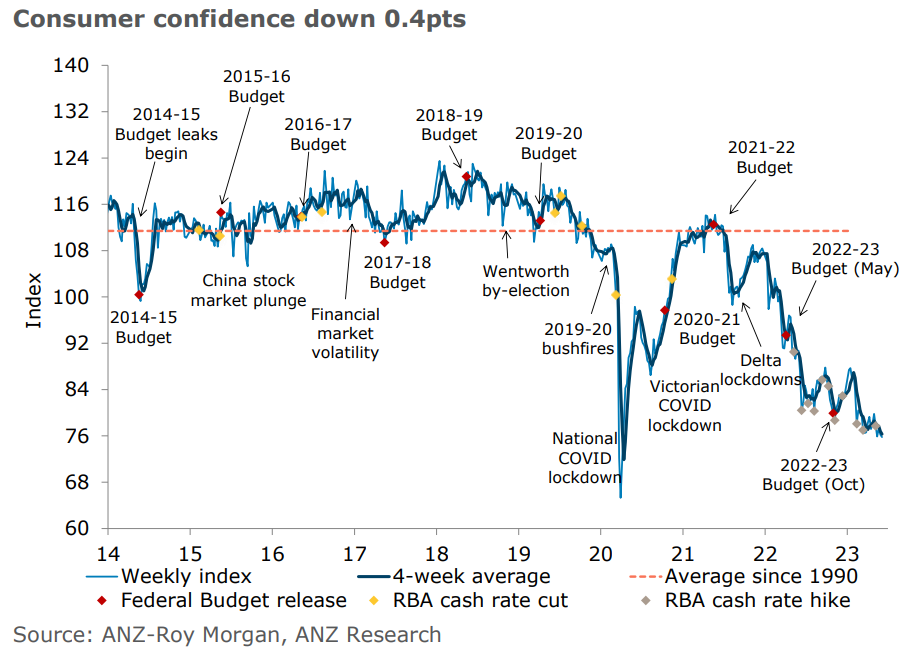
The ANZ-Roy Morgan weekly consumer confidence survey is out, with overall confidence falling another 0.4 points to 75.8%, well below the long-term monthly average of 111.4.
It was also the 14th consecutive week that the consumer confidence index has been below 80:
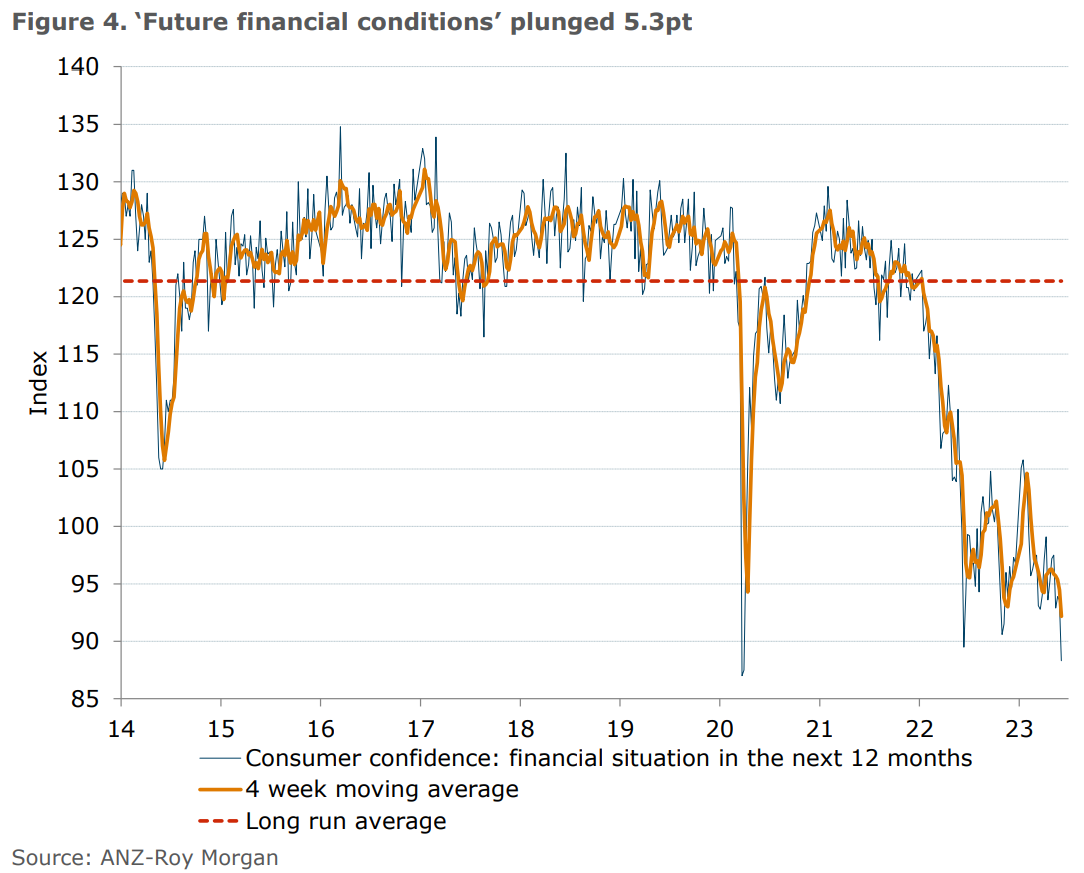
Commenting on the result, ANZ senior economist Adelaide Timbrell noted that consumer confidence is “in deeply negative territory”, with confidence about future financial conditions falling to its lowest level since the start of the COVID outbreak in late March 2020:
The “time to buy a household item” index, which most closely tracks with retail sales, also remained deeply negative, below 70 for a 17th straight week.
Meanwhile, Australia’s ‘misery index’, which has tracked inflation, interest rates and unemployment in Australia since 1960s, jumped by almost 220%, compared to a 62% increase in the 12 months to the start of the GFC in 2007-2008.
According to Guay Lim and Sam Tsiaplias of the University of Melbourne, Australia’s misery index is now just shy of the level reached early in the GFC.
During the September quarter of 2008, the RBA maintained official interest rates at 7.25%, unemployment was 4.2%, and inflation was 4.8%.
Lim predicted that the misery index would remain elevated, adding that while inflation had fallen slightly in recent months, both the unemployment rate and the official cash rate had risen.
Thus, Australia’s army of mortgage and rental slaves are facing a dour period, with rising mortgage rates, rents and energy prices, falling real wages, and rising unemployment.
