
CBA is the latest major bank to revise up its forecast for Australian house prices.
In a report released on Monday, head of Australian economics, Gareth Aird, wrote that CBA “now expect home prices to rise by 3% in 2023 and forecast a further increase of 5% in 2024”.
However, Aird added that “the risk lies with a stronger increase in national dwelling prices in 2024 given we expect the RBA to be in the midst of an easing cycle”.
“Stronger than anticipated population growth has caused vacancy rates to drop and rents to surge around the country. This dynamic lies at the heart of the turning point in Australian property prices”.
“The flow of new listings is [also] below normal levels. Total advertised inventory was 21.8% below the previous five year average”, noted Aird.
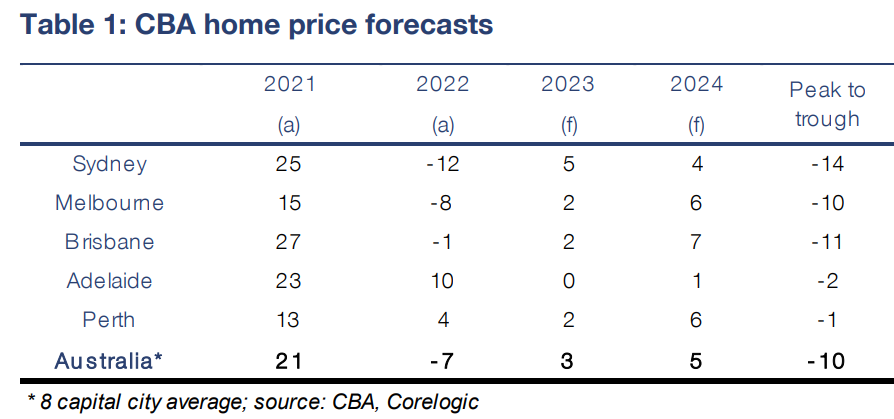
NAB, Westpac and ANZ have also revised their house price forecasts and now expect prices to rebound in 2024 by around 5%.
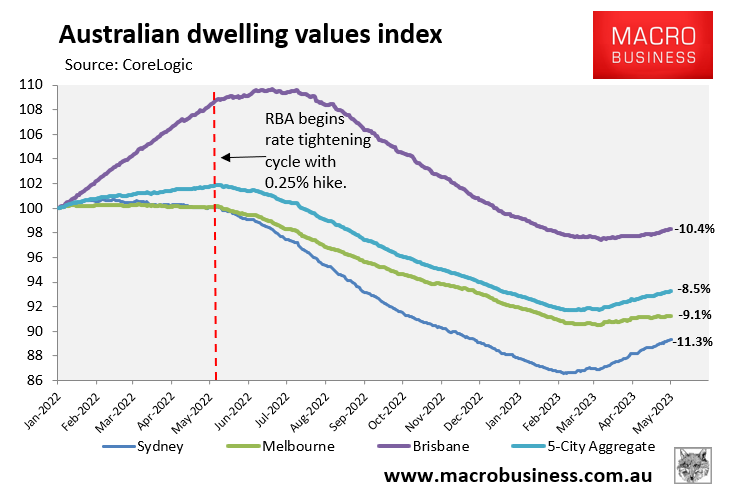
Since bottoming on 7 February, CoreLogic’s daily dwelling values index has risen by 1.7% across the five major capital city markets.
Sydney has driven the increase with values jumping by 3.2% over the same period:
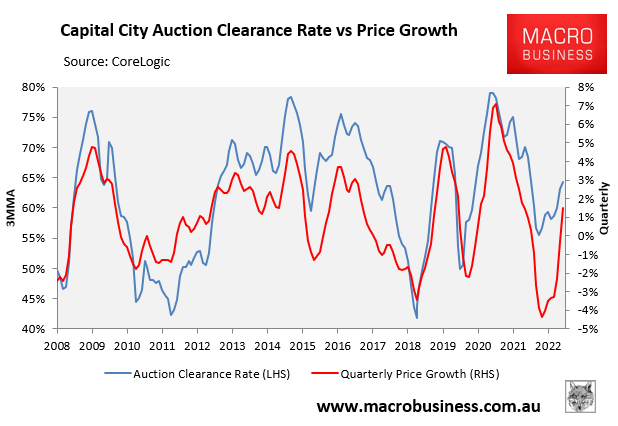
Auction clearance rates have likewise rebounded, which historically has been a leading indicator for house prices:
The growth in new mortgage commitments had also rebounded as at February, albeit less than prices:
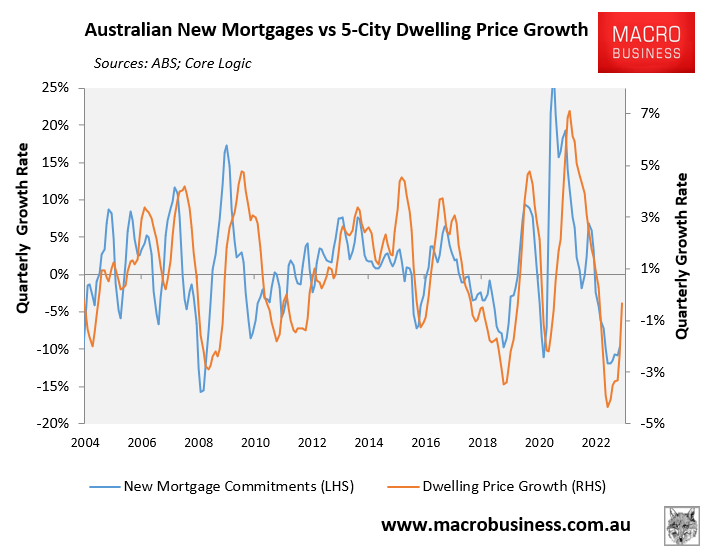
We will receive March’s mortgage commitments data on Friday, which I expect to show a further rebound.
The strong bounce in home values is highly unusual since it has occurred despite two consecutive 0.25% interest rate hikes in early February and early March.
In previous cycles, home values did not rebound until the RBA began cutting interest rates.
Looking ahead, I expect Australian home values to continue rising at a solid clip before accelerating sharply into 2024.
This view is based on the following market tailwinds that will build strength through the year:
- The RBA is expected to lower interest rates later this year, increasing borrowing capacity and mortgage demand.
- APRA will likely follow suit by lowering its mortgage serviceability buffer from 3%, increasing borrowing capacity and demand even further.
- Record immigration will raise demand for housing, both to buy and to rent.
- New home building will decline as a result of construction company failures and continued material price rises.
- The rental market will become even tighter, encouraging more people to buy.
- Foreign buyer demand will rise, with China leading the way.
The substantial rebound in immigration, auction clearances, and prices demonstrates that home demand remains strong.
The only thing holding back prices is the steep drop in borrowing capacity as a result of the RBA’s 3.5% of interest rate rises.
Once the RBA starts decreasing rates and APRA follows suit by reducing its mortgage serviceability buffer, borrowing capacity will increase and house prices will launch.
Whether you like it or not, the seeds of the next house price boom are sown.
