
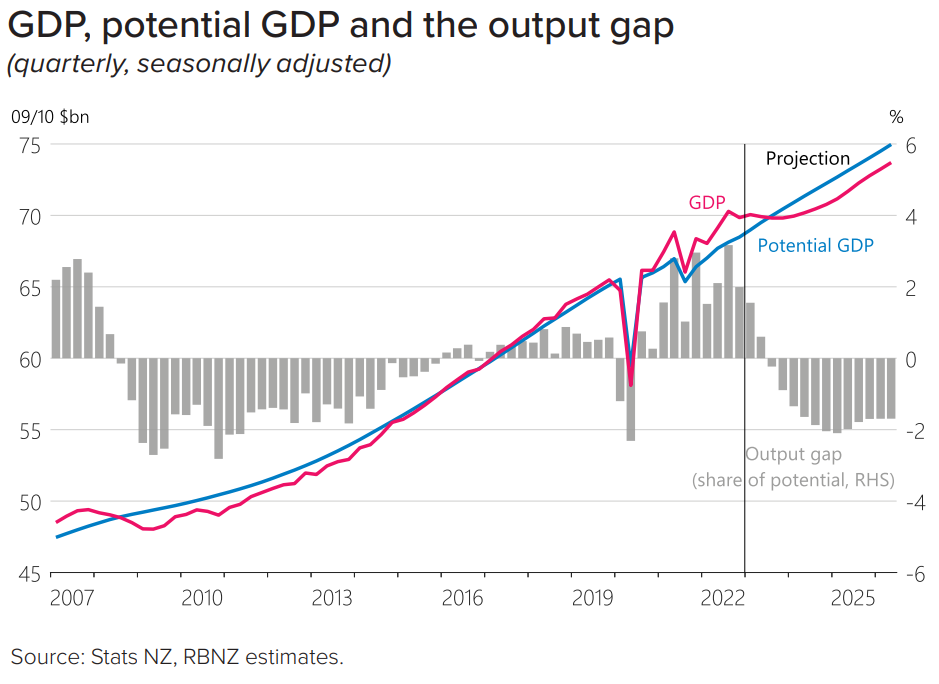
The Reserve Bank of New Zealand’s latest Statement of Monetary Policy tipped the economy would fall into recession in 2023.
“While economic activity in the last quarter of 2022 was weaker than expected, further economic contraction during 2023 remains possible”, said the Reserve Bank.
“The level of GDP is assumed to decline over 2023, but to a lesser extent than was expected in the February Statement”.
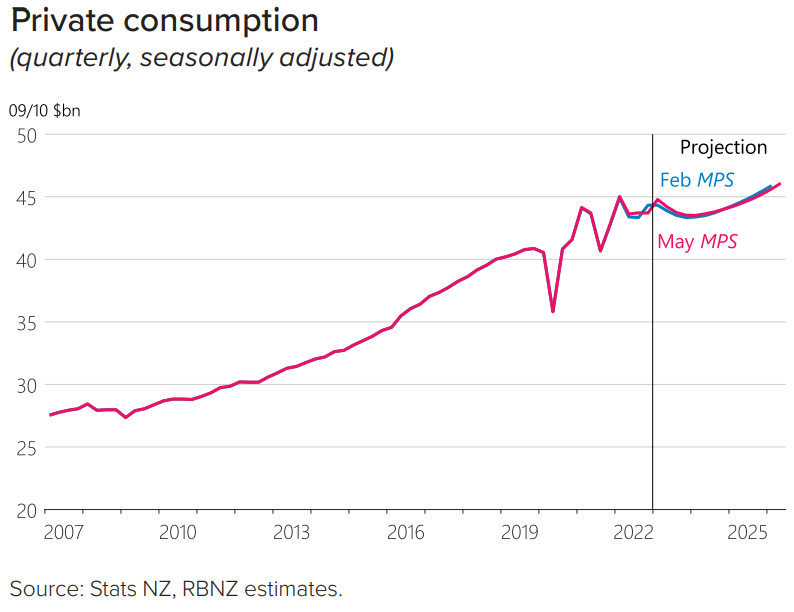
This contraction in GDP will be driven by a fall in private consumption:
Last week’s retail sales figures from Statistics New Zealand revealed that retail volumes fell a seasonally adjusted 1.4% in the March quarter, which follows a 1.0% decline in the December quarter.
The result badly missed analysts’ expectations of a 0.2% quarterly increase in retail sales.
Over the year, retail sales volumes fell 4.1%, which came despite a strong rebound in net overseas migration and population growth.
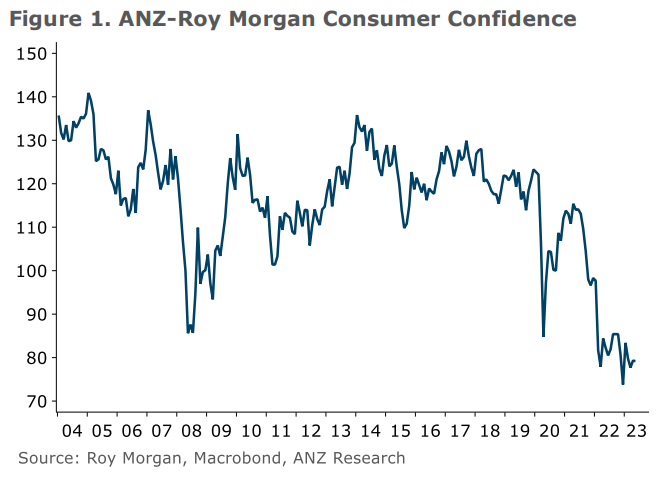
Meanwhile, ANZ-Roy Morgan’s latest Consumer Confidence index continues to bounce around near record low levels:
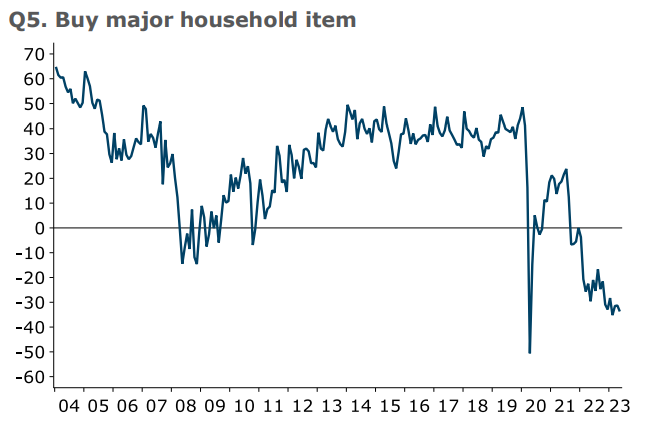
The sub-index most correlated to retail sales and consumption – the proportion of people who believe it is a ‘good time to buy’ a major household item – fell another 3 points to -34, and is tracking around its lowest level since the height of the pandemic:
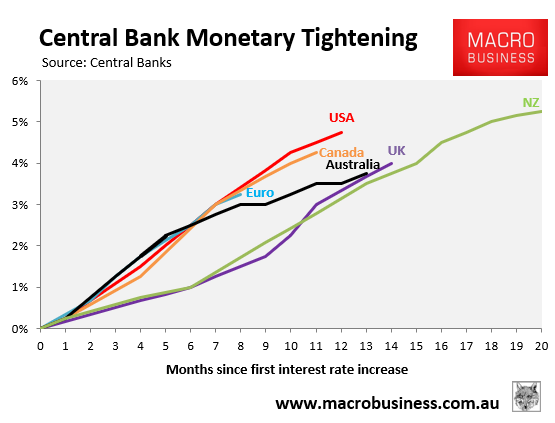
The Reserve Bank has lifted official interest rates more than just about every other central bank, hiking rates 5.25% since October 2021:
The combination of rising interest rates and the fixed rate mortgage reset means monetary conditions across New Zealand will tighten sharply in the months ahead:
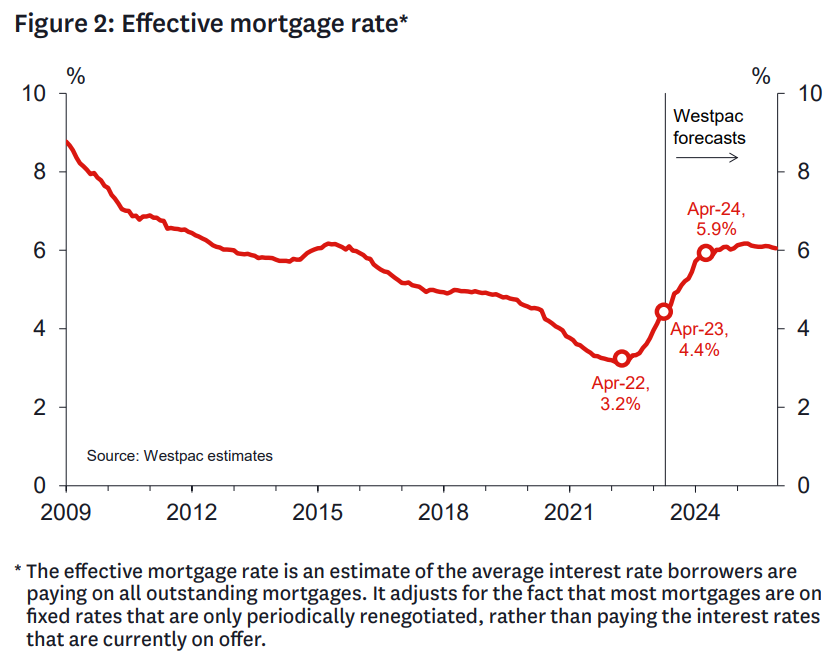
Source: Westpac NZ
This tightening in monetary conditions will inevitably crunch household consumption and ensure the economy falls into recession.
However, the recession will be shallower than previously anticipated because of the unexpected boom in net overseas migration.
But per capita GDP will still fall sharply, while the unemployment rate will rise by around 2% according to the Reserve Bank’s forecasts:
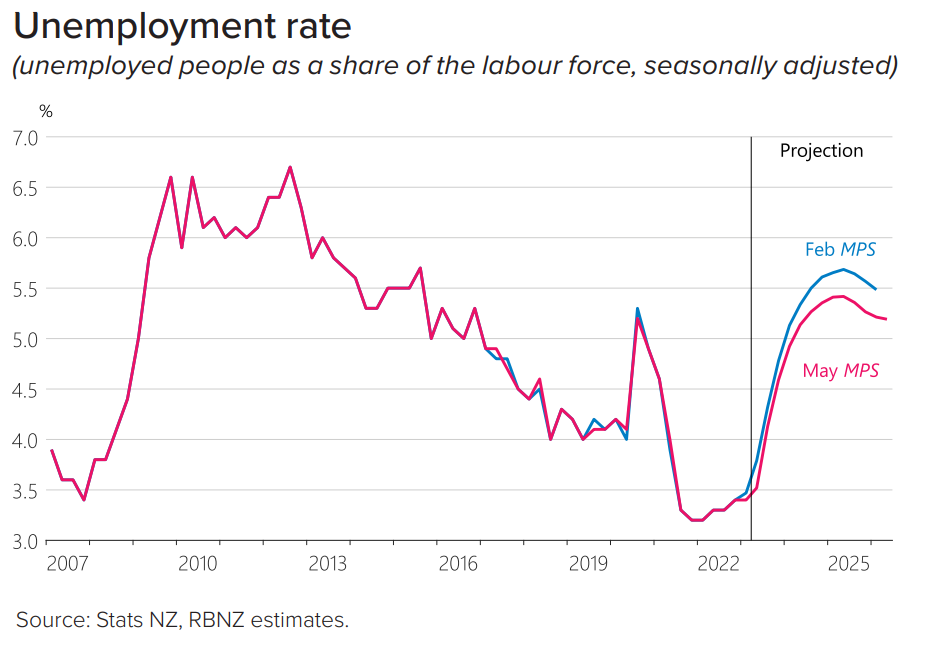
Therefore, it will feel like a brutal recession for many Kiwis.
