
The rapid fire increases in Australian interest rates has delivered the largest recorded rise in annual living costs for employee households, according to the Australian Bureau of Statistics (ABS):
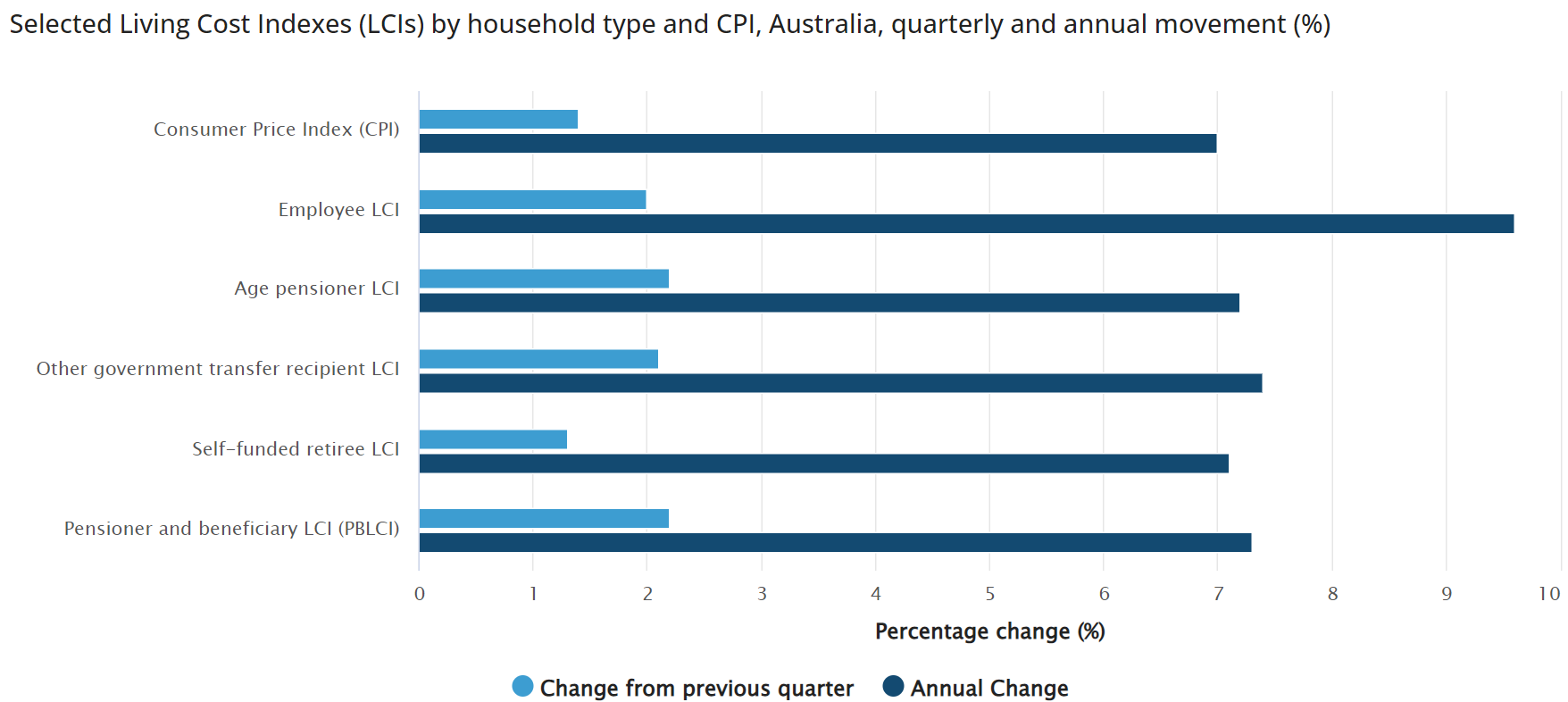
According to Michelle Marquardt, ABS head of prices statistics, “increases ranged from 7.1% to 9.6%, all higher than the 7.0% annual increase in the Consumer Price Index (CPI)”.
“It’s important to note that today’s Living Cost Indexes include the impact of mortgage interest charges, but the CPI does not as it includes the cost of building a new dwelling instead”.
“As a result, living costs for all household types rose more than the CPI”, Marquardt said.
“Living costs for employee households recorded the largest annual rise of all household types, at 9.6%; the largest increase since this series started in 1999. The last time the CPI recorded an annual increase of 9.6% was in 1986″.
“Employee households were particularly impacted by increases in mortgage interest charges, which are a larger proportion of their spending than for the other household types. Mortgage interest charges rose 78.9% over the year”.
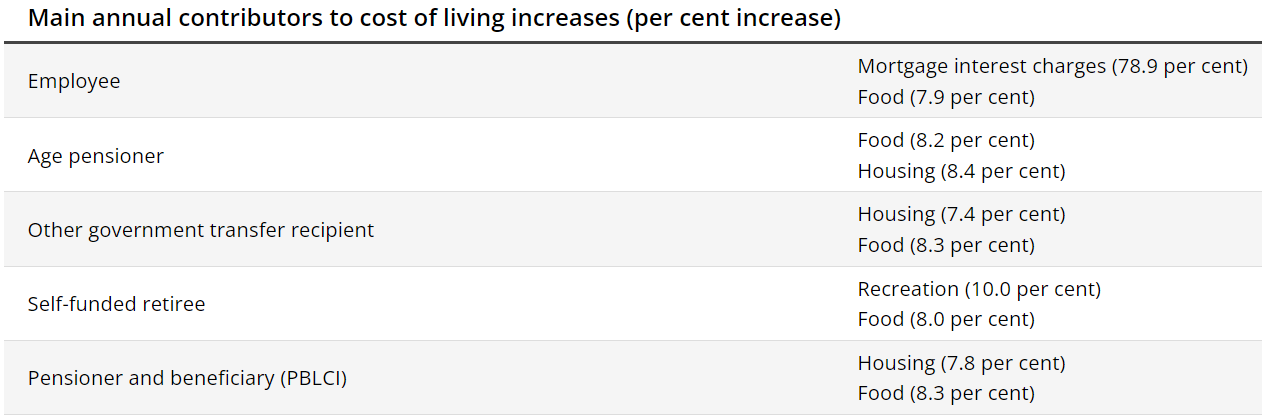
“This was up from a 61.3% annual rise in the December 2022 quarter reflecting the Reserve Bank of Australia’s cash rate rises”, Marquardt said.
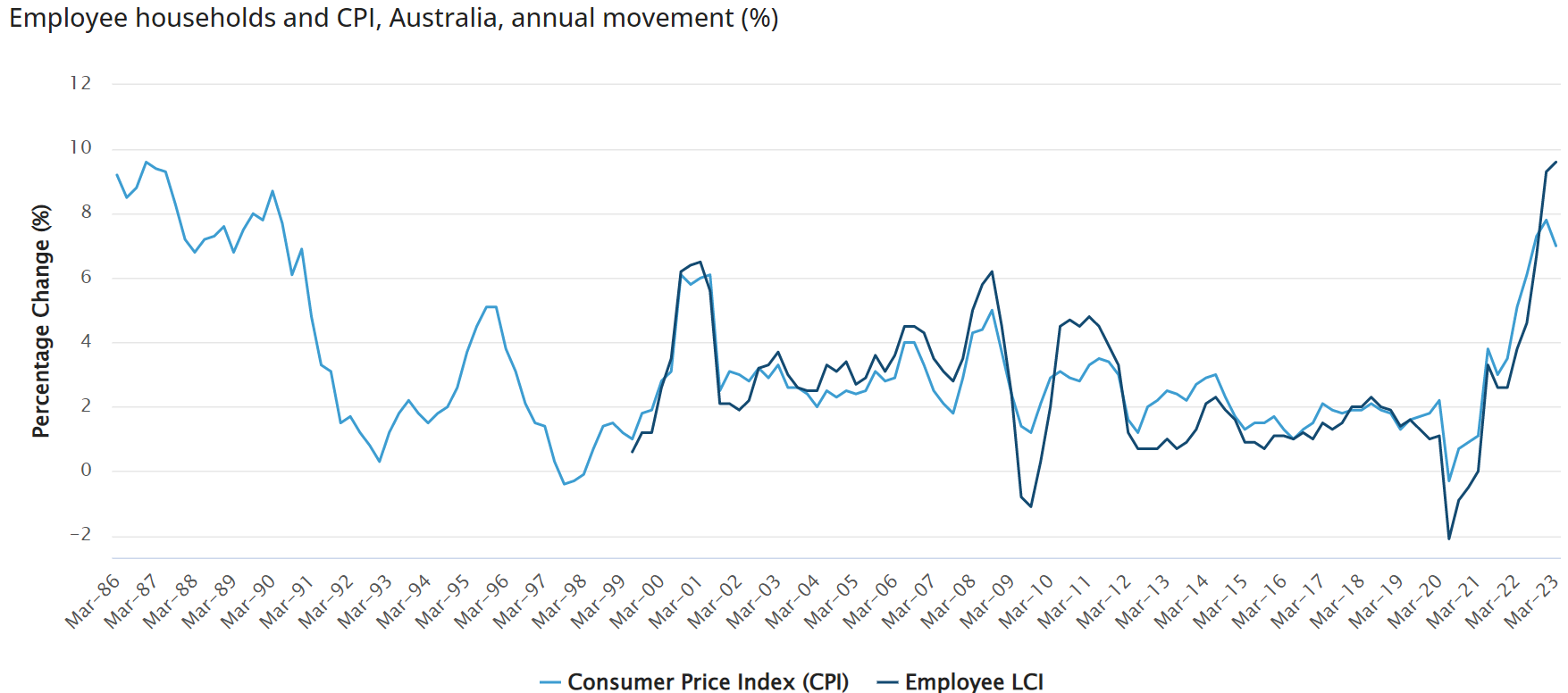
It is clear from the above that working Australians are bearing the brunt of the RBA’s war on inflation, since they are the ones carrying most of the mortgage debt.
Older aged cohorts, by contrast, are faring the best as they are largely insulated from the RBA’s rate hikes.
