
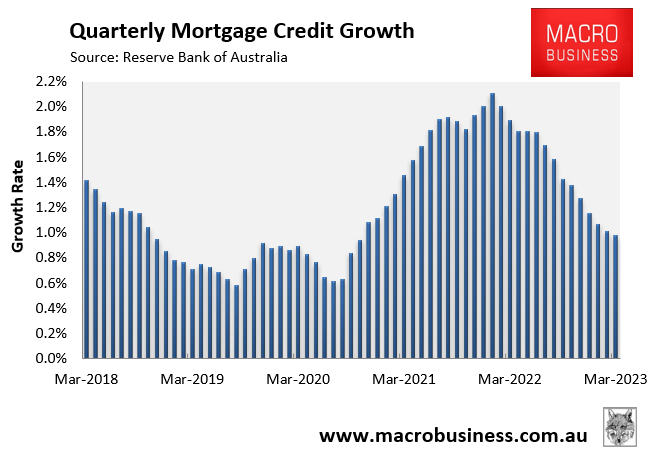
The Reserve Bank of Australia (RBA) has released data on the value of outstanding mortgages, which shows overall mortgage growth slumped to just 1.0% over the March quarter.
This represented the slowest pace of mortgage growth since October 2020:
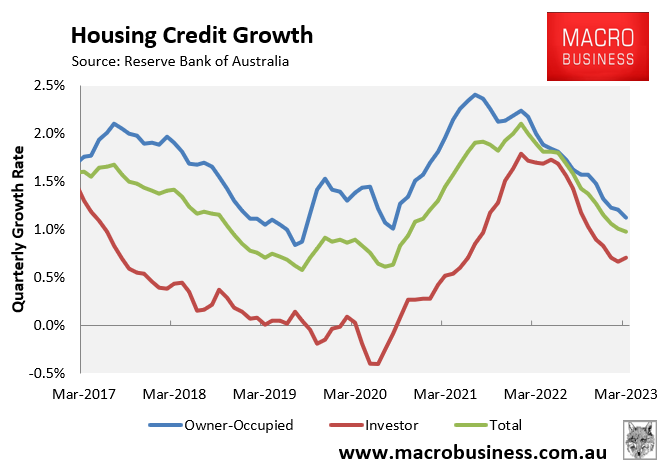
Mortgage growth has fallen sharply across both owner-occupiers (1.1%) and investors (0.7%); although investors are beginning to awaken from their slumber:
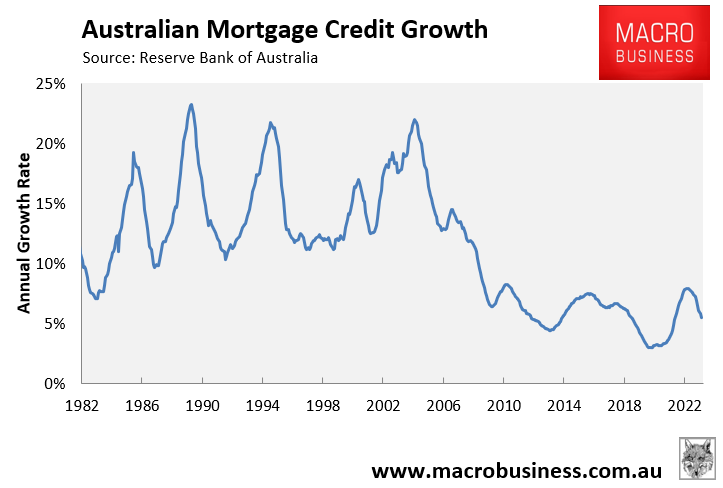
Annual mortgage growth has also fallen to 5.5%, which is the slowest pace of growth since June 2021:
The fall in mortgage credit growth makes sense given it captures all ten interest rate rises from the RBA, which have cut borrowing capacity by nearly one third.
However, the ongoing fall in mortgage growth does seemingly contradict the rebound in home values, which rose by 1.0% over the April quarter, according to CoreLogic.
The reason behind this divergence probably relates to the fact that mortgage credit growth distinguishes between the addition to the mortgage stock from new mortgages taken out by borrowers (which increases the stock of debt outstanding) and the repayment of mortgage debt by current borrowers (which reduces mortgage debt).
Only the first factor, new mortgages, has a significant impact on home values.
The second element, current borrowers’ mortgage payments, has no influence on pricing and does not imply new demand for homes.
The Australian Bureau of Statistics’ lending indicators will be released on Friday and will show new mortgage originations to March.
This release will provide a significantly better predictor for Australian house prices.
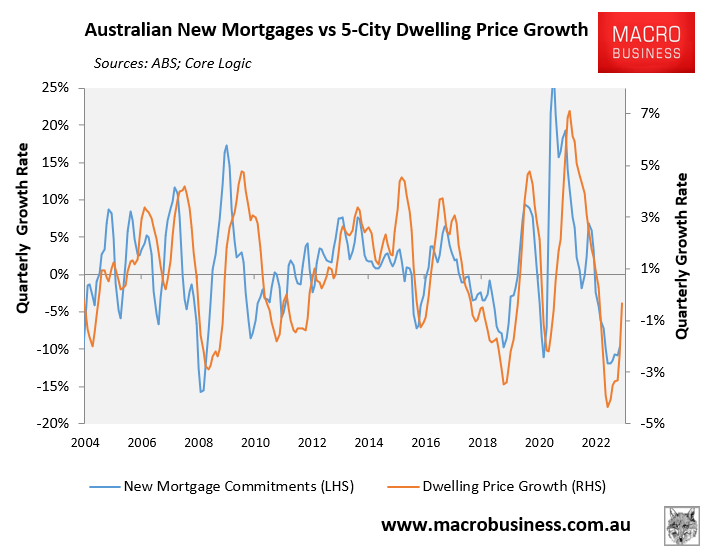
As illustrated in the above chart, new mortgage originations to February had ticked higher; albeit not as much as home values.
I expect March’s data to show a further rebound in new mortgage demand.
