
CoreLogic’s preliminary auction results came in strong again this weekend, with 74.4% of reported auctions clearing across the combined capital cities.
This was the second consecutive week where the preliminary clearance rate held above 70%:
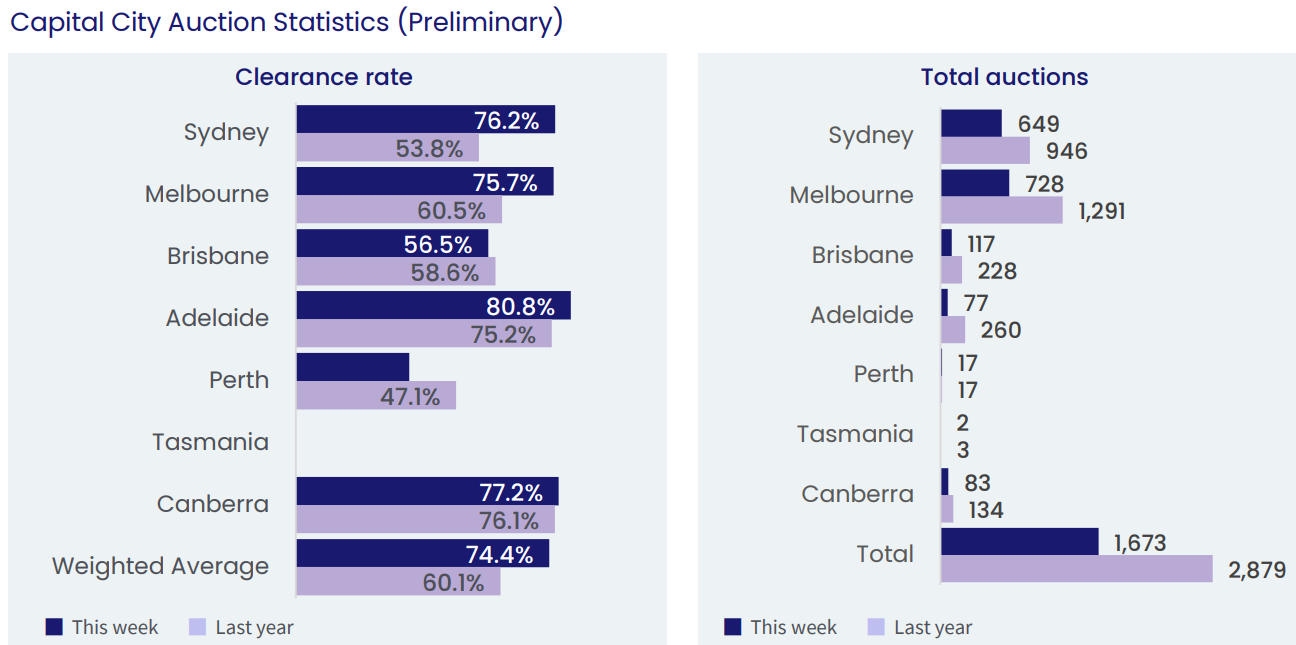
Sydney and Melbourne led the way, with 76.2% and 75.7% of preliminary auction results successful.
Auction volumes remained low, with just 1,673 homes going under the hammer over the weekend. That’s down 42% from the same weekend last year.
This lack of stock combined with unprecedented population growth and the rental crisis is clearly creating a sense of FOMO (Fear of Missing Out) in the market, which is helping to drive prices higher.
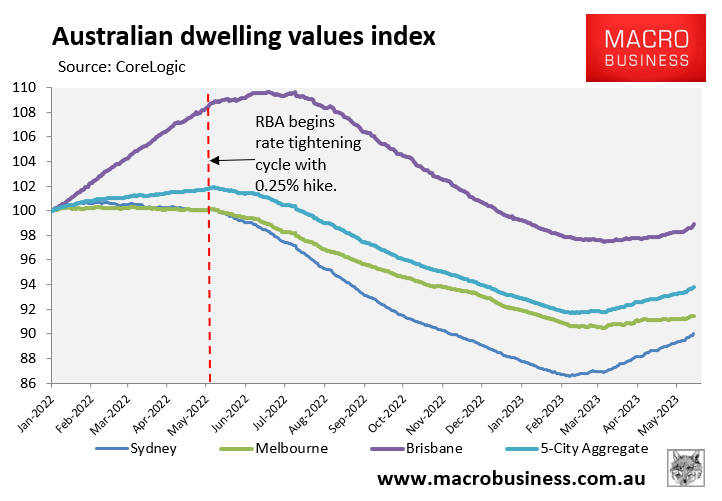
CoreLogic’s daily dwelling values index has now rebounded 2.3% from its 7 February low, with all five major capital cities recording rises.
Sydney continues to lead the way, with dwelling values rebounding a strong 3.9%:
Most factors are now working in favour of house prices rises.
Record immigration will continue to drive up demand for housing, both for purchase and for rent.
This extraordinary population explosion has arrived at a time when Australia’s housing supply pipeline is shrinking due to multiple building company collapses and increasing material and financing (interest rate) costs.
Australia’s housing problem will, therefore, deteriorate in the near future as record immigration-driven demand collides with diminishing home supply.
This inevitably means the rental market will tighten even further, increasing FOMO and encouraging more people to buy.
Finally, foreign buyer demand is rising, led by China, which is placing further upward pressure on home prices.
The only factor that is now working against house price rises is the Reserve Bank of Australia’s (RBA) aggressive interest rate hikes.
However, interest rates are likely close to their peak, even though the RBA could hike one more time.
Therefore, most of the elements are in place for the next housing price boom.
All that is required is for the RBA to begin its easing cycle, which will turn the house price rebound into an outright boom.
There is also the prospect that APRA will follow the next RBA loosening cycle by lowering its mortgage serviceability buffer from 3%, which would further increase borrowing capacity and house prices.
