
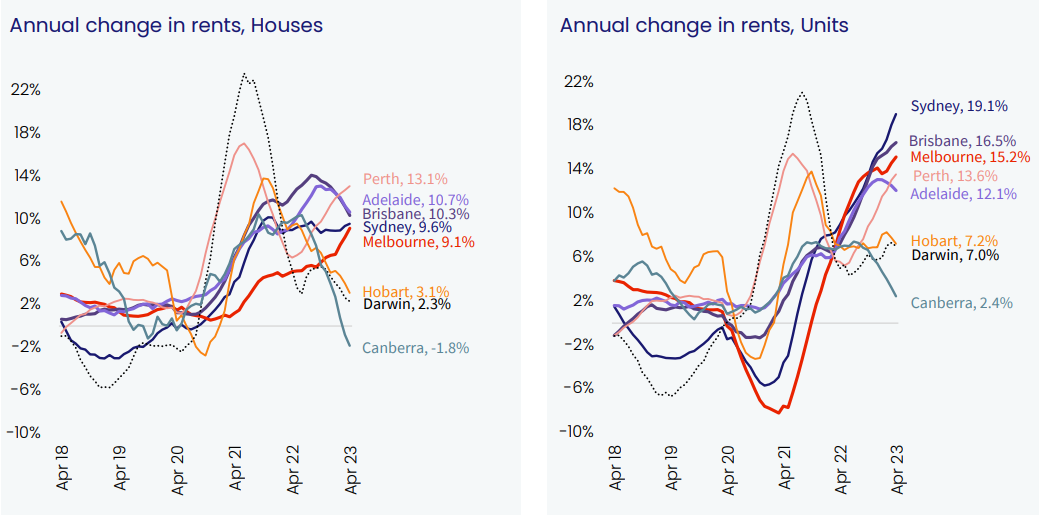
Australia’s housing crisis continues to deepen, with the latest CoreLogic housing price report showing extreme rental inflation across the major capital cities, especially across the unit segment:
The shortage is being driven by the Albanese Government’s unprecedented immigration program, which increased Australia’s population by a record high 482,000 in the 2022 calendar year:
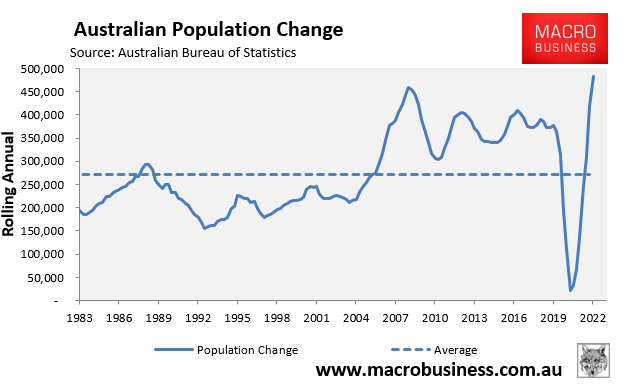
The Australian Treasury is expecting around 400,000 net overseas migrants to arrive in 2023, which will drive Australia’s population up by more than 500,000 people this year.
This unprecedented population surge has arrived at the same time as Australia’s housing construction industry is on its knees, suffering from widespread company collapses amid soaring materials prices and financing (interest rate) costs.
The upshot is that Australia’s housing crisis will continue to worsen over the foreseeable future as record immigration-driven demand collides with falling housing supply.
The extent of the housing crisis facing Australia is neatly encapsulated by the next chart from AMP Capital’s chief economist Shane Oliver, which shows a disastrous housing shortage confronting Australia:
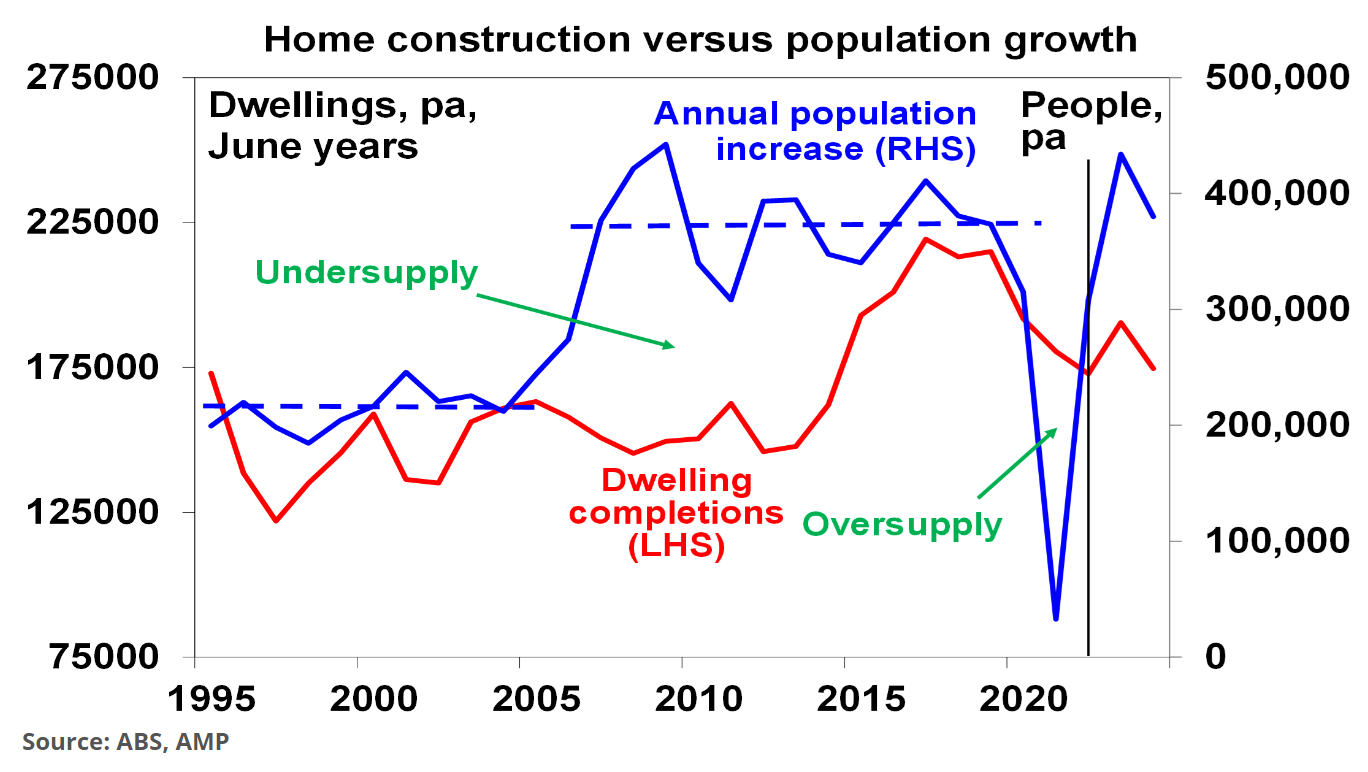
Oliver notes that “immigration has returned far quicker than expected and is now likely to be around 400,000 this financial year”, which is “well above the 235,000 forecast in last October’s Budget”.
This “rapid rebound in immigration over the last 18 months roughly equates to demand for an extra 200,000 dwellings”, according to Oliver.
On the flipside, “the supply of new dwellings has slowed with labour shortages, cost increases and falling building approvals”, meaning Australia is facing “a renewed surge in the undersupply of housing”.
Accordingly, this “very tight housing supply situation is reflected in capital city rental vacancy rates being at a record low of around 1% and this is leading to a surge in rents”.
The above chart from Shane Oliver shows that the undersupply in housing began when the federal government first opened the immigration floodgates in 2005.
Australia’s net overseas migration jumped from an average of 90,500 between 1991 and 2004 to an average of 219,000 between 2005 and 2019 – representing an annual average increase in immigration of 140%.
The situation will only worsen from here as the Albanese Government deliberately engineers the largest immigration program in this nation’s history at the same time as the construction industry is constrained in its ability to supply new homes.
It is an inequality disaster in the making that will hit vulnerable Australians the hardest.
