
In February, UBS reported that Australian households aged over 65 accumulated the overwhelming majority of savings over the pandemic, followed by 55-64 aged households:
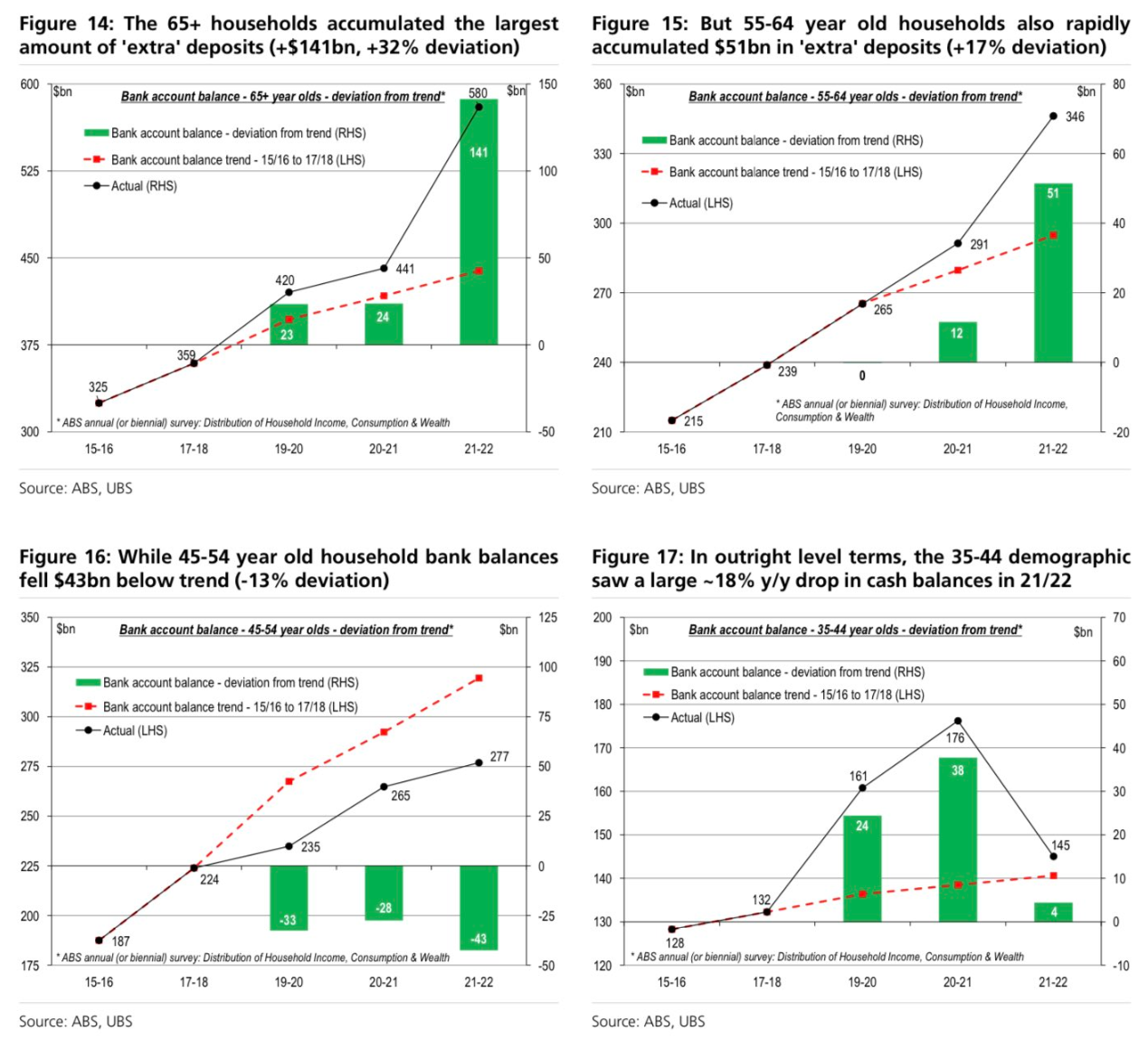
Independent economist Tarric Brooker then made the salient observation that the large accumulation of savings by baby boomers could make it harder for the Reserve Bank of Australia (RBA) to curb spending via rate hikes, given most boomers do not carry any mortgage debt and are, therefore, insulated from rate hikes.
On Anzac Day, Brooker posted a thread on Twitter showing the breakdown in the economic system for Australians aged under 40.
The below chart tells the tale:
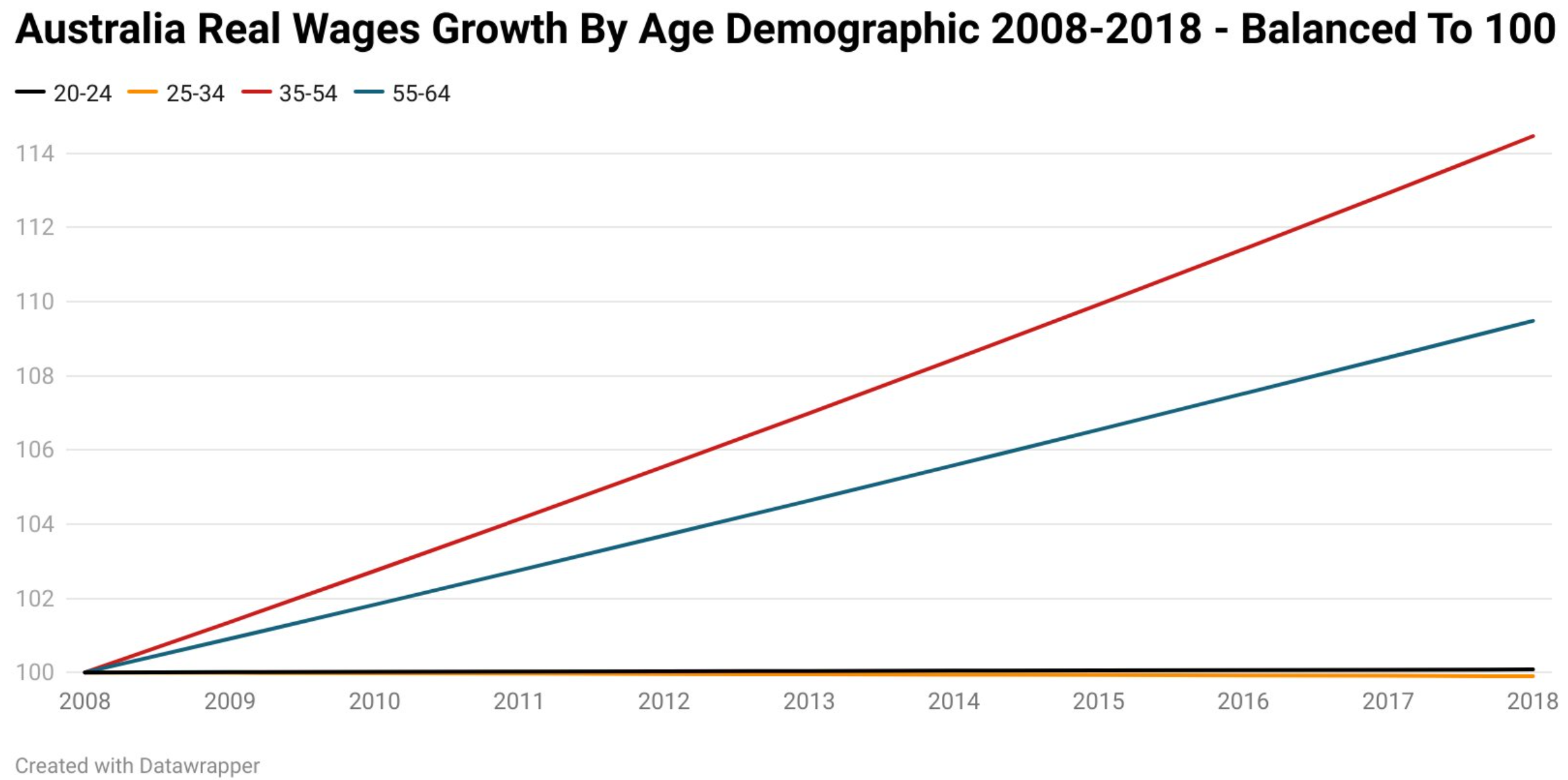
“For households under 40, real hourly wages growth went no where for years. With the latest falls in real incomes, they are operating on ~2005 levels of purchasing power”, noted Brooker.
“In short these households cannot organically drive growth despite being the historic growth engine”.
“Real household consumption figures reflect this. For 15-24 and 25-34 age demographics, real household consumption peaked in 2008”.
“35-44 (in 2018) don’t fare that much better, with only marginally more consumption than in 2008”.
“The real growth in spending is in 45+ age demographics”, noted Brooker.
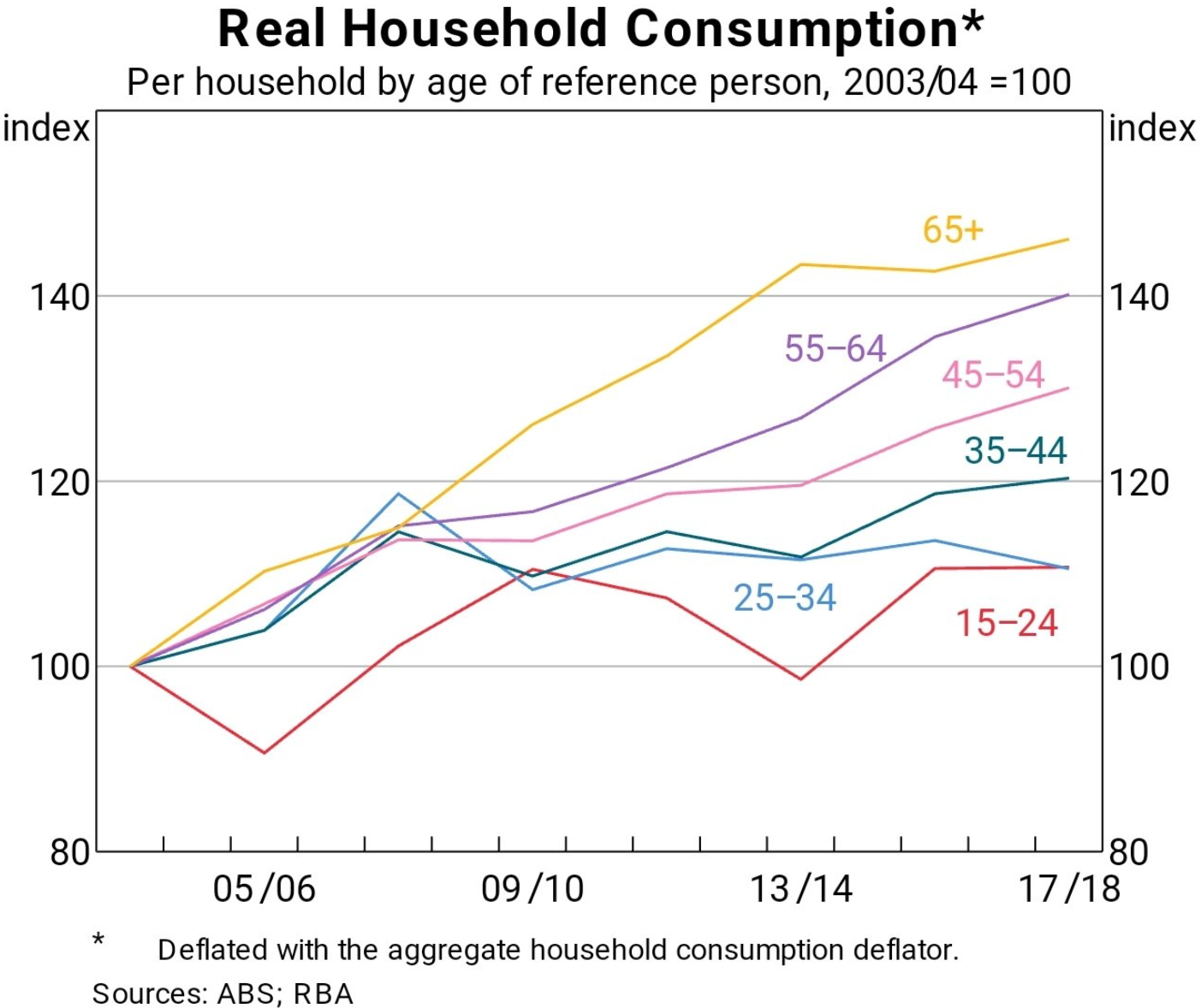
Therefore, “between an enormous debt load and negative real wages growth, younger generations are no longer the growth driver and demographic economic dividend they once were”.
“Instead they have been replaced by greater consumption by older generations and equity mate”:
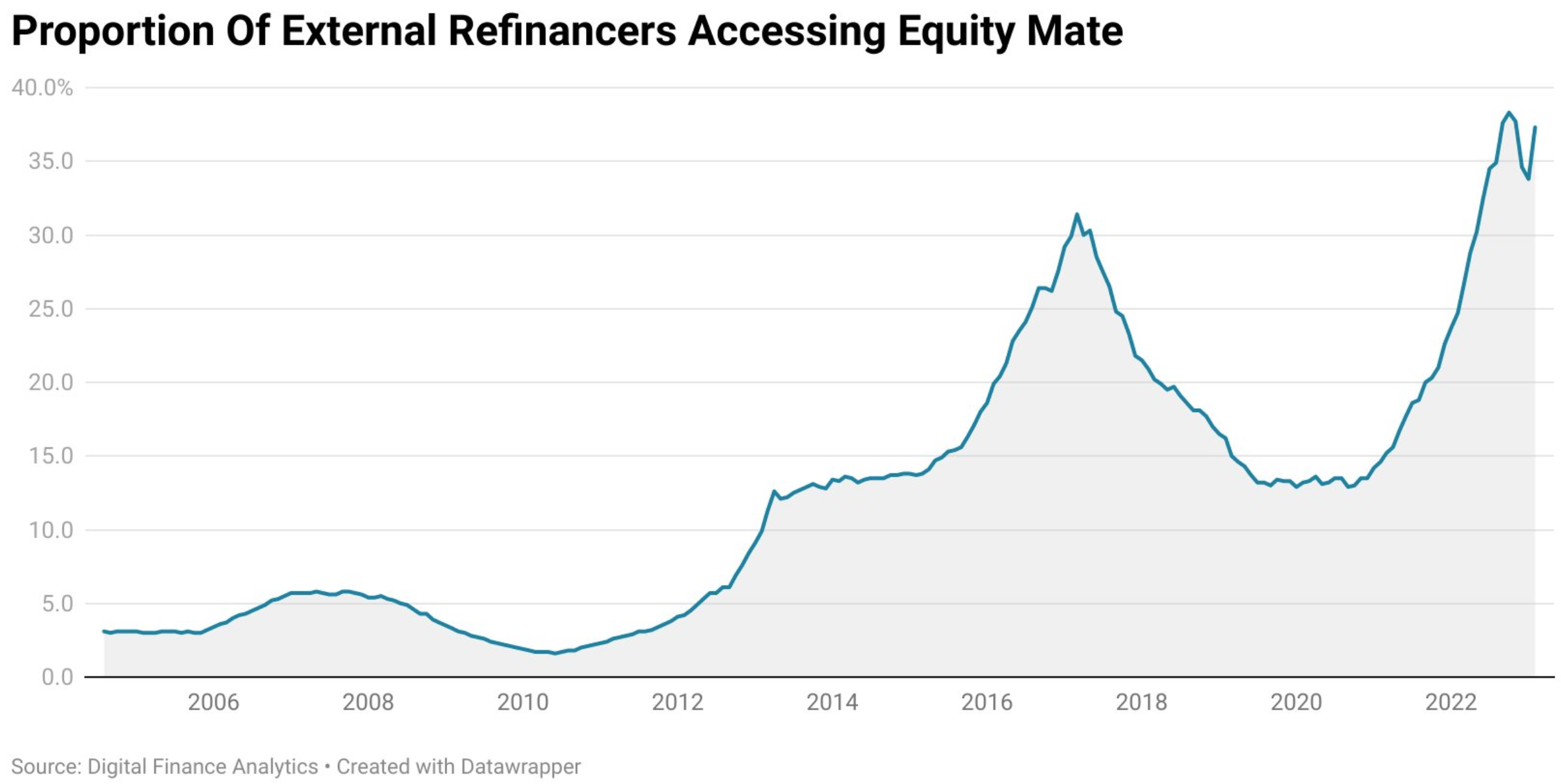
“TLDR: Traditional consumer economy is cooked”, ended Brooker.
To the Baby Boomer generation goes the Australian economy’s spoils!
