SQM Research has released rental vacancy data for March, with the national vacancy rate easing marginally to 1.1% from 1.0% in February:
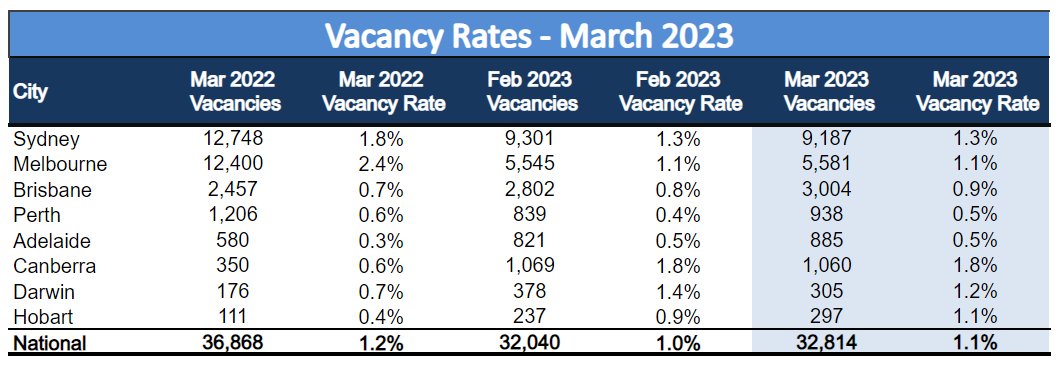
The slight easing was driven by the regions “as a sign of a population flow reversal back to the cities”.
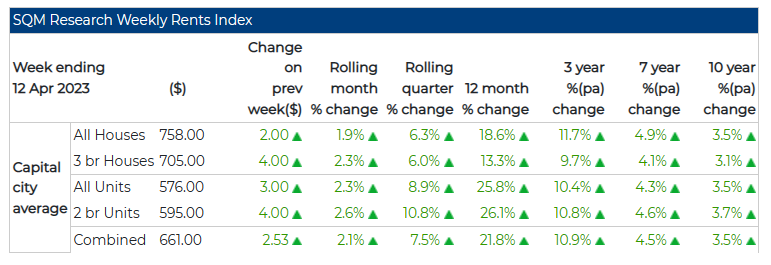
However, “over the past 30 days to 12 April 2023, capital city asking rents rose by another 2.1% with the 12-month rise standing at 21.8%”, according to SQM:
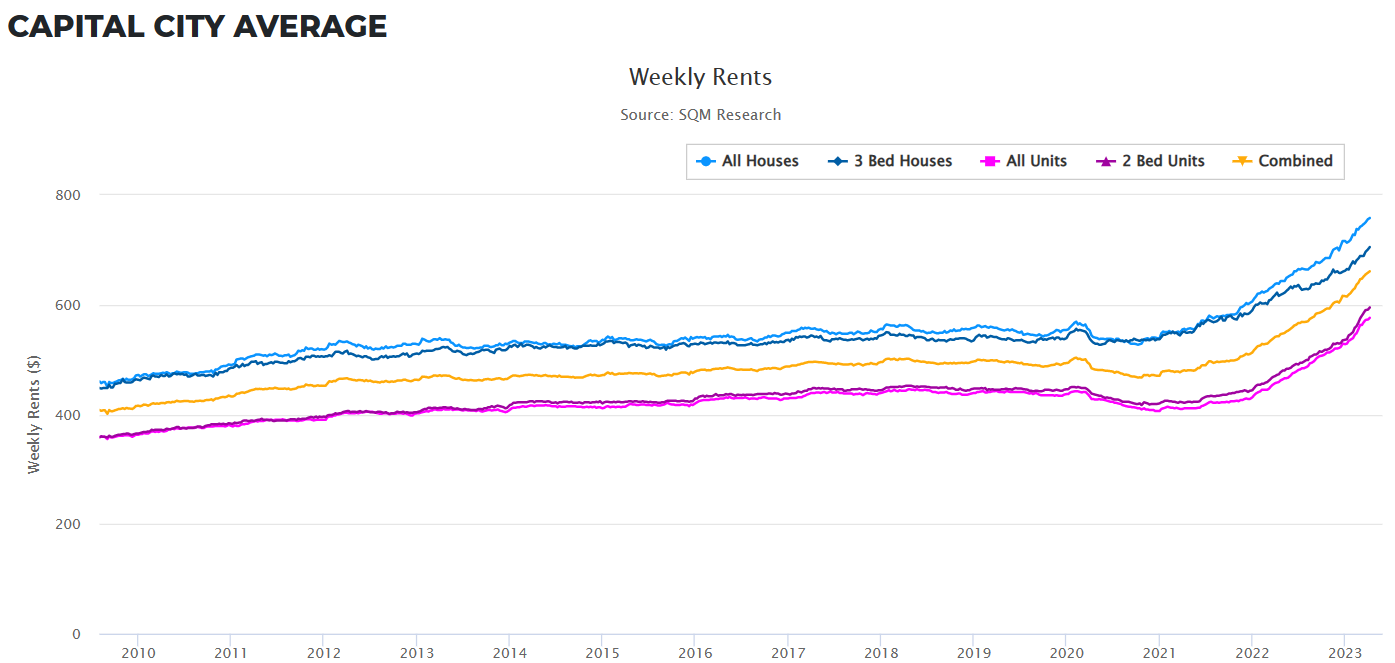
This ramp-up in rents is clearly shown in the next chart from SQM:
Commenting on the result, SQM Research managing director, Louis Christopher, noted that “the rental crisis in Australia’s regions has peaked with an easing in rental vacancy rates and rents across many smaller townships and coastal locations”.
“This peak is also extends to some of our smaller capital cities such as Hobart, where rental vacancy rates rose back over 1% and rents are now down by 1.8% for the past 30 days”.
“However, the same cannot be said for our two largest capital cities where the rental crisis rolls on, driven by rampant population growth, a slowdown in the respective construction pipeline and a return to the city office move from the regions“.
Australia’s population grew by a record 482,000 in 2022, driven by net overseas migration of nearly 400,000 (also a record):
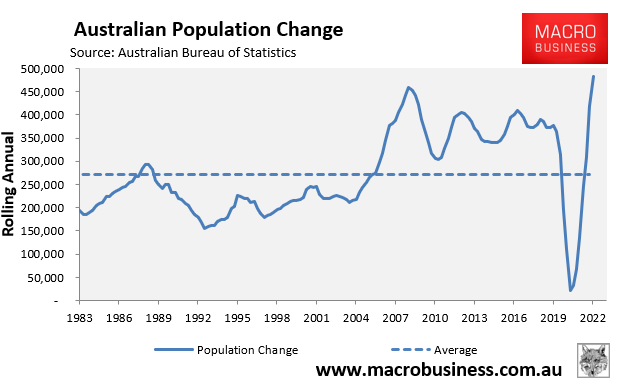
Most of this immigration would have arrived in Sydney and Melbourne, which is driving the extreme rental growth in these two cities.
Australia’s rental market will remain in crisis as long as the Albanese Government maintains its extreme mass immigration policy.