
Roy Morgan estimates that mortgage stress has risen to its highest level since September 2008 with 28.4% of mortgage holders now considered ‘At Risk’ following 3.5% of interest rate hikes by the RBA:
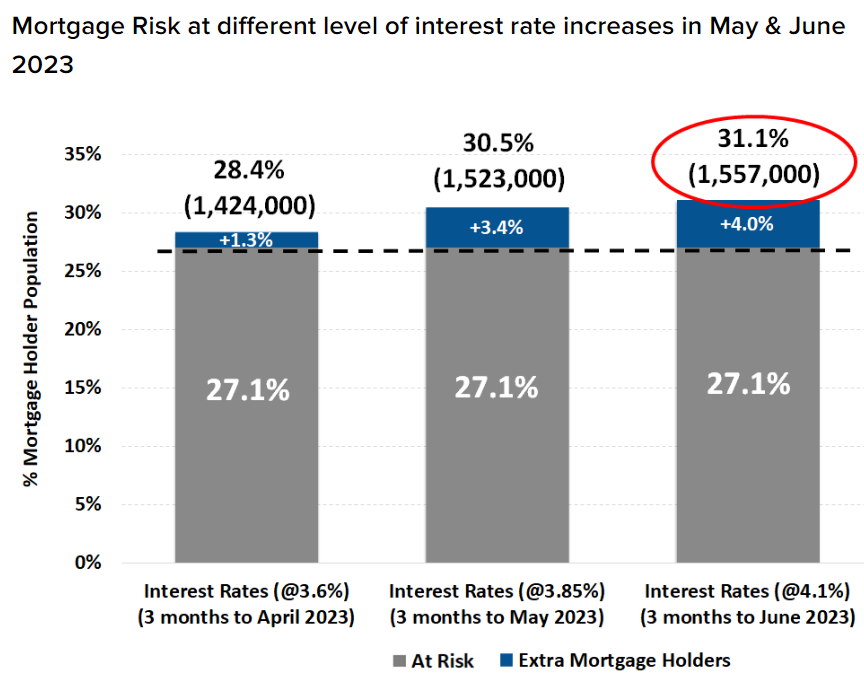
A borrower is deemed by Roy Morgan to be “At Risk” when their mortgage payments exceed a predetermined threshold (between 25% and 45%, depending on income and spending).
If the RBA increases interest rates by another 0.25% next week, Roy Morgan estimates an additional 99,000 borrowers would experience financial stress, and a further 34,000 borrowers will experience financial stress if rates are lifted by another 0.25% in June.
Roy Morgan adopts “a conservative model, essentially assuming all other factors remain the same”.
Therefore, if there was to be a meaningful lift in unemployment, then mortgage stress would be higher than estimated above.
I will add that more than 600,000 fixed rate mortgages are scheduled to expire over the nine months to December 2023 across the Big Four banks alone.
These fixed rate expiries will see borrowers’ mortgage rates jump from around 2% to over 5%:
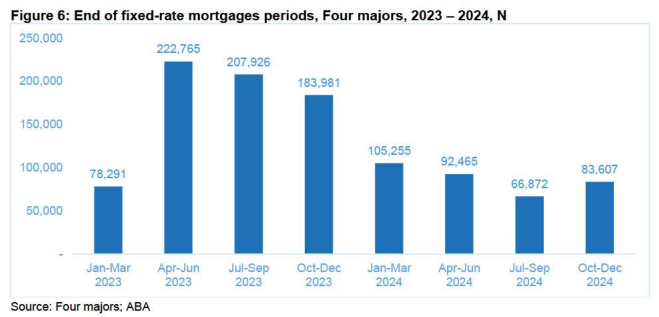
Accordingly, even if the RBA holds interest rates from here, Australian households will continue to come under increasing financial pressure due to the fixed rate “mortgage cliff”.
The below chart from the RBA’s latest Financial Stability Review highlights the impact of this fixed rate “mortgage cliff”:
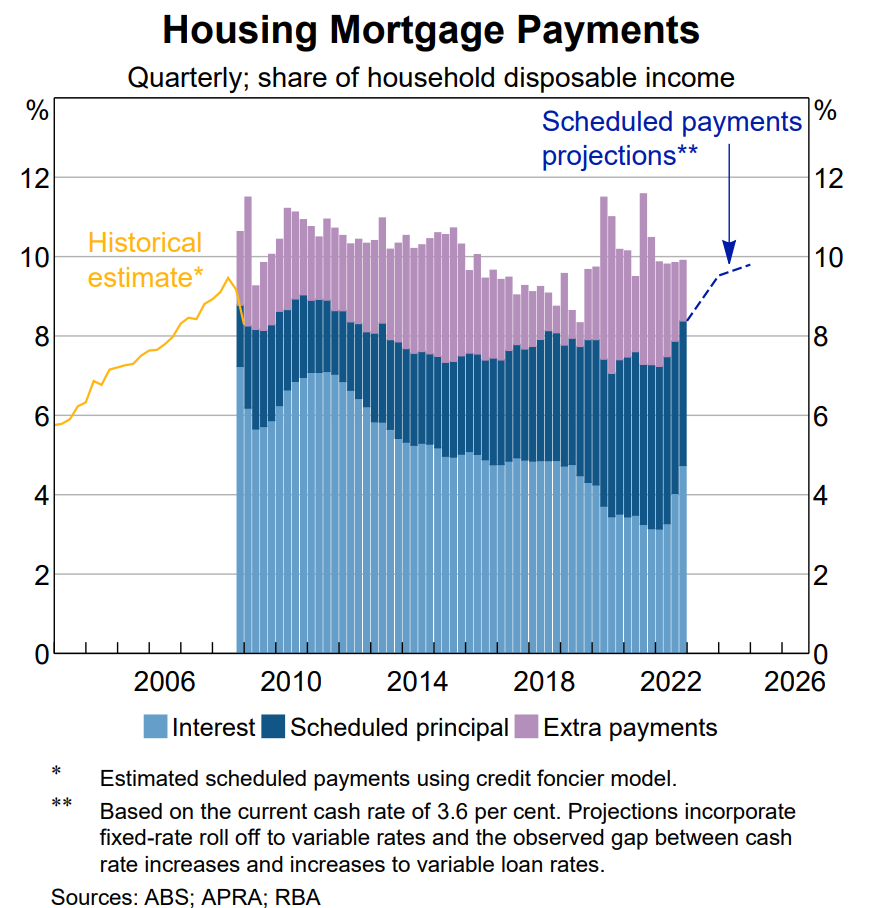
As you can see, scheduled mortgage repayments are forecast to rise to a record share of household income once the fixed rate mortgage reset finishes.
Mortgage rates have already risen beyond the 3% mortgage serviceability buffer applied by APRA when these fixed rate mortgages were originated.
Therefore, a large number of borrowers risk being pulled into the red once their fixed rate mortgage terms expire.
