Gareth Aird at CBA with the note. My view is the RBA is done and prices are bottoming.
Australian home prices rebound in March, but too early to declare a turning point
■Dwelling prices rose by 0.8% across the eight capital cities in March – it was the first monthly gain since April 2022.
■Prices rose solidly in Sydney, Melbourne and Perth. Values in Brisbane and Adelaide were little changed.
■Dwelling prices are seasonally firmer in March, although the strength of the latest monthly outcome is surprising.
■Our forecast for a national decline in home prices from peak to trough of ~15% now looks a little pessimistic in light of the March result, but we retain it for now.
■Dwelling price outcomes over the coming month will provide a clearer signal of where we are in the cycle.
■The April RBA Board meeting is tomorrow. In a close call we expect the Board to leave the cash rate on hold at 3.6%.
Home prices lift across the country in March – a surprising result
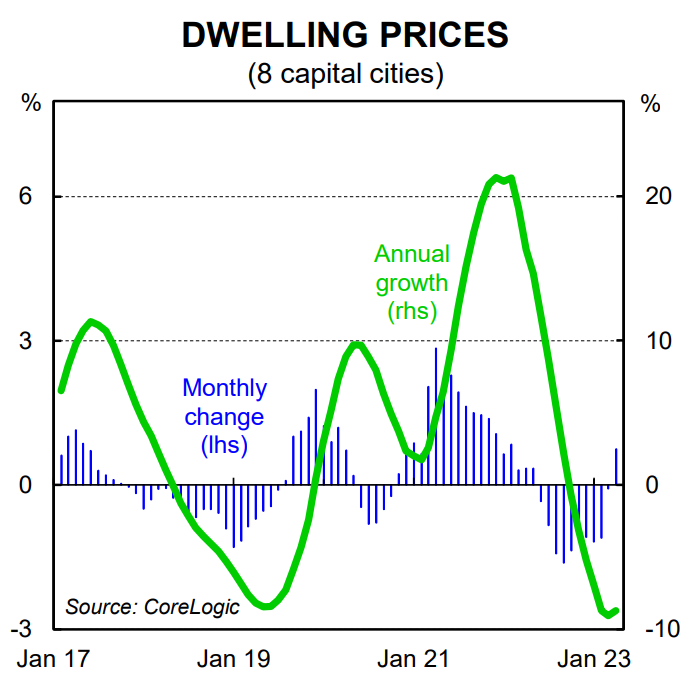
According to CoreLogic, Australian property prices rebounded in March. The 0.8% increase in the 8 capital city benchmark index over the month followed a small 0.1% fall in February.
The lift in dwelling prices over March was the first gain since April 2022. It means that home prices across the 8 capital cities are now down by 9.0% from their April 2022 peak. Of course the decline has been a lot larger in real terms given very high inflation over that period.
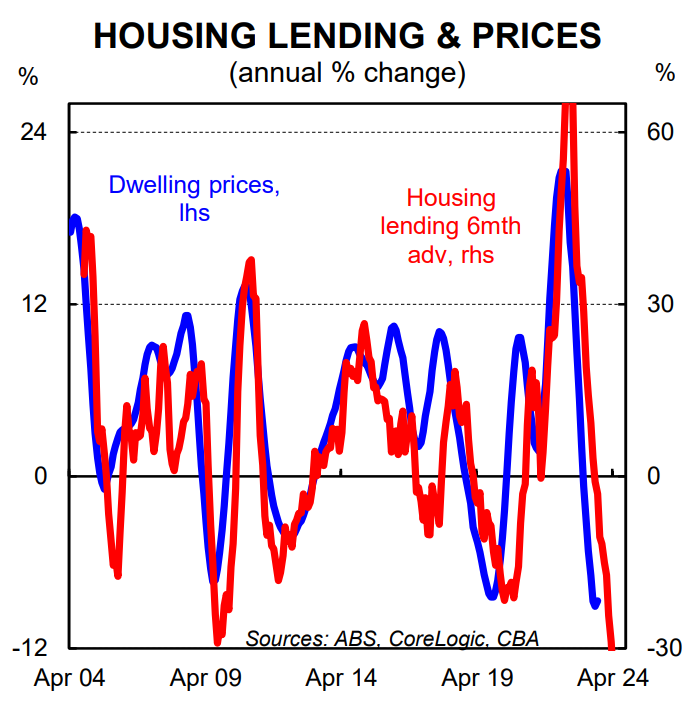
Interest rates normally work with a lag on home prices. As such, it is surprising to see dwelling values lift in March given the RBA increased the cash rate again by 25bp in March to take the cumulative tightening to a whopping 350bp since May 2022. For context, the RBA’s hiking cycle has so far reduced borrowing capacity by almost 30%, notwithstanding that the average standard variable rate has risen by less than the cash rate due to competition amongst lenders for borrowers.
Any conventional model of home prices indicates further falls should be expected. But in many respects these are unconventional times. New housing starts are declining at the same time as population growth has surged due to net overseas migration. As a result, the rental market is red hot and vacancy rates are at very low levels across the country. This is no doubt supporting dwelling prices and complicates the forecasting process.
March is a seasonally strong month for home prices. Indeed according to Corelogic home prices rose by 0.4% on a seasonally adjusted basis in March (less than the headline change). So we are reluctant to call today’s outcome a turning point in the cycle. But our forecast for a national decline in home prices from peak to trough of ~15% looks a little pessimistic in light of the March result.
We retain our forecast for now. But another lift in prices over April coupled with the expectation that the RBA’s tightening cycle is almost complete will see us send that peak to trough forecast to the shredder. Here we would note that our ~15% peak to trough forecast is on the less pessimistic side of the fence compared to the rest of the forecasting community.
Price outcomes over March were divergent across the country. Dwelling prices rose by a big 1.4% in Sydney, our largest capital city, in March. Sydney home prices fell the most across the capital cities in 2022. The cumulative fall since the peak in January 2022 now sits at 12.3% after the gain in March.
Monthly increases in dwelling prices were also posted in Melbourne (0.6%), Perth (0.5%) and Brisbane (0.1%). Values declined in Adelaide (‑0.1%), Hobart (‑0.9%), Canberra (‑0.5%) and Darwin (‑0.4%).
Prices were a little firmer across regional Australia. The CoreLogic regional benchmark index increased by 0.2% in March. Home prices in regional Australia are down 7.5% from their June 2022 peak.
On the supply side CoreLogic notes the flow of new listings has held at below average levels since September 2022. And that every capital city except Hobart is recording a total advertised listing count that is lower relative to the previous five year average.
On the demand side modelled sales over the three months to March across the capital cities were 18.4% lower than the corresponding period a year ago.
The RBA tomorrow
The housing market is one of the most interest rate sensitive parts of the Australian economy. As such, the RBA Board meeting tomorrow has a bearing on both the prices and construction side of the residential market.
In what we believe is a very close call, we expect the RBA to leave the cash rate on hold at 3.6%. We ascribe a 55% chance to no change and a 45% probability to a 25bp rate increase to 3.85% (we consider the risk of any other move immaterial).
The actions of many other central banks globally over the past two weeks lend weight to the RBA continuing to tighten policy despite some concerns within pockets of the global banking system (outside of Australia).
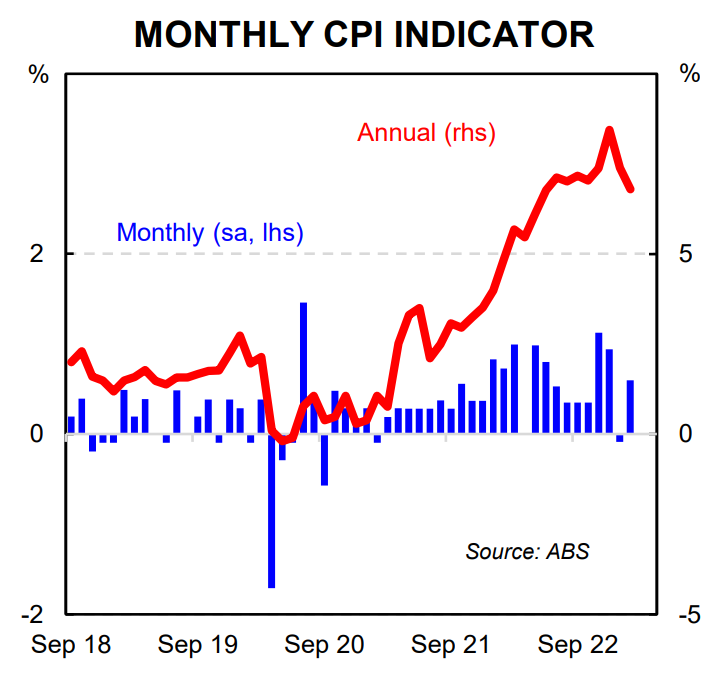
But the domestic economy is now showing sufficient signs of slowing and we expect the RBA Board will judge that a pause in the tightening cycle is the appropriate move in April. The February monthly CPI indicator confirmed that inflation peaked in Q4 22 and looks to be coming down a touch quicker than the RBA’s implied forecast profile. In addition wages growth remains consistent with the inflation target.
The Board can resume increasing the cash rate in May following a pause in April if the economic data makes the case.
There is still a massive amount of tightening left to hit the Australian household sector even if the RBA leaves policy on hold from here. Monetary policy works with a lag and only ~45% of the increase in the cash rate to date had passed through to scheduled mortgage repayments at the end of 2022. See here for our full preview of tomorrow’s RBA Board meeting.