
The excellent Michael Wilson at Morgan Stanley with his latest.
Bad Is Bad For Earnings
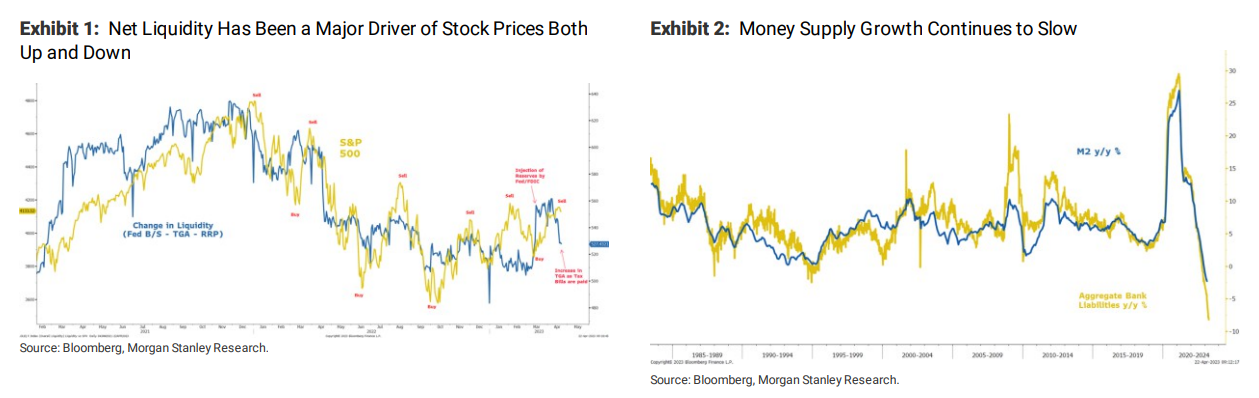
Over the past year,earnings forecasts have steadily fallen,and bottom up consensus EPS estimates for the S&P 500 now forecastno growth for 2023. Normally, this would elicit a more negative reaction from stock valuations as these numbers have come down. However, over the last 3reporting seasons, stocks have sold off into earnings season and then rallied on “better than feared” results. In short, stocks have de-rated lower going into earnings but then re-rated higher as companies jumped over the lower earnings expectations for the quarter. The process then repeats itself as the next quarter’s estimates are revised lower into reporting season. In our view, that pattern is changing this quarter for 2 main reasons: 1) 1Q23is now expected to be the rate of change trough. Based on current consensus forecasts, S&P 500 1Q23 EPS growth is expected to come in at -9% y/y while 2Q is expected to be better at -4%. Meanwhile, 2H23is expected to grow high single digits. With that kind of progression in expected EPS growth, it is not surprising that investors have been unwilling to sell into 1Q results as they believe this is as bad as it gets. We would agree with that conclusion if we believed the consensus forecasts. Unfortunately, our forecasts are more pessimistic,and we don’t expect the trough rate of change EPS growth quarter until 3Q or 4Q.2) the second reason why the broader markethas held up is due to increased liquidity from the Fed/FDIC to deal with last month’s bank events and deposit flight. While this injection of reserves is far from a traditional Quantitative Easing program, we do think it has provided some lift to the S&P 500 that would not have been there in the absence of these emergency actions (Exhibit 1). In short, the irony of the bank stress experienced in early March is that it has kept asset prices higher than they would have been otherwise (via this perception is reality liquidity dynamic)even though, in our view, there will be a negative impact on growth as capital availability is ultimately constrained (Exhibit 2).
The full text of this article is available to MacroBusiness subscribers
