
Monday’s housing finance data for February revealed that the total value of mortgage originations (excluding refinancings) fell another 0.9% to be sitting at their lowest level since September 2020:
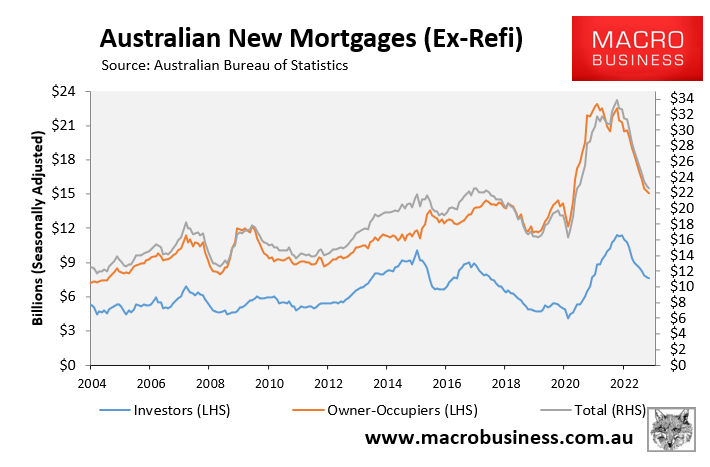
From its peak in January 2022, annual mortgage originations were down 33%, with owner-occupiers and investors falling by roughly equal amounts.
Normally, the collapse in mortgage originations would suggest falling house prices. This is because the overwhelming majority of homes are purchased using borrowed money.
Therefore, when the total value of new mortgage originations is falling, house prices generally do as well, as illustrated in the next chart plotting quarterly growth:
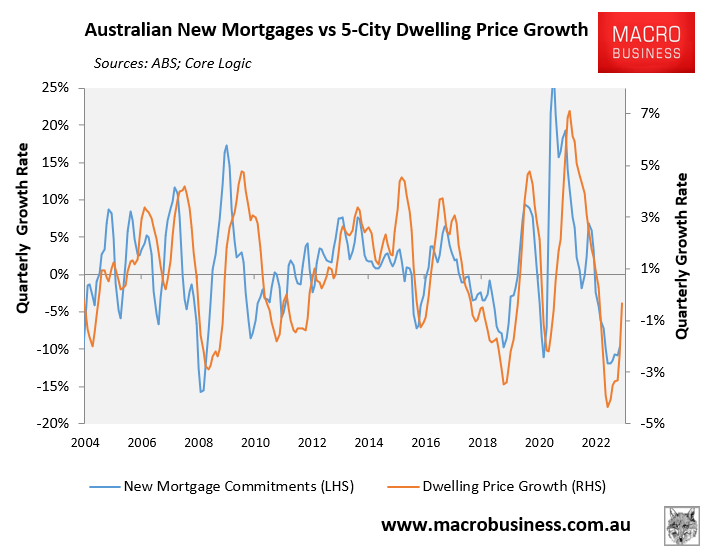
What makes the current house price rebound so unusual is that it has occurred without a similar rebound in mortgage originations.
While the quarterly growth in house prices and mortgage originations bottomed at the same time (i.e. September 2022), CoreLogic’s daily dwelling values index has rebounded sharply (from -4.4% to -0.3%) whereas mortgage growth has barely rebounded (from -11.9% to -9.6%).
It is also unusual that both series have experienced rebounds (in growth terms) despite two consecutive 0.25% interest rate hikes from the Reserve Bank of Australia in early February and early March.
These additional interest rate hikes have further reduced borrowing capacity, which would normally be associated with falling house prices and mortgage growth.
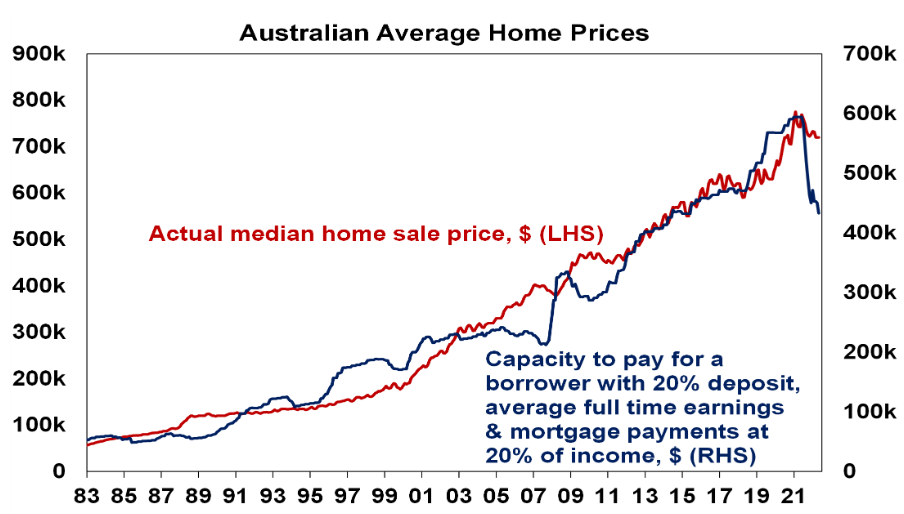
The most likely explanation for the divergence between interest rates, mortgage originations and house prices is that fewer buyers are chasing even fewer available listings, meaning the average price paid per sale has risen even though the overall value of mortgage originations continue to fall.
According to CoreLogic, “the flow of new listings has held at below average levels since September last year, which coincided with the initial loss of momentum in the downwards trend of housing values”:
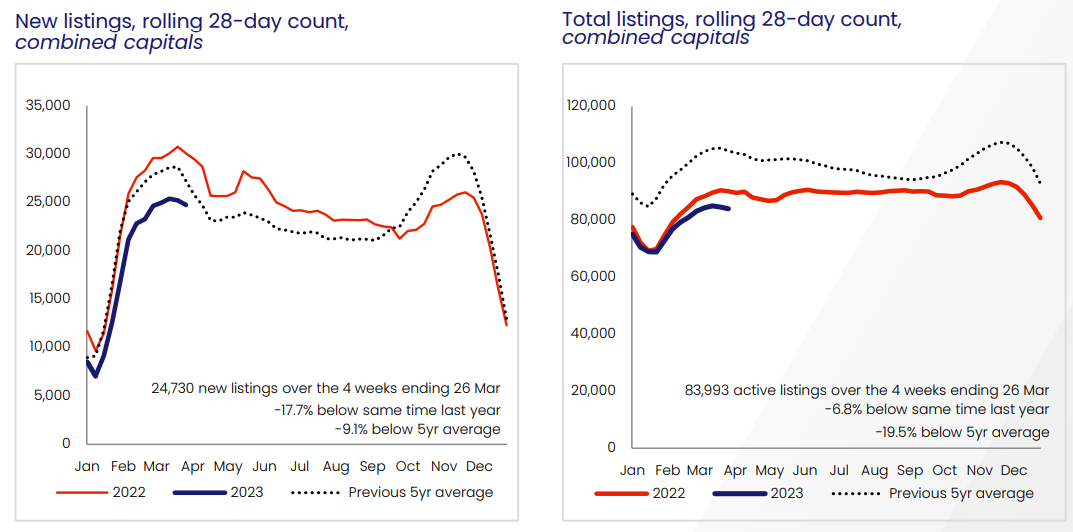
However, “amid low advertised supply, estimates for purchasing activity picked up through March, rising 10.4% over the month”.
“While the month-on-month lift is smaller than the usual seasonal uplift for this time of the year (the long term average is a lift of 11.1% between February and March), estimated sales over the month were the highest since May last year”.
“Purchasing activity has fallen but not as much as available supply”, CoreLogic said regarding its March results.
Over the next nine months, more than 600,000 mortgages will switch from ultra cheap fixed rates taken out over the pandemic to variable rates of around 6%:
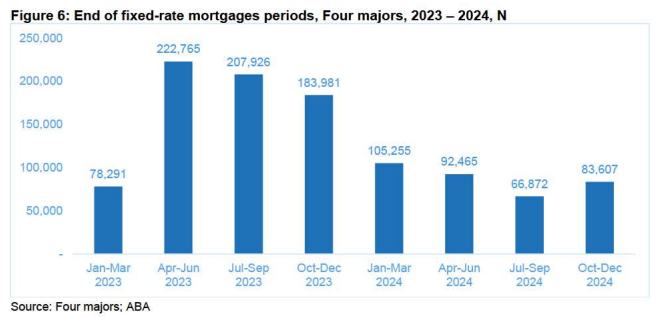
Accordingly, monetary conditions will continue to tighten even without further rate hikes from the RBA.
Therefore, it is still possible that the housing correction will reassert itself if the fixed rate “mortgage cliff” pushes large numbers of borrowers into default, resulting in significant numbers of forced sales.
