Westpac with the note.
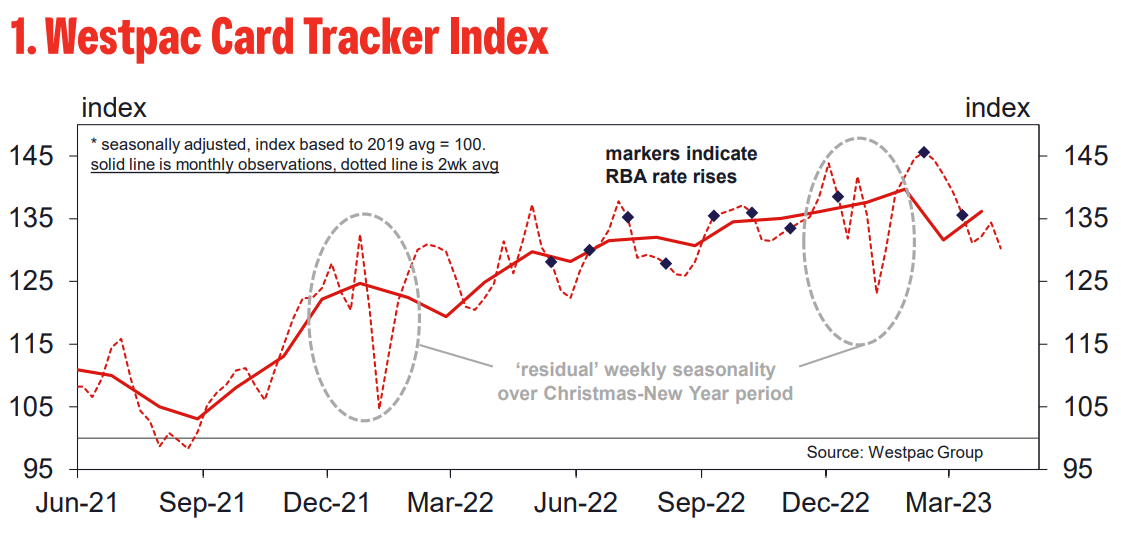
― The Westpac Card Tracker Index softened over the first two weeks of April, subdued underlying momentum compounded by disruptions from Easter public holidays. The Index dropped to 124.9 in the holiday-affected week ending April 8, the two-week average down 1.9pts vs late March.
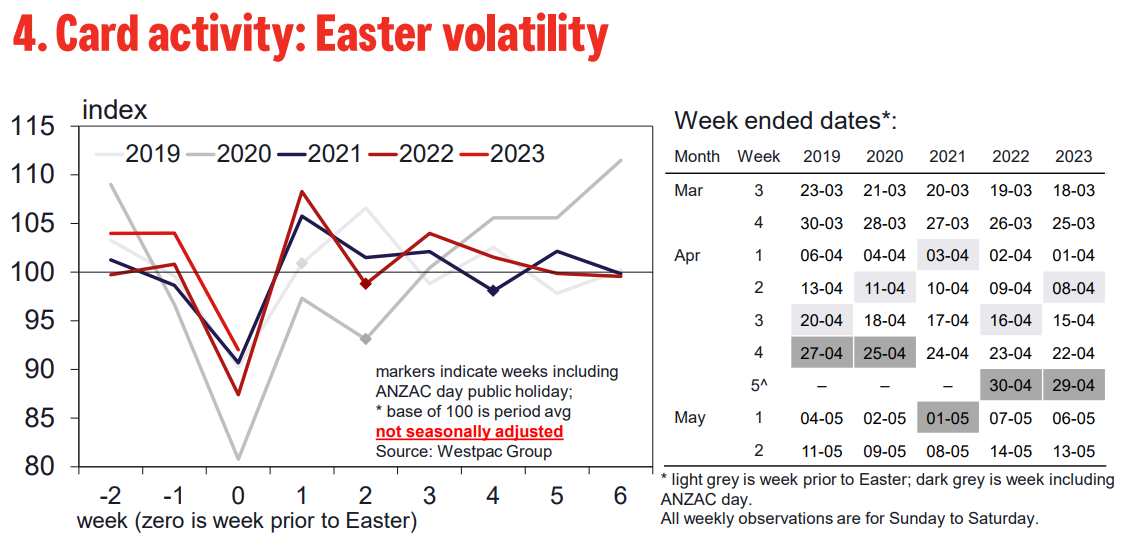
― Card activity typically shows a significant drop in the short week prior to Easter with an average fall of ~10% (excluding the COVIDimpacted read in 2020). As noted previously, our headline index is adjusted to remove regular monthly seasonal shifts but does not exclude large weekly seasonal moves. Easter-related shifts are particularly problematic due to shifts in timing and its proximity to school and ANZAC Day holidays. That said, the 11.5% dropoff in 2023 in non-seasonally adjusted terms looks to be a fairly standard decline overlaid with some slight additional softness.
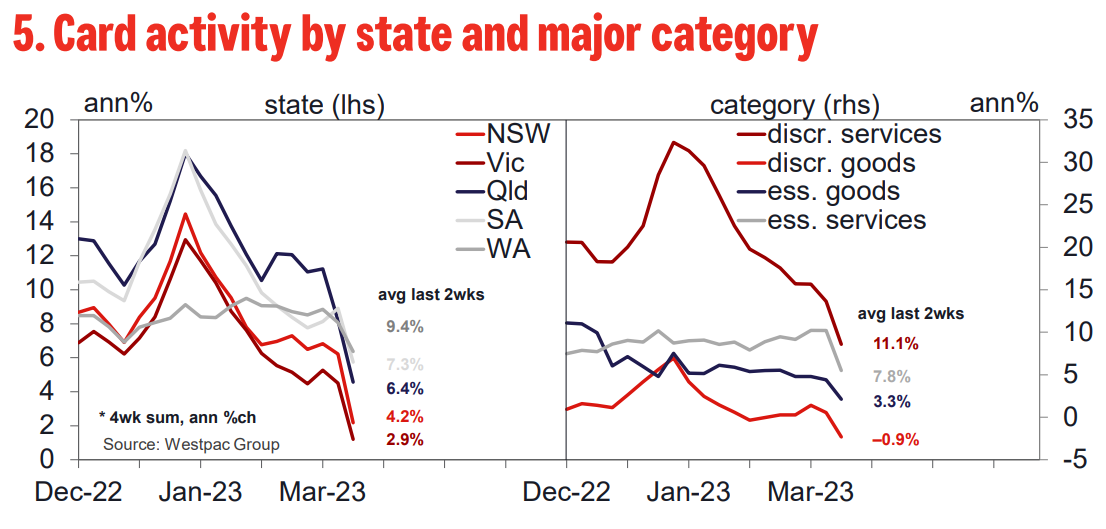
― Easter-related shifts are particularly problematic for interpreting the state and major category detail as the later timing of the holiday in 2022 means annual growth rates are skewed lower in the latest week and will be skewed higher in the week to come. Again, there are tentative signs of an underlying softening but we will need to see the post-Easter rebound before this can be confirmed and quantified.
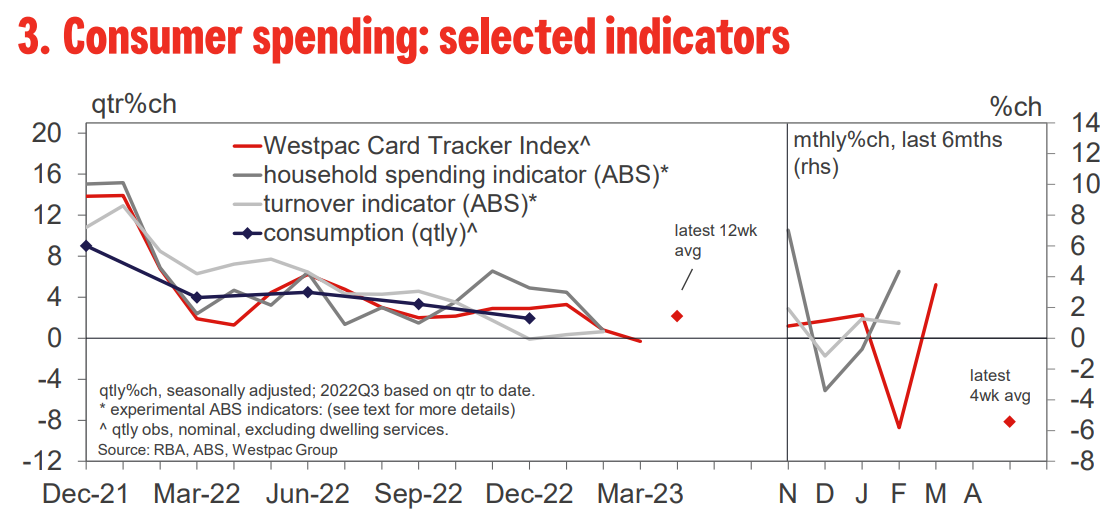
― While the pulse heading into Q2 is a little unclear, the evidence of a weak Q1 for the consumer is continuing to build. Card tracker figures for the quarter as a whole and a range of official indicators to Feb – including retail sales – now suggest spending stalled in nominal terms, a result that would imply a contraction in real terms. March ABS updates on retail sales, other spending indicators and inflation, due in coming weeks, could be decisive.