It appears the gas cartel may be getting some traction with Albo’s cowards though it’s hard to tell given the extremity of AFR propaganda:
Labor wants to extend its controversial price cap on east coast gas producers but faces pressure to dilute its heavy-handed “reasonable pricing” rules, amid warnings of a deteriorating investment climate that will freeze new supply.
The government will release its proposed mandatory code of conduct as early as Monday, ahead of a two-to-three-week consultation period, and sources say the government wants to extend the existing $12 per gigajoule cap on wholesale prices beyond its December expiry.
However, in a bid to ensure the intervention does not hamper investment in more gas exploration and production, the government is understood to be considering a mechanism that would allow for “exceptions and exemptions” from the price caps for gas producers that pump additional supply into the domestic market.
Credit Suisse energy analyst Saul Kavonic said that by making room for exemptions for new supply, the government was acknowledging that its gas price policy otherwise risked hampering gas supply.
And I thought that Credit Suisse was a disgraced and bankrupted rogue bank that no longer employed anybody. Silly me.
Why would Albo’s idiots exempt anybody? Any domestically supplied gas above $12Gj is not worth having.
Advertisement
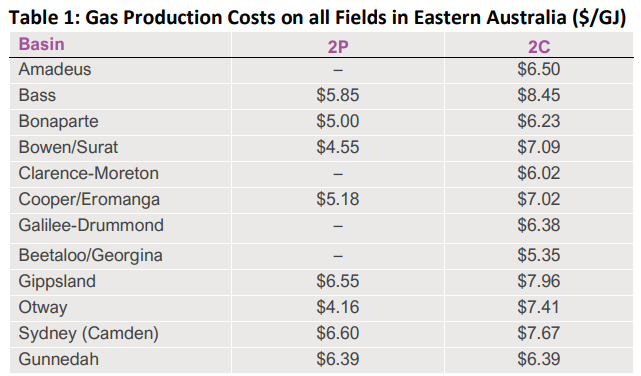
Nor are exceptions necessary to bring the supply given $12Gj makes a fortune. From the EEFA:
If the government listens to the cartel and its deadbeat whores then it deserves to go to the gallows.
Advertisement
A cartel refusing to supply energy is committing an act of war. Smash it with:
‘use it or or lose it’ laws;
the ADGSM lever;
massive export levies for domestic subsidies;
new laws to prosecute executives directly for carteling, or
nationalise.
East coast gas is a failed market. Pretending otherwise is treason and deserves the harshest possible sanction.
Advertisement
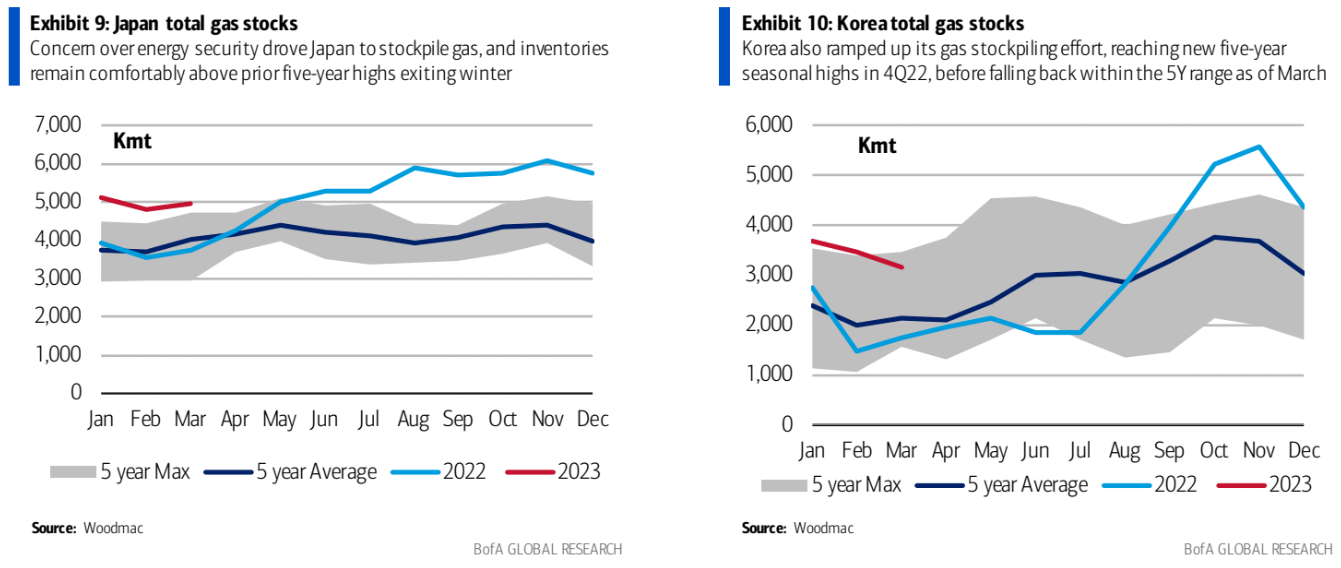
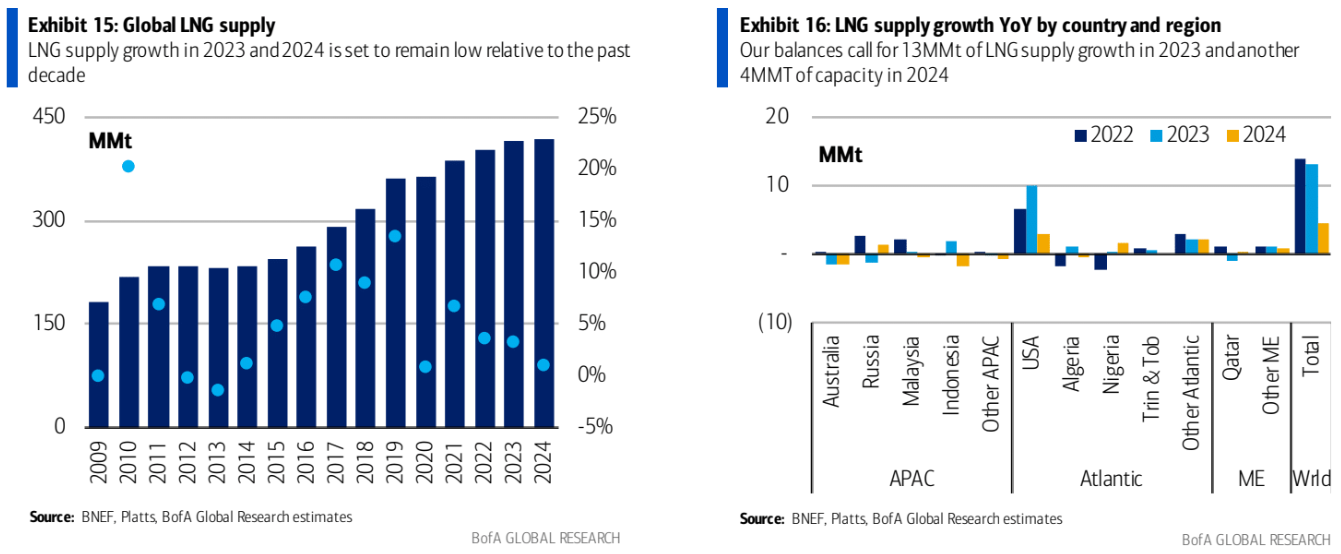
Remember, there is no shortage of gas. Only an excess of greed. BofA has more on the enormous global glut:
High global gas inventories are weighing on LNG prices…
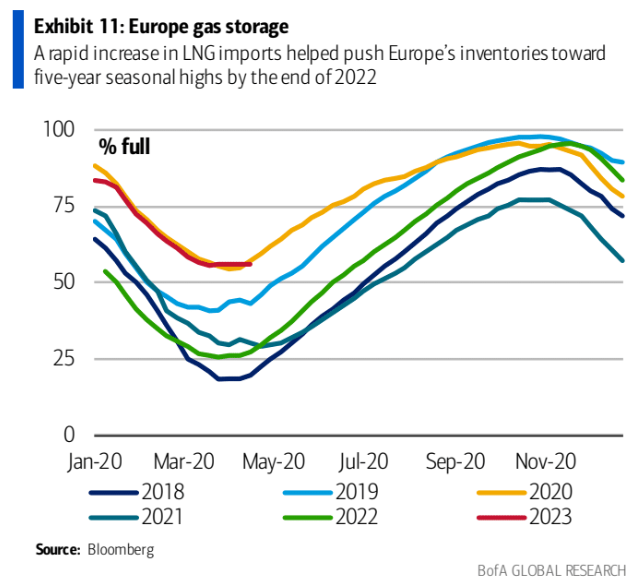
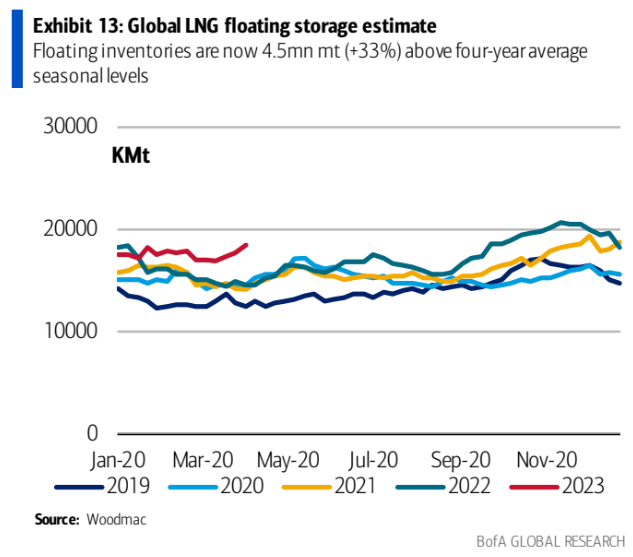
Global gas prices have collapsed in dramatic fashion since mid-2022 due to price-driven demand destruction and unseasonably warm winter weather, with TTF gas prices recently trading near €41/MWh or 88% below the August 2022 peak. Furthermore, China, Japan, and Korea’s near absence from the spot LNG market recently has kept prices tracking close to our€40/MWh bear case for 2023. The supply/demand imbalance is apparent in European, Asian,and floating storage levels, which are at or above five-year high seasonal highs, putting the market in a precarious spot ahead of summer build season. In Europe, storage is tracking near 2020 levels, leading to some concern that prices could follow 2020’s path, with spreads between global and US prices narrowing to close export arbs and shut LNG exports to prevent a global storage containment issue.
…which could entice Asian buyers, boost fuel switching
The good news for the global gas market is that LNG supply growth is slowing and is set to rise 13mn mt YoY in 2023 and 4mn mt in 2024, down from a five-year average rate of 22mn mt. The US should add 10mnmt in 2023 with the Freeport LNG restart, and Indonesia, Mozambique, and Norway will also be key sources of growth. In 2024, the USA, Russia, and Nigeria drive modest supply growth. With a sluggish supply outlook, demand will likely play a large role in dictating the path of prices this year. Europe upended the LNGmarket in 2022, boosting imports by 50% YoY and driving up LNG prices in the process. LNG became so expensive that gas-to-coal and gas-to-oil switching occurred in Europe, Asia, and elsewhere. Since then, gas prices have collapsed versus other fuels, making gas switching more economic for the power and industrial sectors. Even so, coal is unlikely to give up without a fight, which could drive both commodities lower in a competition for demand.
A few things must go right to avoid a summer 2020 redux
In 2022, Europe increased its LNG imports 44mn mtandAsiaand the Americas cut LNG imports by 22mn mt and 7MMT respectively. This year, we see Asian demand rebounding 7mn mtYoY led by more Chinese buying, while Japan’snuclear restarts drive LNG imports lower. Meanwhile, Europe’s LNG demand is set to rise 4mn mt. With inventories hurtling towarda 2020 repeat, several factors could improve the outlook. First, prices have only been trading at current levels for about two months, and demand can take time to respond to lower prices. Second, the shift to El Nino could bring a hotter summer to parts of Europe, boosting power demand. Third, warmer weather, coupled with light snowpack, could constrain hydro, while France’s nuclear could also continue to underperform due to extended downtime. Nonetheless, we remain cautious on prices due to risks of a deteriorating macro environment.
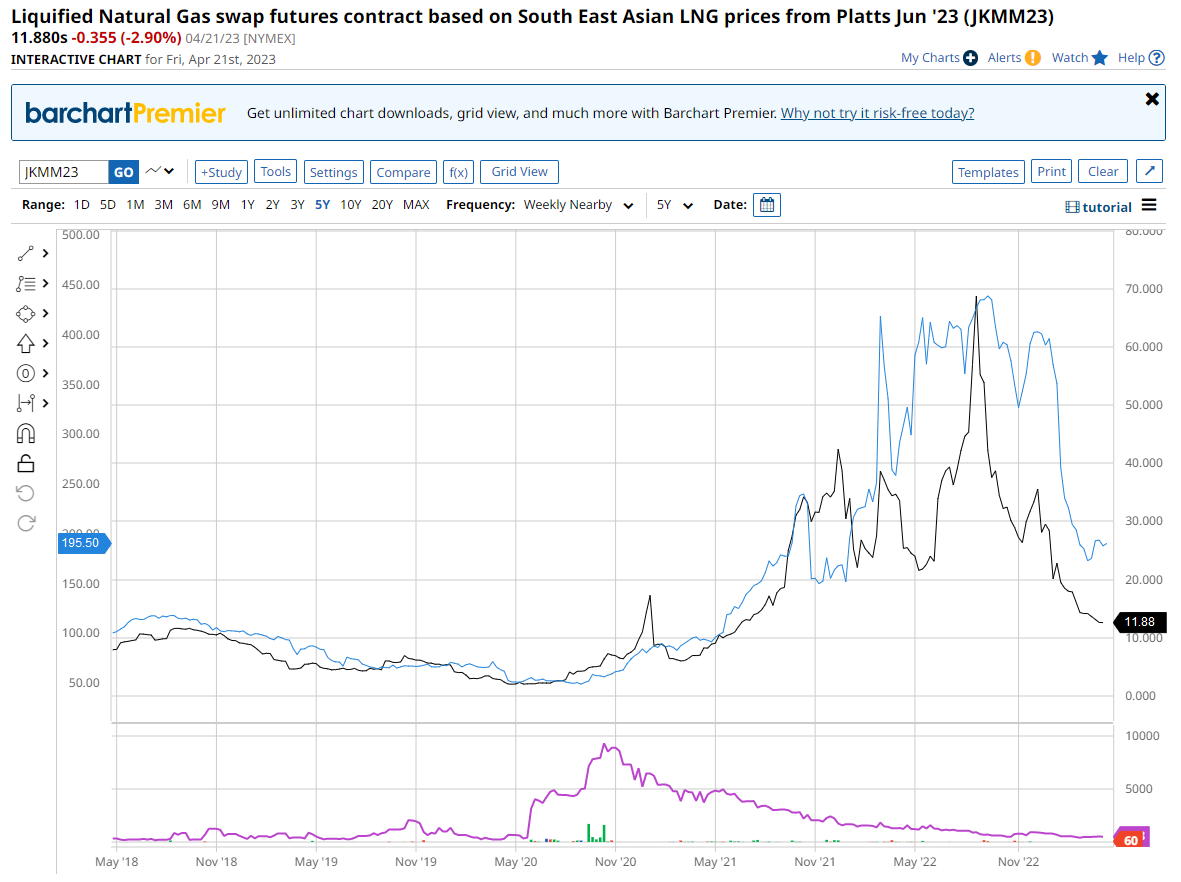
Prices are still far too high owing to fears of cold northern winter. Both commodities are going to halve yet:
Advertisement
Smash the gas cartel. Then smash it again. And keep on smashing it until it ceases to exist.
David Llewellyn-Smith is Chief Strategist at the MB Fund and MB Super. David is the founding publisher and editor of MacroBusiness and was the founding publisher and global economy editor of The Diplomat, the Asia Pacific's leading geo-politics and economics portal.
He is also a former gold trader and economic commentator at The Sydney Morning Herald, The Age, the ABC and Business Spectator. He is the co-author of The Great Crash of 2008 with Ross Garnaut and was the editor of the second Garnaut Climate Change Review.