
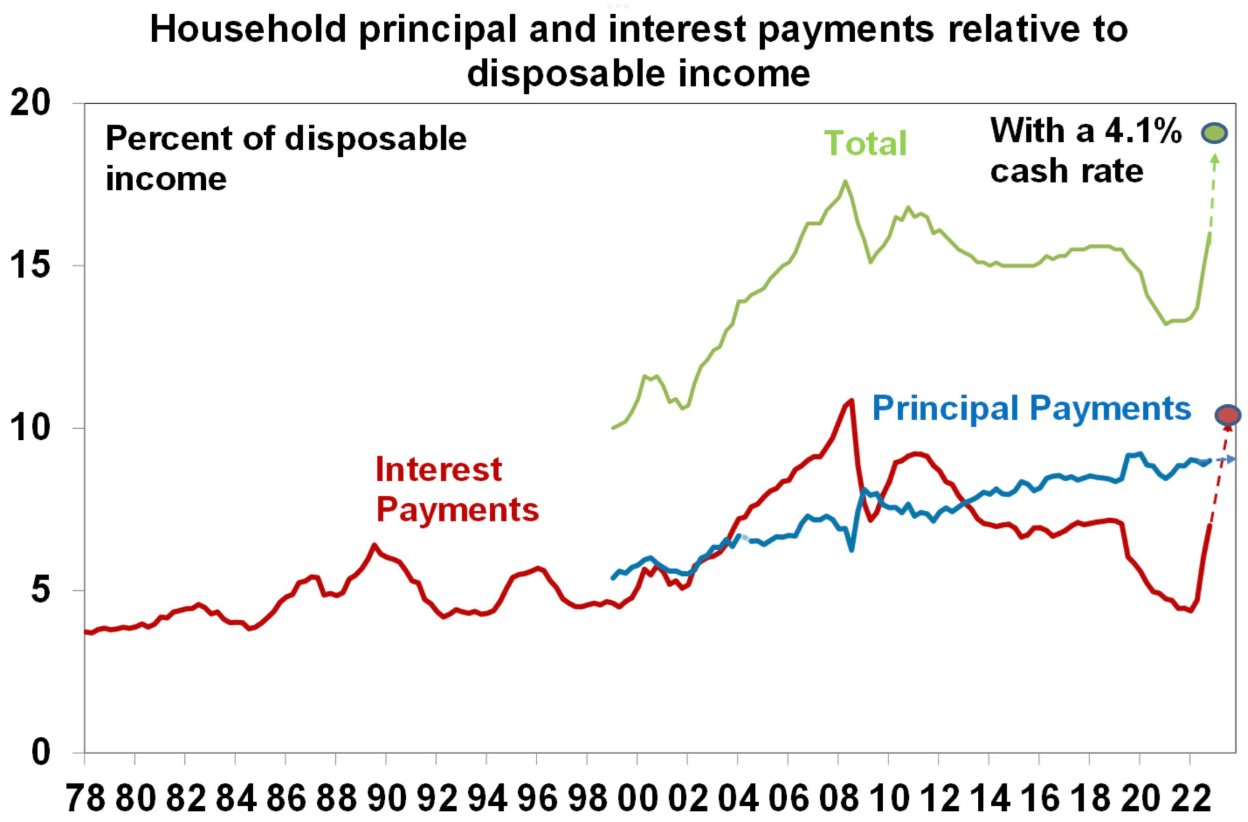
Last week, AMP Capital chief economist, Shane Oliver, published the below chart showing that household principal and interest debt repayments will hit a record high relative to disposable income if the Reserve Bank of Australia (RBA) lifts the official cash rate another 0.5%:
Now, Moody’s Investor Services has released research explaining how “low-income homeowners face significant challenges” from the RBA’s rate hikes.
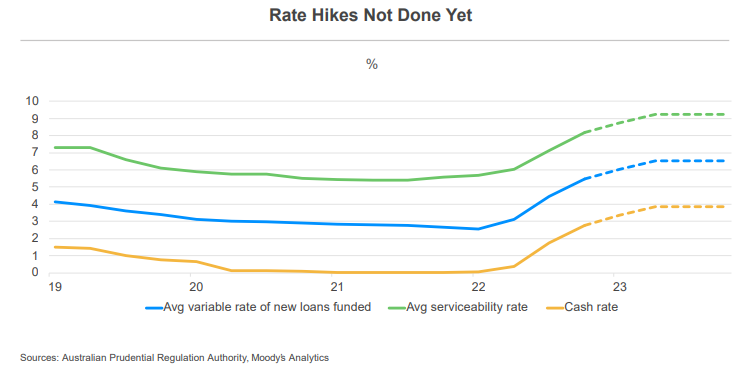
Moody’s notes that the RBA’s 350 basis points of tightening “have caught many off guard” by pushing rates above the mandated 3% serviceability test when mortgages were taken out before the first rate hike.
“And there’s more to come”, says Moody’s, which expects “interest rates to peak at 3.85% in April, lifting the average rate on new variable home loans to 6.5%”, from 2.5% at the start of the cycle:
Moreover, “there’s an extra 880,000 or so homeowners on fixed terms that will similarly feel the pain as their loans roll onto new terms this year”, according to Moody’s.
Low-income households in danger
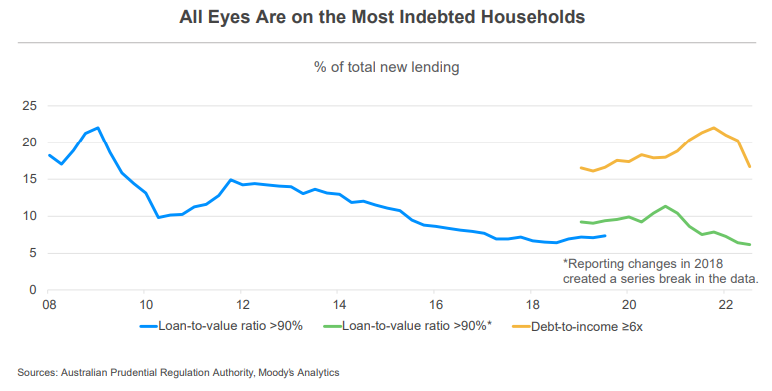
Moody’s notes that “the proportion of new loans with a debt-to-income ratio above six—generally considered a measure of high risk—rocketed” over the pandemic. And “as real incomes have since been eaten away by higher prices and rising mortgage repayments, these households are vulnerable”:
“Interest payments on mortgages last quarter were almost 5% of disposable income, up from a low of 2.1% in December 2021”, notes Moody’s.
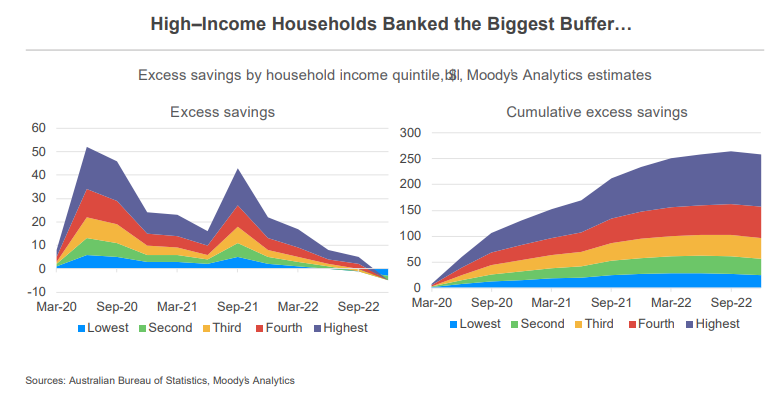
Meanwhile, lower-income households did not build-up the savings buffer that higher-income households did over the pandemic:
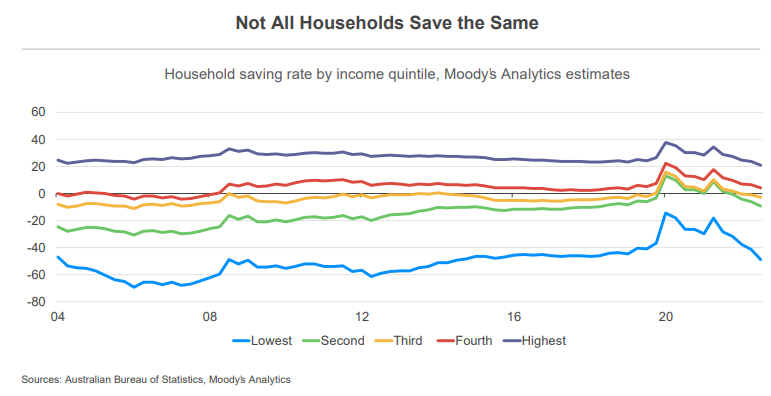
Moody’s estimates that “the lowest 20% of incomes account for less than 10% of excess savings” meaning they “have a substantially smaller bank of savings to draw on as mortgage repayments rise and higher prices chip away at real incomes”:
Indeed, the RBA in August “estimated that of owner-occupier households on variable rates from the lowest income quartile, around 4% had a prepayment buffer of less than a month and a debt-to-income ratio above six”.
“Meanwhile, almost one-in-seven low-income households had a buffer of less than three months and a debt-to-income ratio above four”.
Accordingly, lower-income mortgage holders are in a precarious position, according to Moody’s.
They “have far less wriggle room; they couldn’t build a savings buffer as grand as that of high-income households, and inflation is disproportionately eating away at what savings they might have”.
