The steepest interest rate hikes in Australia’s history have cratered demand for new homes, with the latest construction finance data from the Australian Bureau of Statistics (ABS) collapsing to its lowest level since the onset of the Global Financial Crisis in 2008:
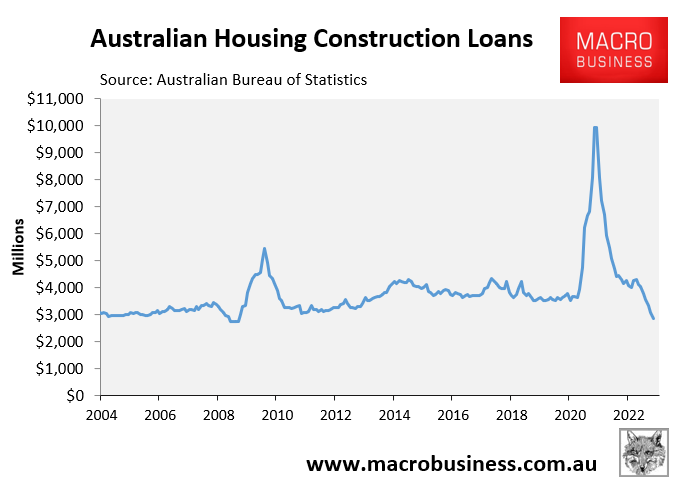
The slump in finance commitments has the Housing Industry Association (HIA) worried, with senior economist Tom Devitt bemoaning that “owner occupiers and investors, alike, continue to retreat from the market”, reflecting “the weight of interest rate increases which occurred in 2022, and before the RBA increased the rate again in February, with the promise of more rate increases to come”.
Devitt also warned that the situation facing home builders will worsen given “there are significant lags evident in this cycle and we are unlikely to see the bottom in this data until the second half of the year, at the earliest”.
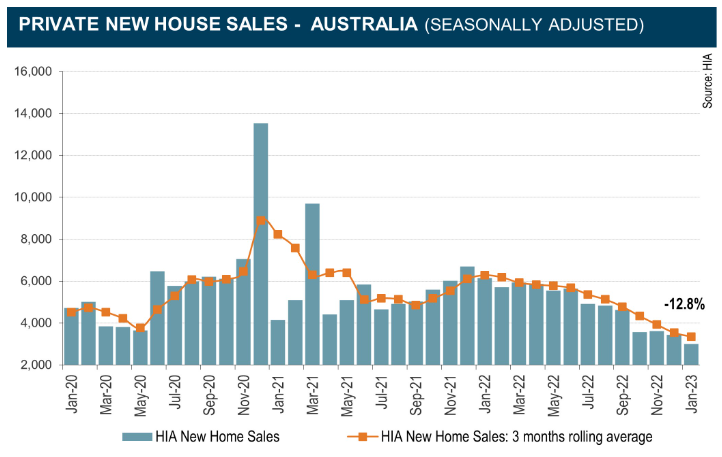
Other forward-looking indicators are equally dire, with the HIA’s new home sales series halving after the RBA commenced its rate hiking cycle:
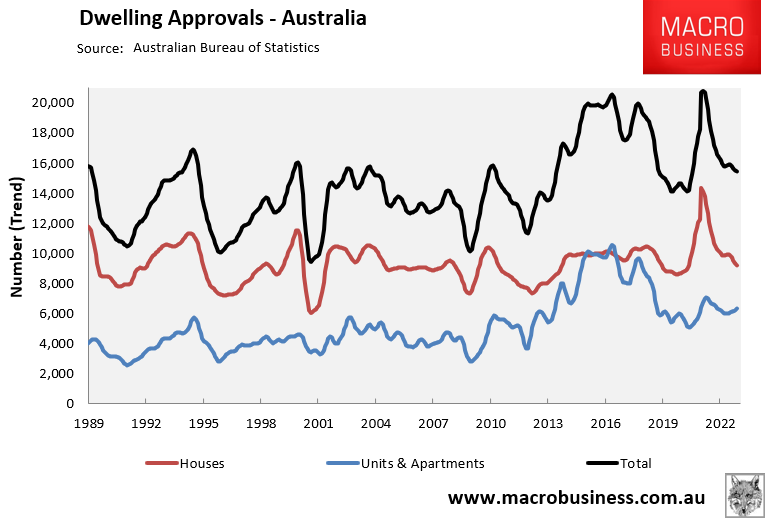
Dwelling approvals have also tanked:
The only positive for home builders is that there is a large pipeline of unfinished homes owing to the HomeBuilder stimulus and supply disruptions over the pandemic:
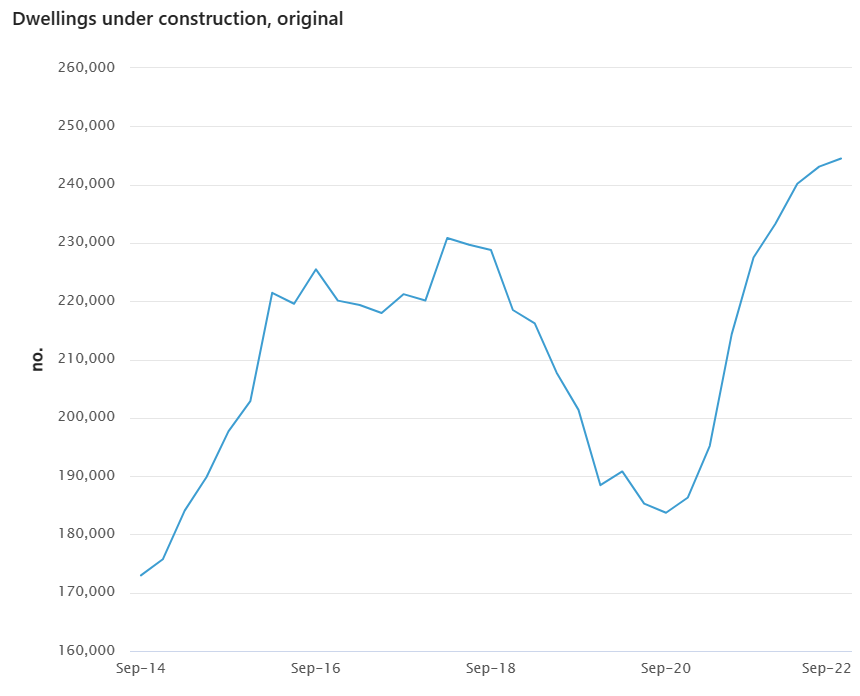
This pipeline will ensure that home builders remain busy for the remainder of 2023, even though many are going broke because of soaring input costs and fixed price contracts.
The real pain will arrive in 2024 once this pipeline is exhausted and there is little new work coming through, as suggested above.
That’s when we are likely to see a sharp contraction in construction activity, alongside more builder collapses.
The contraction in new home supply will also arrive at the same time as record numbers of migrants will land in Australia.
Lower housing supply in the face of soaring demand inevitably means worsening housing shortages, soaring rents, and increasing homelessness.
It is a disaster in the making.