
9% rates trap Aussies in mortgage prison
Last week’s 0.25% interest rate hike from the Reserve Bank of Australia (RBA) has slashed borrowing capacity by 30% and lifted variable mortgage repayments by around 50%, according to Canstar.
RateCity estimates that the maximum loan amount a family of four earning an average income can borrow has dropped to $674,400 following the RBA’s 10 consecutive rate hikes, down from $878,400 before rates started rising.
The minutes accompanying last week’s RBA monetary policy decision flagged further rate rises in the period ahead, although the timing is uncertain.
This means borrowing capacity will shrink even further.
The head of the Finance Brokers Association of Australia (FBAA), Peter White, warned that APRA’s 3% mortgage serviceability buffer means that borrowers should be prepared to be assessed at an average variable rate of close to 9%, which will trap many in ‘mortgage prison’.
This is the amount of interest an existing borrower must now prove they can afford to repay if refinancing to the average variable rate.
If they can’t afford repayments at this rate, they could be stuck paying their current rate even as the cash rate continues to climb.
“More borrowers are becoming ‘mortgage prisoners’, locked into a situation where they can’t access a better deal because they don’t meet the inflated assessment rate”, White said.
“Others may be forced into selling their homes because the excessive buffer rate holds them prisoner to their current lender as rates rise”.
The situation is exacerbated by the heavy house price falls experienced in Sydney, Brisbane and Melbourne, which will have driven many recent buyers into negative equity:
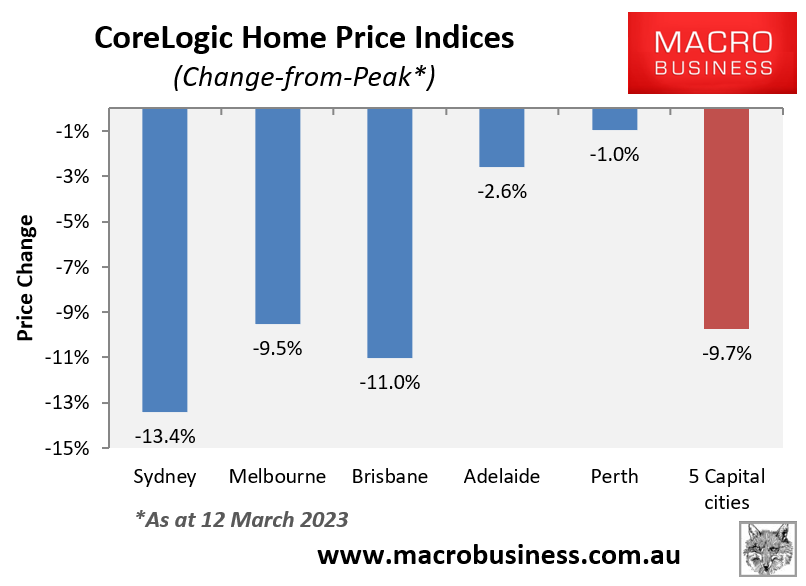
Soaring mortgage rates combined with falling house prices (negative equity) will impede mortgage holders’ ability to refinance because they will no longer satisfy borrower stress tests.
Many will, therefore, be trapped in expensive mortgages they can no longer afford.
The decline in home values will also push some loan-to-valuation ratios beyond the 80% threshold where new borrowers must pay mortgage insurance.
The situation is most worrying for the many thousands of first-time purchasers that bought near the peak at ultra-low fixed rates of around 2%:
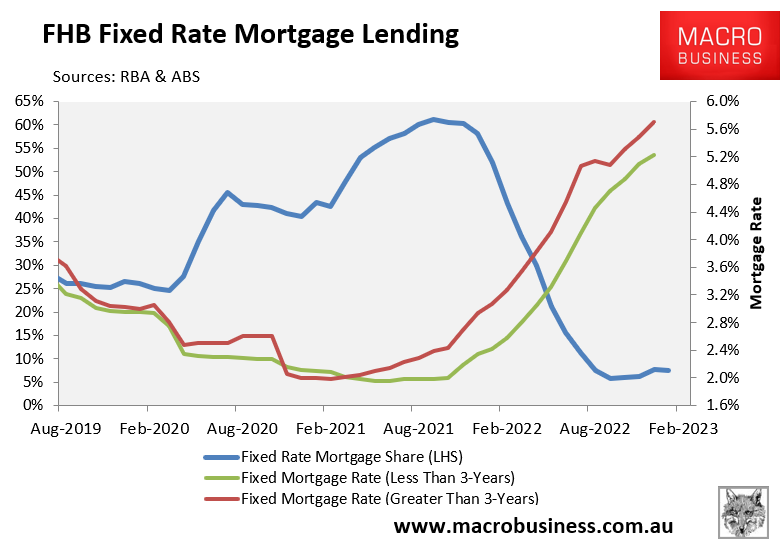
If the RBA continues to tighten, many of these recent purchasers face resetting to mortgage rates that are around triple current fixed levels and being unable to refinance to a better deal.
If you are looking to save thousands of dollars in mortgage repayments, try the MacroBusiness Compare n Save mortgage comparison tool. It takes less than a minute. And if you wish to refinance, the process is easy.
