You can almost smell the fear emanating from the Housing Industry Association (HIA), which is begging the Reserve Bank of Australia (RBA) not to lift the official cash rate further on Tuesday.
After the Australian Bureau of Statistics (ABS) on Friday revealed that loans for new construction “has fallen to its lowest level since 2012, even before the full impact of last year’s cash rate rises take hold”, HIA Chief Economist, Tim Reardon, has called for a pause.
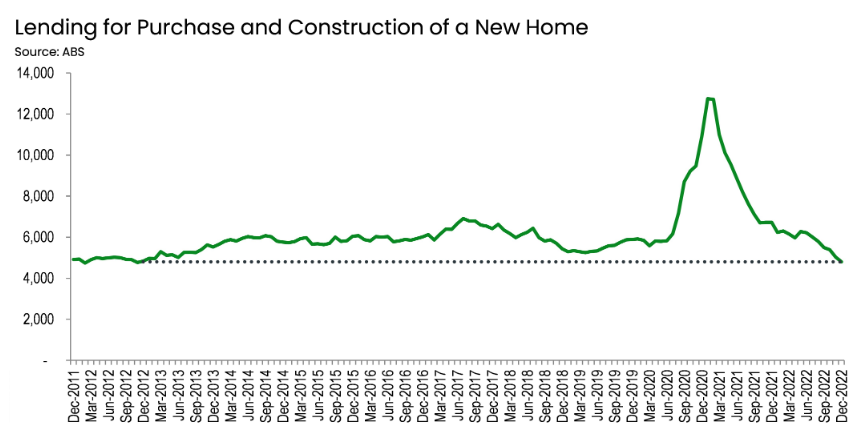
“There were just 4,797 loans issued for new housing, the lowest level since November 2012”, according to Reardon. “Lending for new homes is now down by 62.4% since its peak in January 2021″.
“It is concerning that this downturn to date doesn’t reflect the full impact of the RBA’s rate hiking cycle of 2022″, Reardon added, given “there are significant lags between a change in the cash rate and its impact on the economy”.
Accordingly, Reardon believes “the economy needs time to digest the full impact of interest rate hikes before the RBA considers further action”.
“Industry needs stability, and the RBA won’t achieve this by sending the housing sector through boom-and-bust cycles”, argues Reardon.
The good news for the HIA is that there is still a record pipeline of homes under construction (see below chart), courtesy of delays following the HomeBuilder stimulus. This pipeline alone should ensure home building activity remains strong through 2023.
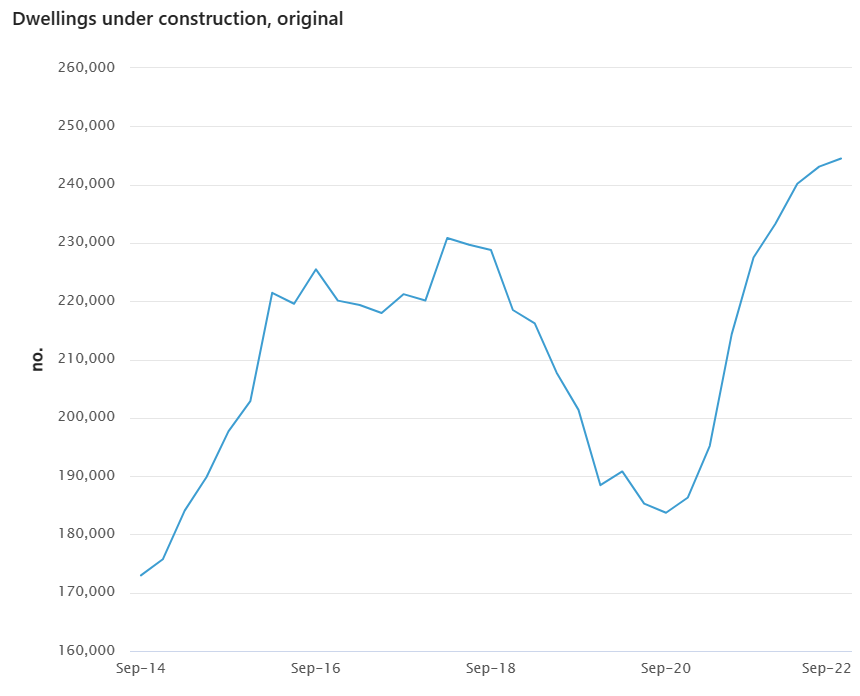
The bust will likely arrive in 2024 once this pipeline is exhausted. In addition to the slump in new home sales, dwelling approvals have also fallen sharply:
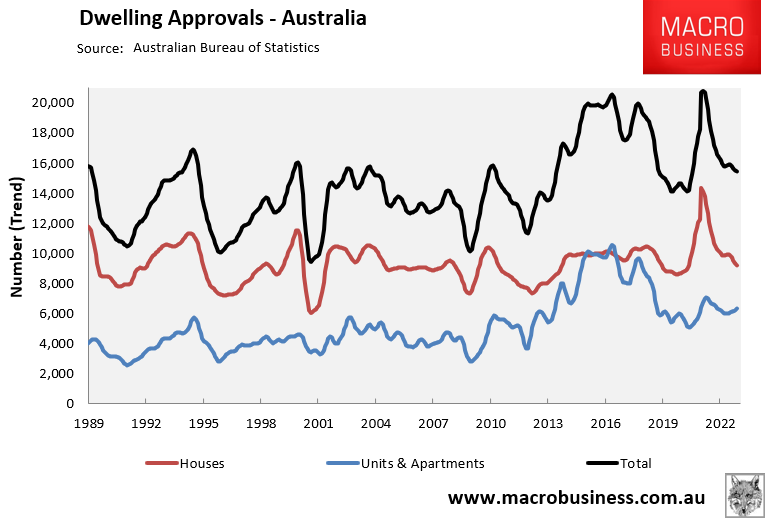
Thus, forward housing activity indicators look dire for 2024, which is concerning given Australia also faces record immigration inflows this year and the next.
Unless something changes, Australia is staring at an unprecedented housing shortage as demand via immigration easily outpaces supply.