
Westpac with the note.
The Westpac-Melbourne Institute Consumer Sentiment Index fell 6.9% from 84.3 in January to 78.5 in February.
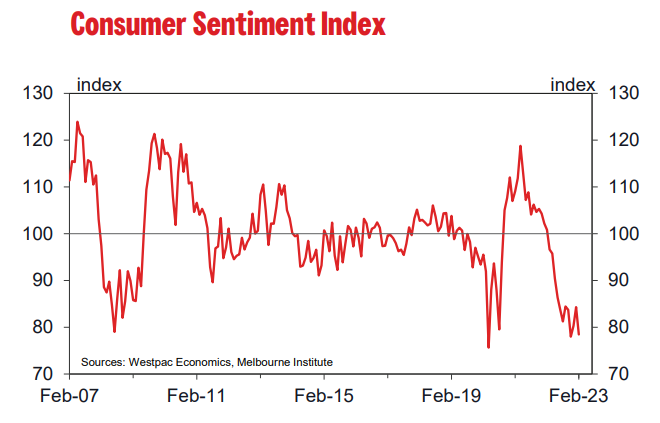
After a modest rally through the Christmas-New Year period, consumer confidence has fallen sharply to be back near the historic lows seen last November. Cost of living pressures and interest rate rises continue to weigh heavily. Hopes of some easing in both have been dashed by the strong December quarter CPI and the RBA’s resumption of its interest rate tightening cycle.
At 78.5, the latest Index read is a touch above the 78 read in November but below the low point of the GFC (79.0) and only slightly higher than when the COVID pandemic first hit in April 2020 (75.6). Prior to that, we need to go back to the deep recession in the early 1990s to find weaker Index readings.
The latest sentiment decline follows ABS figures released late last month showing consumer price inflation surged from 7.3% in September to 7.8% in December, taking Australia’s inflation to a 32-year high and putting it on a par with the very high rates seen in major developed countries abroad.
Interest rates were also a clear factor weighing on confidence in the month. The RBA raised the official cash rate by a further 0.25ppts at its February meeting, the announcement coming midway through the survey week. Sentiment amongst those surveyed before the decision showed a relatively steady 83.5 but sentiment amongst those surveyed after showed a steep fall to 74.8.
Given that the move was widely anticipated, the negative response likely reflects the clear signal from the RBA Governor that further increases can be expected in the months ahead.
Certainly, more consumers now expect substantial follow-on rate rises. Amongst those surveyed after the RBA decision, 80% expect rates to move higher over the next year with 53% expecting a rise of 1ppt or more – up from 76% and 48% respectively in the January survey.
The index components showed a particularly big deterioration in views on family finances, the near-term outlook for the economy and whether now is a good time to buy a major household item.
Most disturbing is the size of the hit to current finances. The ‘family finances vs a year ago’ sub-index dropped 8% in February, to just 62.1 – marking the weakest reading since the depths of the early-1990s recession. The index read amongst consumers with a mortgage was just 55.4, down 14.4% since January. These are amongst the bleakest responses on this question in the history of the survey, which goes back to the mid-1970s.
Consumers see no let-up in the year ahead. The ‘family finances, next 12 months’ sub-index recorded a 6.7% fall to 86.8. The mortgage belt again featured, with expectations for family finances in this sub-group dropping nearly 15% to just 78.9.
Consumers also expect 2023 to be a very challenging year for the economy, the ‘economic outlook, next 12 months’ sub-index falling 7.7% to 75.1. Expectations showed a particularly sharp deterioration following the RBA decision, falling 12% between pre- and post-RBA samples (from 82.1 to 70).
The medium to longer term economic outlook showed a much milder deterioration. The ‘economic outlook, next five years’ sub-index declined 2.8% to 90.3 to be in line with its December read and still well above previous cycle lows.
Attitudes towards major household purchases showed a particularly big fall to a very weak level. The ‘time to buy a major household item’ sub-index plunged 10.1% to 78, miles below the long run average of 126. Indeed, there are only three instances of weaker survey reads on this question: April 2008, when the RBA cash rate hit 7.25%; October 2008, at the height of the Global Financial Crisis; and in April 2020 when the COVID pandemic hit. This, and the very weak read on family finances vs a year ago, are a clear warning that consumers are poised to cut back sharply on spending.
Confidence around jobs remains the one stand-out positive in an otherwise bleak consumer landscape but even here there are again signs that confidence is getting rattled. The WestpacMelbourne Institute Unemployment Expectations Index jumped 10.6%, from 108 to 119.4 in February, marking an 18 month-high (recall that higher index reads mean more consumers expect unemployment to rise in the year ahead). While the index remains comfortably below the long run average of 129, it is again hinting at a sustained deterioration.
Around housing, buyer attitudes remain extremely negative. The ‘time to buy a dwelling’ index fell 5.6% to 73.9, dipping below the 75-80 range that has prevailed since March last year, to a new postGFC low, down 44% from the more recent peak in late 2020.
House price expectations remain soft but are still showing a surprising degree of resilience. The Westpac Melbourne Institute House Price Expectations Index dipped 1.4% to 102.9 in November but remained in ‘net positive’ territory (recall that an index level above 100 indicates more respondents expect prices to increase than decline over the next 12 months). It is also well above previous cycle lows. The contrast between pre- and postRBA responses is stark, with an index read of 117.2 amongst those surveyed prior to the February rate hike falling to just 92.7 amongst those surveyed after the decision. That in turn suggests there is a low degree of ‘conviction’ to the consumer view on house prices.
The Reserve Bank Board next meets on March 7. We expect the Board to raise the cash rate by a further 0.25ppts to 3.60%, pausing in April before a final 0.25ppt increase to 3.85% in May. Inflation remains far too high in Australia and threatens to remain high for an extended period, leaving the RBA with no option but to continue tightening policy until demand shows clear signs of slowing back in line with stretched capacity.
The consumer sentiment survey continues to give a very clear warning that the pressures bearing down on the consumer are becoming intense. While spending has held up relatively well t date, we expect an abrupt slowdown to show through in coming months. Alongside evidence of some cooling in inflation – both here and abroad – and an easing in labour market pressures, that should set the scene for the RBA to end its policy tightening cycle around mid-year.
