The Housing Industry Association (HIA) has released data on new home sales, which shows that sales volumes have been cut in half by the Reserve Bank of Australia’s (RBA) aggressive interest rate hikes:
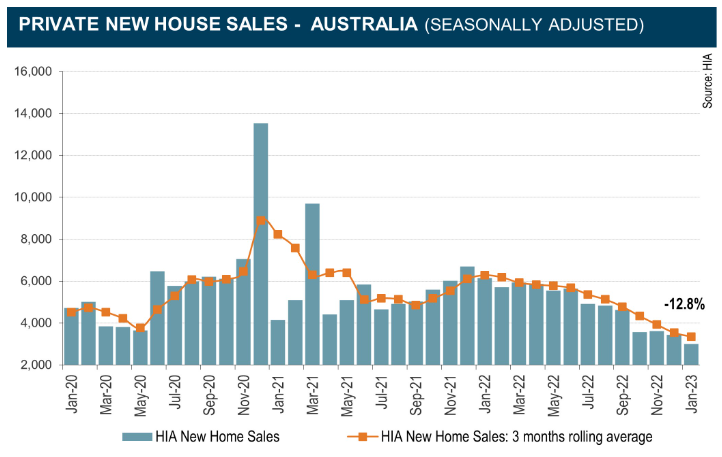
HIA’s Chief Economist, Tim Reardon, noted that “sales of new homes fell again in January, down by 12.8% for the month, leaving sales in the previous three months a remarkable 46.7% lower than in the previous year”.
“There is no indication that the market has reached the bottom of this cycle with sales falling in all states. A further increase in the cash rate in February is likely to see sales fall further”, warned Reardon.
The result comes in the wake of the latest ABS housing finance data, which showed that loans for new construction have fallen to their lowest level since 2012:
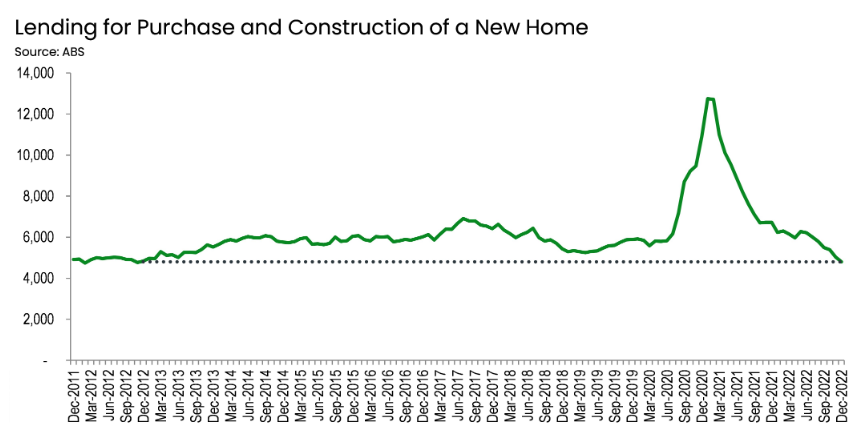
Accordingly, Tim Reardon has begged the RBA to stop hiking rates, claiming “the RBA doesn’t need to crush the economy in order slow inflation”.
“There are long lags in this cycle given the large volume of building work underway which will obscure the impact of the rate rises on the wider economy”.
“There is a risk that once the contraction in home building occurs, and slows activity across the rest of the economy, that it will prove difficult to stop”, Reardon warned.
The only positive is that there is a record pipeline of homes under construction (see below ABS chart), thanks to delays following the HomeBuilder stimulus. This pipeline should ensure home building activity remains strong through 2023:
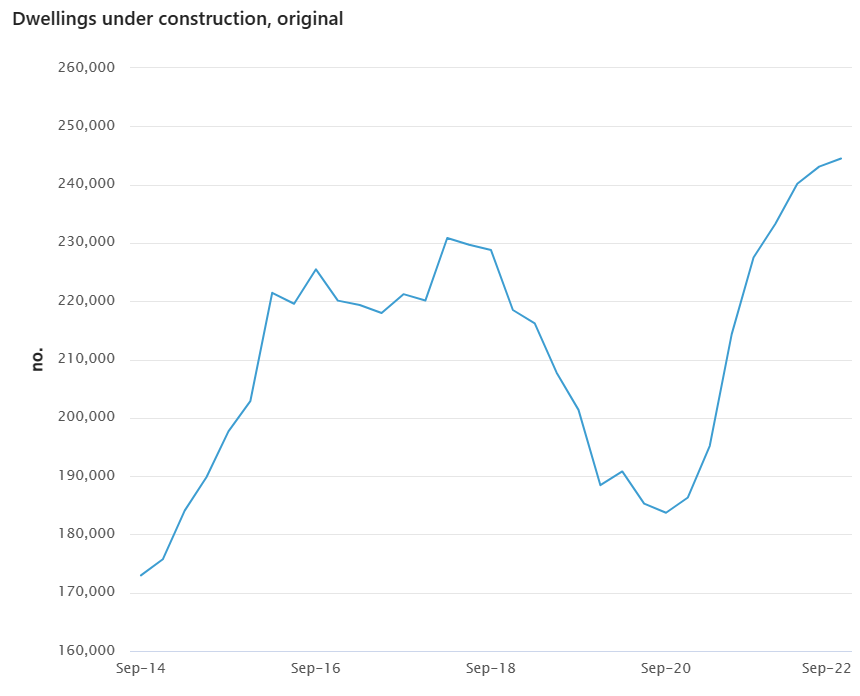
Even so, there have been a wave of building company collapses over the past year owing to the fixed price contracts entered into over the pandemic being exceeded by ballooning costs.
Just this week, luxury apartment builder EQ Constructions became the latest big builder to collapse, owing between $40 million and $50million to between 400 and 500 creditors.
It was the second construction company to enter administration this month after Victorian-based Delco Building Group appointed liquidators on 2 February.
Next year is looking especially worrying for the industry once the building pipeline is exhausted.
In addition to the collapse in new home sales and construction loans, dwelling approvals have also fallen sharply:
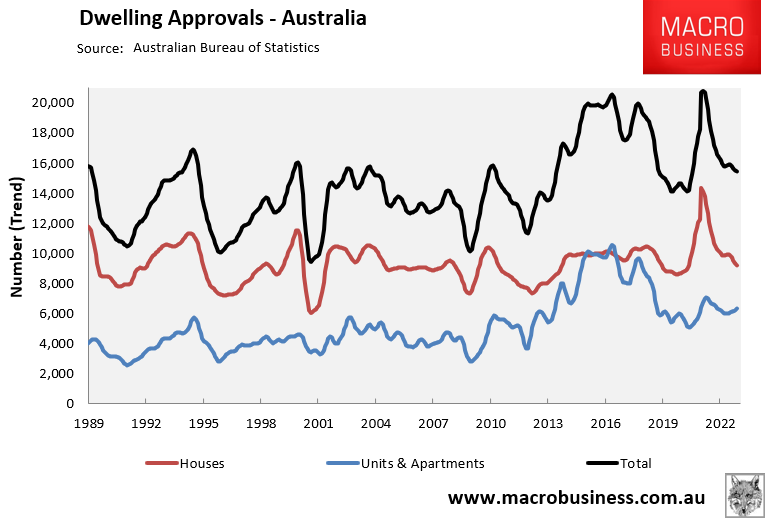
Therefore, forward housing activity indicators look dire for 2024.
This is concerning given Australia faces record immigration inflows this year and the next.
Unless the situation changes, Australians are facing an unprecedented housing (rental) shortage as demand through immigration easily outpaces supply.