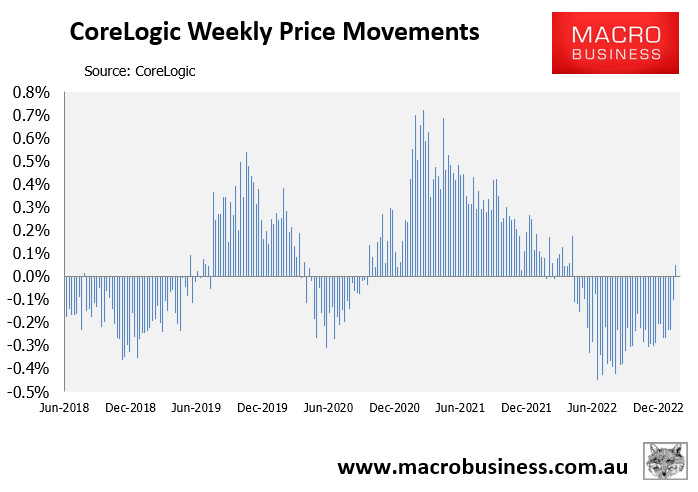
CoreLogic’s daily dwelling values index, which tracks price changes across the five major capital city markets, rose by 0.05% in the week ended 16 February.
This was the first weekly increase in the index since early May 2022 just before the RBA’s first interest rate hike:
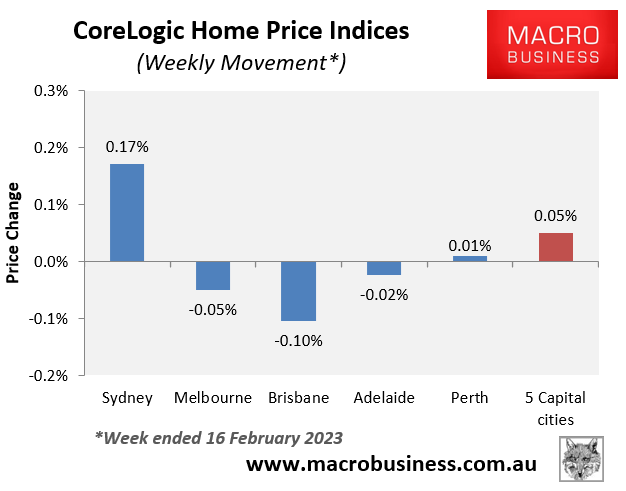
The weekly increase was driven by Sydney, where values increased by 0.17%, offsetting losses across Melbourne (-0.05%) and Brisbane (-0.10%):
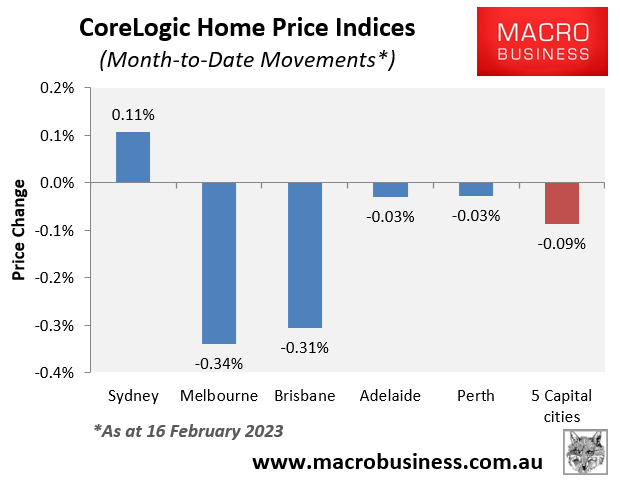
So far in February, dwelling values have fallen 0.09% at the 5-city aggregate level. Sydney (+0.11%) has recorded an increase in values, whereas the other four major capitals have posted losses:
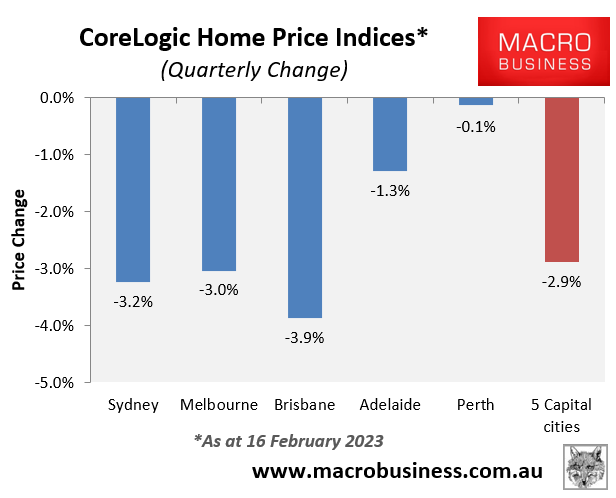
The quarterly rate of decline has moderated to 2.9% at the 5-city aggregate level, led by the three largest capitals:
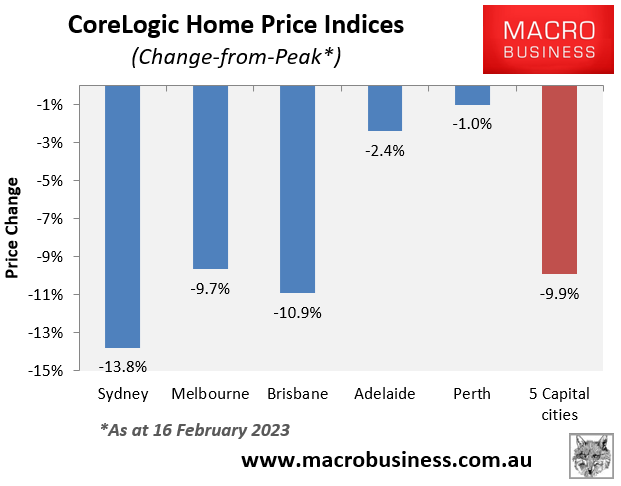
Finally, home values are now down 9.9% at the 5-city aggregate level, again led by the three largest capitals:
In my opinion, the weekly rebound in home values is a dead cat bounce and falls will soon resume.
The reason is simple: last week’s 0.25% rate hike from the RBA will not be reflected in the above data. The RBA also indicated in its Monetary Policy Statement that it will increase rates further in the months ahead.
These rate hikes will reduce borrowing capacity and, therefore, cause further falls in home values.
KPMG also estimated this week that there are around 800,000 fixed rate borrowers that will reset to variable rates this year. And a borrower with an average mortgage of $600,000 will face a $16,500 increase in their annual repayments once this switching occurs.
Therefore, there is also the clear and present danger of a sharp increase in forced sales, which could send prices even lower.