
Deutsche with the note.
In the first 18 months after the COVID outbreak, equities practically doubled up in value. This happened in the environment of low inflation and unprecedented fiscal and monetary stimulus. 2022 was the year of atonement: Equities recorded a 20+%drawdown, which in nominal terms appears as a small correction compared to the previous 100% rise. However, when accounting for (the aggressive rise in) inflation,this decline looks much more dramatic: In real terms, equities are now close to pre-covid levels – the effects of inflation and rate hikes wiped out practically all real gains created by the stimulus.
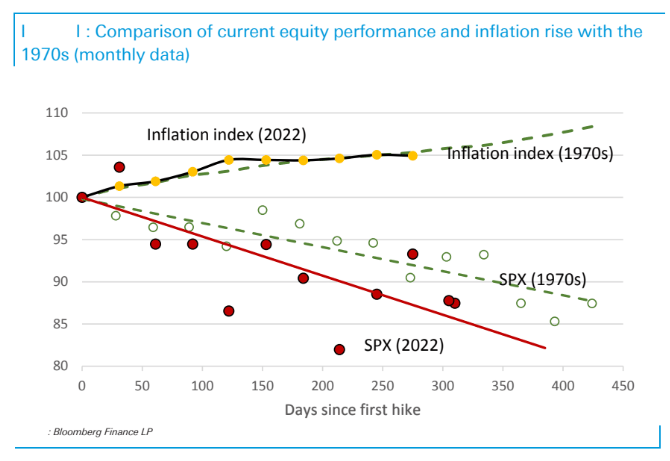
So, how do we benchmark current monetary policy relative to the past episodes of rising inflation, and how extreme the recent Fed hikes appear when viewed in a broader metric? The first logical step in that direction is to compare the current cycle with the Volcker’s Fed of the late 1970s. In many ways, the last 12 months of equity and inflation trajectories resemble the first year of rate hikes in 1977. When put side to side with each other, the extreme nature of the current cycle becomes visible both in nominal and inflation adjusted terms. We organize this in the Figure by displaying the trajectories of both inflation and S&P prices (indexed to the time of the beginning of each cycle) as a function of time from the first hike. We note that,while inflation trajectories in both cycles are practically coincident, the relative drawdown in 2022 is even more severe than in the late 1970s.
The full text of this article is available to MacroBusiness subscribers
