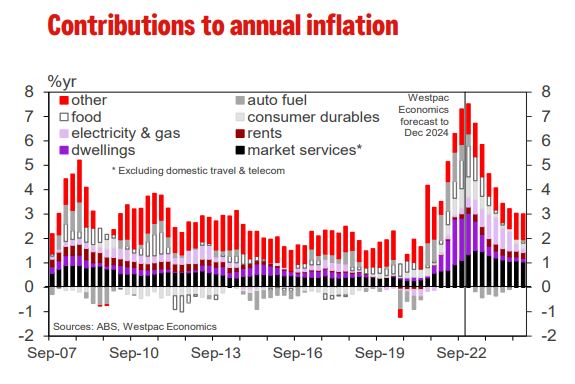
The December 2022 quarter CPI print from the ABS is due next week and Westpac opines that inflation in Australia peaked at a high of 7.4% in the September quarter. I am still hopeful that we will not see such large impacts from energy, assuming Albo bashes the cartel into shape.
• Westpac is forecasting 1.5% rise in the September quarter boosting the annual pace 0.1ppt to 7.4% which is our forecast peak in the annual pace of inflation for the current cycle.
• We are forecasting the annual pace of headline inflation to ease back to 3.7%yr by end 2023.
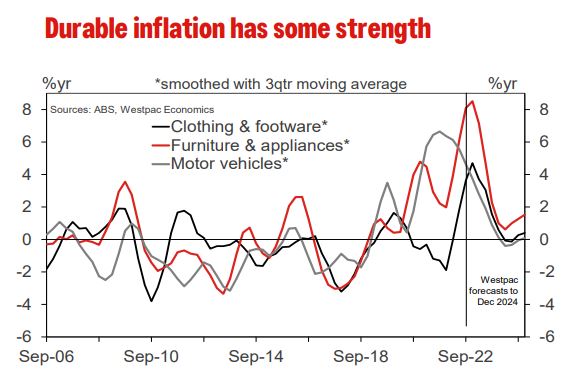
• The reasons behind the step down from 1.8%qtr print in Q3 are the ongoing moderation in pace of price increases for food, clothing& footwear, new dwellings and household contents & services.
• The Trimmed Mean is forecast to lift 1.6% in December, a moderation from the 1.8% gain in September which we are forecasting to be the largest quarterly rise this cycle.
• The annual pace for the Trimmed Mean is set to lift to 6.6%yr, from 6.1%yr in September, which again is our forecast peak in core inflation. We are forecasting core inflation to moderate to 3.4%yr by end 2023.
• The Monthly CPI Indicator is a helpful guide to the components of the CPI so we have use the data to November to fine tune our CPI forecasts.
• An important note: electricity prices are measured in the last month of each quarter and so the Monthly CPI Indicator is not able to provide an update on electricity prices before the release of the Quarterly CPI (when the last month of the\ quarter Indicator is released). For more information on the Monthly CPI Indicator, and what is does and does not provide in regards to the quarterly CPI, please see “Australian Monthly CPI Indicator First Release”.
• While the energy rebates in NSW and Qld are likely to provide some offset the Victoria rebates will have no impact on the CPI as they are provided as a direct cash payment rather than a bill reduction. In addition, we are expecting a solid bounce back in Perth electricity prices following the 84% decline in the September quarter.
• Dwelling price in the Monthly Indicator continue to moderate far more quickly than we thought they would resulting in a downward revision to our inflation profile.
• The key factors in our forecasts are: ongoing robust gains in food prices, rising fuel prices due to the increase in fuel excise, and a bounce back in holiday travel prices.