
It appears Marko Kolanovic has seen the MB Fund light! I find Marko more a trend follower than a setter but he’s usually in time for gains. That said, he made a good call on the China bottom last year.
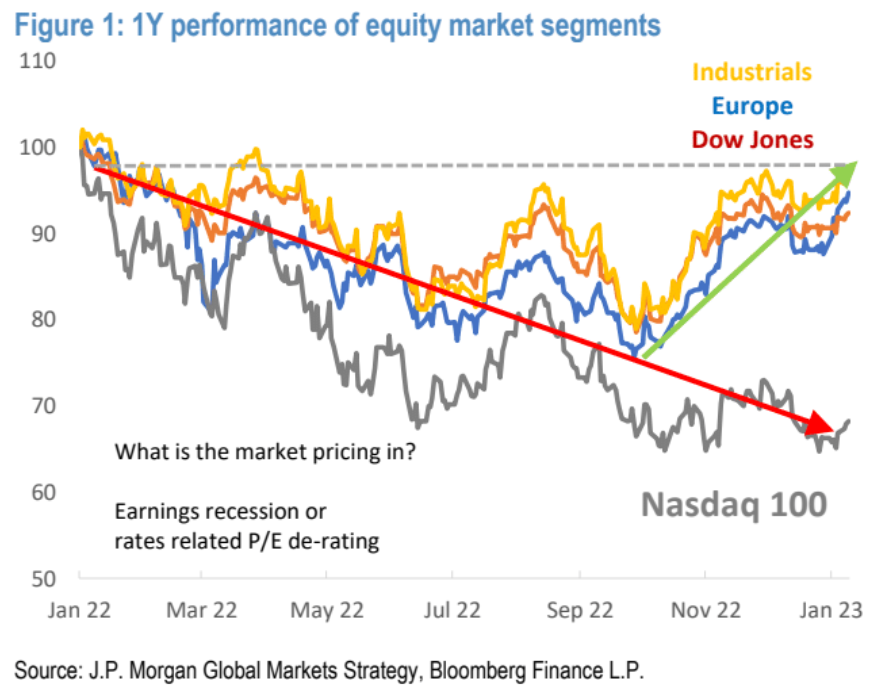
In our December publication (here), we turned outright negative on global equities. The recent weakening of economic data (e.g. ISM, industrial production, regional surveys, retail sales, etc.) and anticipated decline in earnings expectations are pointing to markets that are likely to move lower in our view. Economic slowdown and weakening corporate fundamentals are happening in an environment where interest rates are very high (Fed Funds is at its highest level since 2007), rising, and likely to stay high as stated by the Fed on several occasions. Whether the terminal rate is higher or lower by a few hikes at this point does not matter in our view, given the absolute level of rates and shock that was introduced to the system in the second half last year. Layoffs are starting to happen, and, given margin pressures, they are likely to accelerate. In the backdrop of these negative developments, markets have been fairly resilient and, in many
segments, moved significantly higher this year. Does that mean that recession was priced in, positioning was sufficiently low, or something else?
Before we address the question of recession, we note that indeed recent flows have been positive – primarily driven by systematic inflows on account of declining volatility (e.g. VIX sub-20). Volatility significantly declined in December, helped by low trading activity and hedging of long option positions (such as put spread collars and short calls). In Europe, likely misplaced optimism caused trend following programs to reverse positions from fully short to long. Along the way, many fundamental investors also covered their short positions, despite their negative fundamental outlook. Also, there is a January effect of new 401(k) allocations, rotation from growth to value, as well as increased risk positions by long only funds.
The full text of this article is available to MacroBusiness subscribers
