

The Australian dollar has been resilient so far against a resurgent USD, starting off 2023 by staying within a trend channel that began in mid November, when the initial thinkings of the risk complex that the Fed maybe nearly done with rate rises started to coalesce:
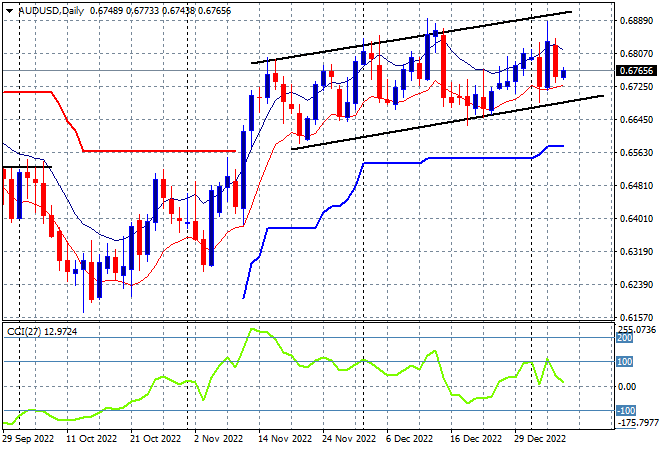
We’ve seen some moderation of this short term trend in recent days as more hawkish views are becoming prevalent, with the Aussie dollar looking to potentially break below the 67 cent level if tonight’s US jobs report – aka the non-farm payrolls – is better than expected, forcing the Fed’s hand to put more Americans out of work to “solve” the inflation problem.
But its against the Kiwi where its shining bright after a disastrous 2022:
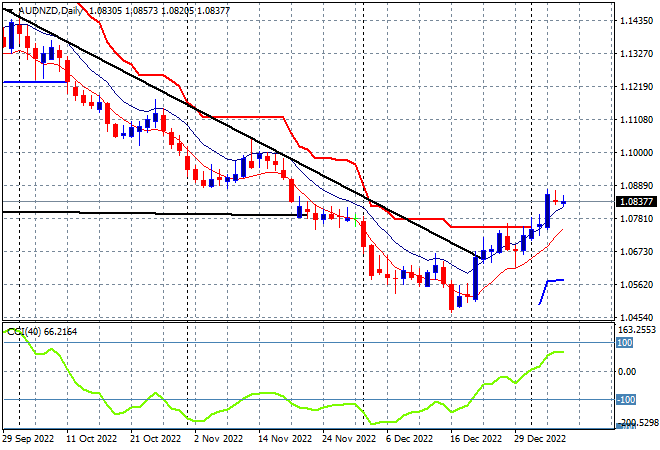
After bottoming out near the 1.04 handle, the Aussie/Kiwi cross has seen a breakout of the 2022 downtrend to get back up towards the 1.09 level, taking it back to the multiyear support line that was briefly breached (bottom black horizontal line on the daily chart).
The main reason is the divergent fortunes in the Australian and New Zealand economy, with the latter supposedly more exposed to the China COVID crisis. From Newshub:
“Although we were already expecting recession across the world in 2023, this recession could go longer and stronger because of how weak the Chinese economy is starting from,” Infometrics Principal Economist Brad Olsen said.
Olsen said the result means New Zealand’s recession could be worse than forecast. “We could see a harder economic hit in New Zealand, and also across wider Asia Pacific in the early stages of this year,” Olsen said.
New Zealand imports more than $16 billion of goods and services from China, so with pandemic pressure on their supply chains and manufacturing, our cost of living is likely to keep rising.
Last year was tough for households and businesses as the cost of living crisis continued to bite, with costs steadily rising partly because of low unemployment and staffing shortages and partly because of high inflation. Annual inflation skyrocketed last year from 4.9 percent in the September 2021 quarter compared to a whopping 7.2 percent in the same quarter this year.
But those fears have grown again when the Reserve Bank (RBNZ) hiked the Official Cash Rate (OCR) by 75 basis points in November – the largest-ever rise – to increase interest rates and hopefully curb inflation.
RBNZ Governor Adrian Orr later admitted the RBNZ was purposely engineering a recession to slow spending and bring inflation under control.
And while the tourism industry will welcome the influx of new Chinese tourists in both NZ and Australia, the former doesn’t have a resource backup if those tourists start spreading COVID and causing the NZ economy to lockdown. Again.