
Why everybody should be cheering the energy price caps
The energy price caps are coming into focus:
The Australian has confirmed that the federal government has asked the NSW government to impose a $125 coal price cap in its bid to bring down energy prices.
The Australian first revealed yesterday that the initial advice to NSW and Queensland governments was that they would have to cap coal prices at between $125 and $160 a tonne – around half current levels – to have any meaningful flow on impact for energy bills.
Negotiations are still ongoing over the possibility compensation to be paid by the commonwealth to the states for lost royalties and possible compensation payments to coal producers.
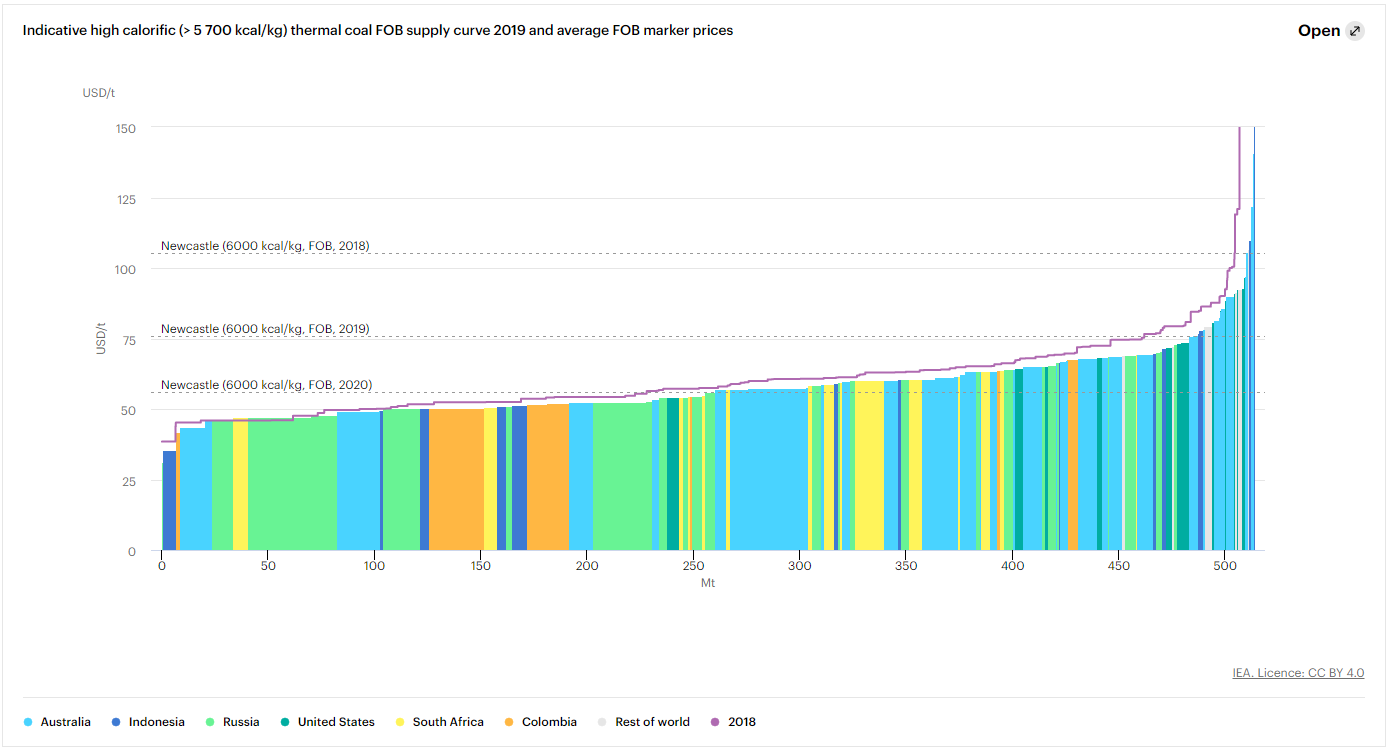
At $125 per tonne there isn’t a coal mine in the country that can’t turn a profit. These are all-in costs. Cash costs are much lower:
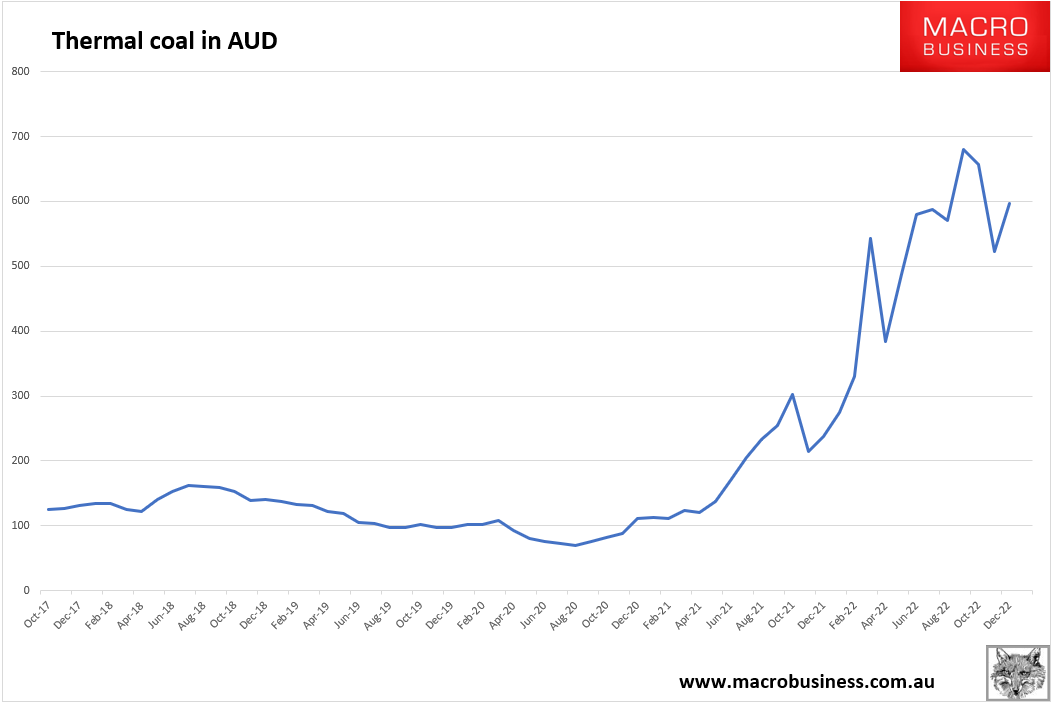
Moreover, export prices are out of this world at $600 per tonne delivering unbelievable profits:
The theatre of Dunciad premiers goes on but this deal is going to be done:
Anthony Albanese has offered an initial funding package to get a deal done on coal price caps with the NSW and Queensland governments but is under pressure to significantly increase the commonwealth’s financial assistance ahead of Friday’s national cabinet meeting.
…NSW government sources said the offer to fund programs not directly linked with subsidising coal producers and generators remained “insufficient” but did not rule out a deal before the national cabinet meeting.
The NSW government is concerned about potential losses for generators who have existing contracts above the price cap and for coal suppliers whose cost of production is higher than the cap. With the spot price for thermal coal above $600 a tonne on Wednesday, a $125 price cap would hit suppliers hard and potentially cost the NSW and Queensland government in royalties.
Rubbish. Most of the coal is on sub-$125 contracts already. This is haggling over pennies. What we need to do is remove spot coal as a marginal price setter, which the cap does.
Tim Buckley explains it all with eminent sense:
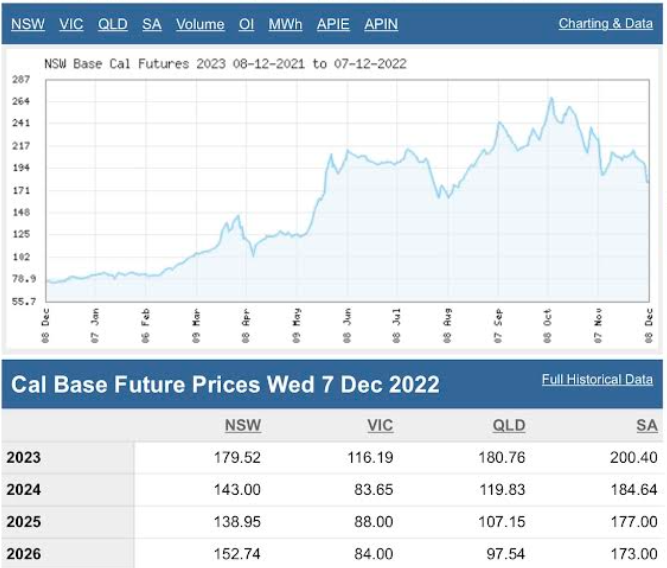
$13Gj gas and $125 coal will put a serious dent in power prices. Indeed, although still high, electricity futures prices have begun to fall more steeply despite global prices for both fuels ripping higher:
For perspective, cop this.
If left alone, current import parity prices for gas and coal would deliver an electricity price of 300-400Mw/h and CPI shock of 9-12% over a couple of years versus a pre-Ukraine War benchmark.
The average electricity bill in eastern Australia is about $1600 per annum. With global fuel prices, that would have gone to $5k-$6k over a year or more. As the spillovers jacked the price of everything, the RBA would have been forced to crazy interest rates and house prices would have halve, plunging the banking system into crisis and triggering depression.
All of those wankers arguing that this is a good idea have been rooting for an unprecedented income and wealth transfer from households and wider business to the gas cartel and coal barons.
With $13Gj gas and $125 coal, we should expect to see electricity prices crash well below $100Mw/h, even in winter. This will mean the shock is already priced in NSW and QLD. Utility bills elsewhere else will only rise 20% or so.
NSW and QLD may see price falls but much of the price shock has been held back by state subsidies of one kind or another so most of the upside will be in having dodged the above bazooka aimed at their heads.
The impact on CPI is virtually erased and brings immense relief to the RBA.
Every household and business east of WA should be cheering wildly for this to get up. Every LNG and coal miner should be cheering that their blood-soaked war profits have been left alone.
Perhaps more importantly, they won’t face the guillotine of popular rage because, if they had got their way, the fallout is the stuff of revolutions.
