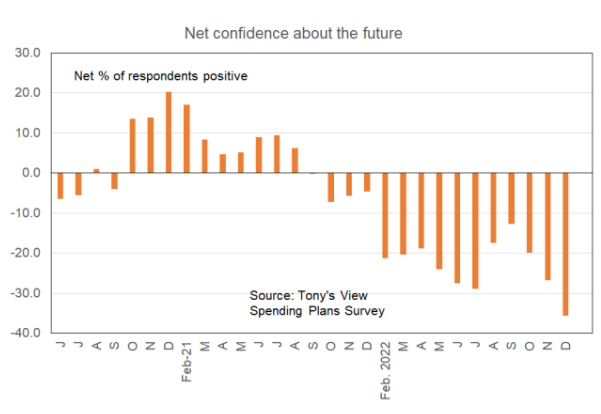
The Reserve Bank of New Zealand’s recent record tightening of monetary policy and use of words aimed at scaring people away from spending have had an immediate impact on Kiwi’s spending plans.
The 1,341 respondents in independent economist, Tony Alexander’s latest Spending Pans Survey reveal intentions to cut back on spending in all areas except groceries – by necessity.
Consumers close their wallets
This month’s survey of the 29,000 subscribers to my weekly Tony’s View publication yielded 1,341 responses. The results show a strong reduction in plans to spend on all items apart from groceries – by necessity. The Reserve Bank’s warnings about recession and record increase in the official cash rate have had a decidedly negative impact in the household sector.
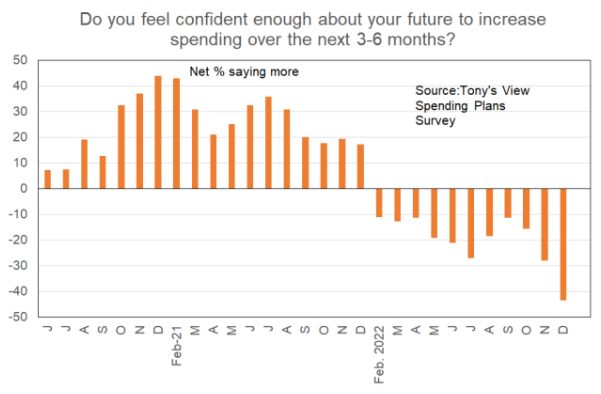
Do you feel confident enough about your future to increase spending over the next 3-6 months?
A net record 43% of survey respondents have said they plan cutting their spending in the next 3-6 months. This is a deterioration from a net 28% negative last month and net 17% positive intentions a year ago.
Where will people spend more?
We ask people what things they plan spending more on and what they plan spending less on. From those responses we can calculate net purchasing intentions for the categories we cover and the results for this month are shown in the following chart.
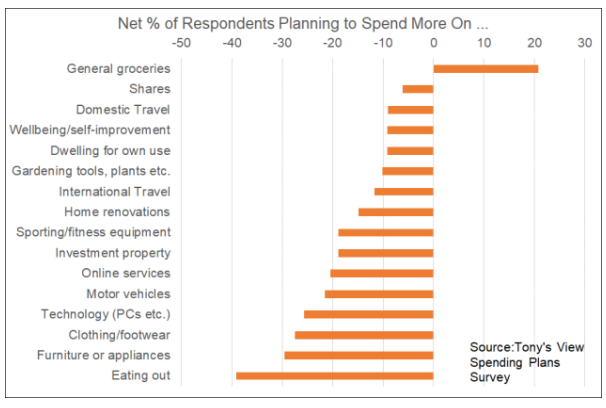
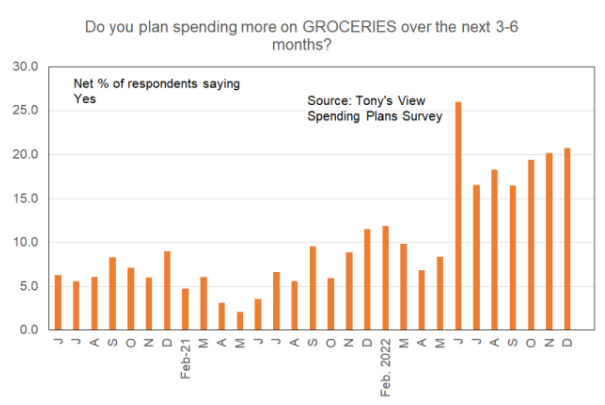
Apart from groceries people plan cutting their spending on all other categories we offer people to choose from… By necessity we “plan” to spend more on groceries…
When it comes to purchasing durable items – things which last a long time, and which traditionally show the greatest variations in sales across the economic cycle – the picture is bad…
Housing indicators
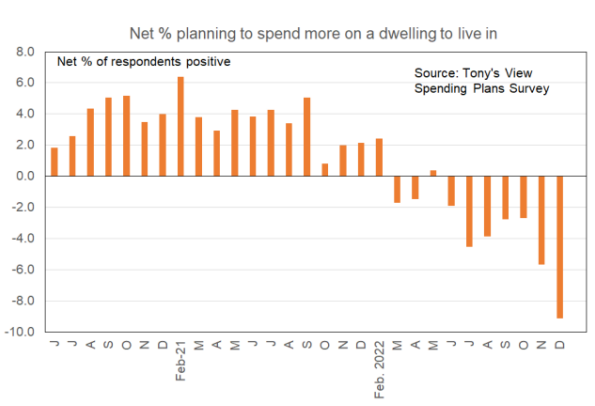
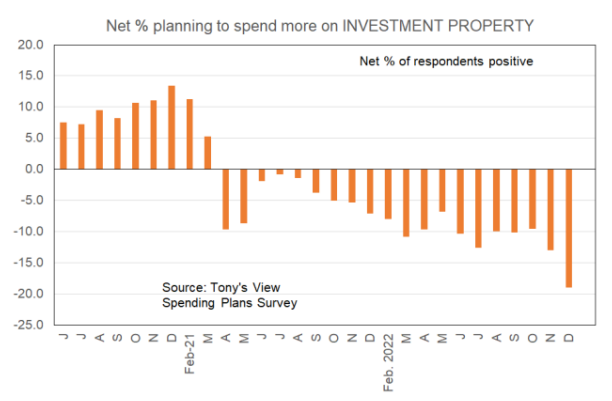
Our two housing market indicators have substantially deteriorated over the past two months as banks have engaged in two rounds of 0.5% or so increases in fixed mortgage rates.
A net 9% of respondents have said they plan spending less on a home to occupy themselves. Two months ago, this reading was a net 2.6% negative.
A high net 19% of people plan cutting back on buying investment property.
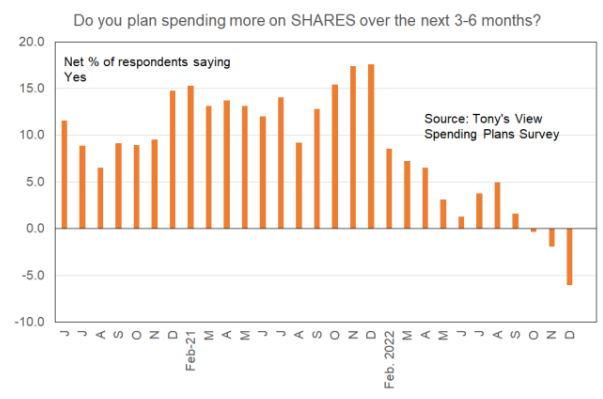
Buying shares
Concerns about the economy and business profitability alongside rising interest rates have contributed to a net 6% of our survey respondents this month saying they plan cutting their share purchases.
Why do you plan spending more or less?
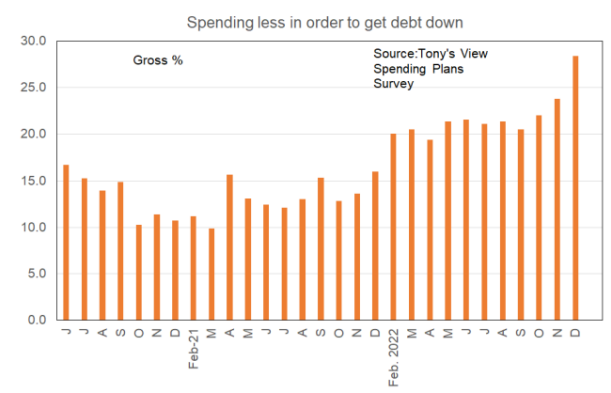
The following graph shows the proportion of people who state that they are cutting spending for the reasons shown. Cutbacks are mainly attributable to worries about the future and getting debt down.
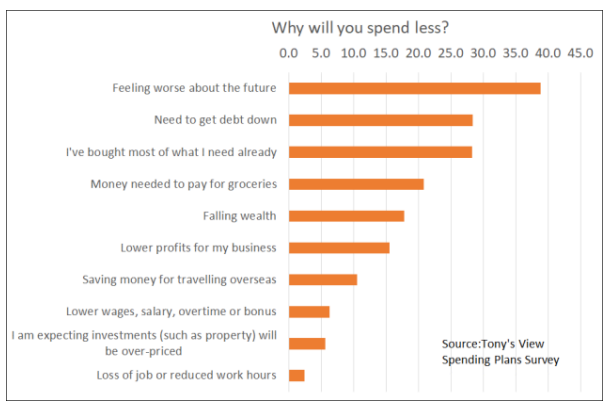
Plans for getting debt down have noticeably risen again this survey.
We also ask why people will spend more, and the results are shown in this next graph.
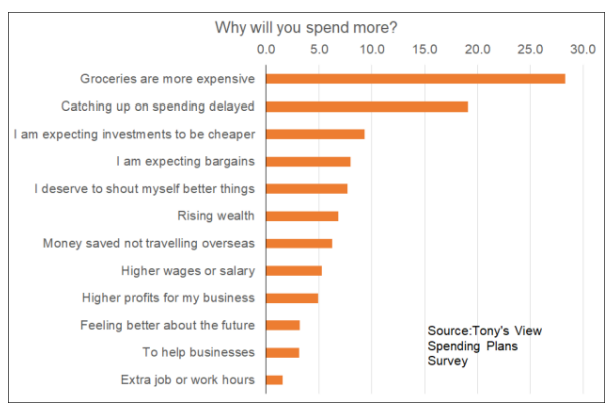
Rising grocery prices are the prime reason people plan to spend more.
Wealth expectations continue to trend down, but not at a rapid pace.
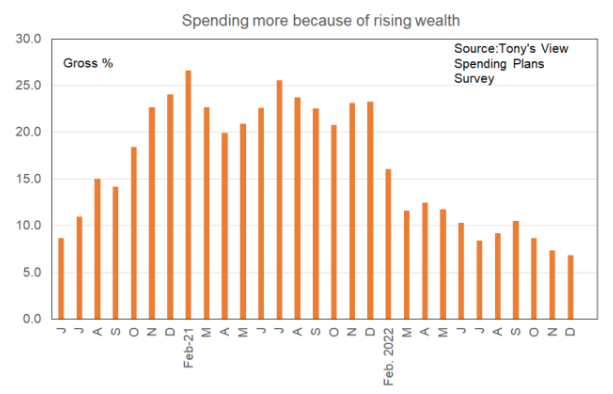
Overall, in an indication of what we can expect to soon be revealed in monthly measures of consumer confidence, hopes for the future are well down.