
RBA rate hikes “still highly stimulatory”
As we know, the Reserve Bank of Australia (RBA) yesterday lifted the official cash rate (OCR) another 25 basis points to 3.10%, taking it to its highest level since November 2012.
Once the increase is passed onto mortgage holders, Australia’s average discount variable mortgage rate will climb to 6.45%, which will be the highest level since April 2012:
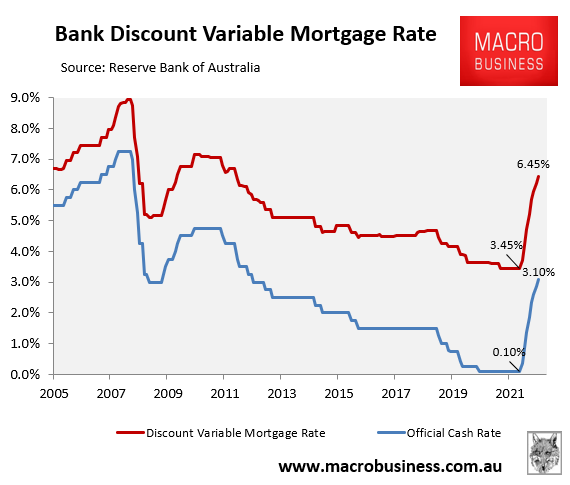
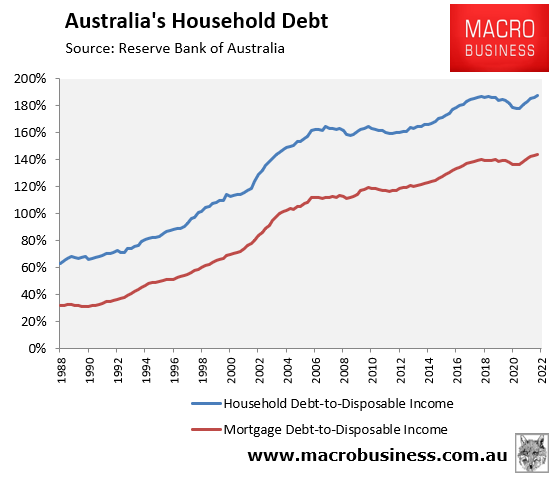
In effect, the RBA has reversed a decade of interest rate cuts in just seven months. Moreover, Australia’s ratio of household debt to disposable income is significantly higher today (188%) than it was a decade ago (160%), meaning monetary conditions are significantly tighter:
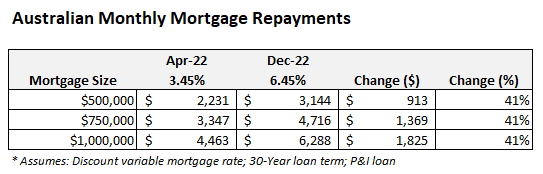
Once Tuesday’s 0.25% OCR increase is passed onto mortgage holders, it will lift average monthly mortgage repayments 41% above their level in April before the RBA’s first hike. For a borrower with a $500,000 mortgage, this will represent an increase of more than $900 in monthly mortgage repayments:
Strangely, Terry McCrann continues to argue that the unprecedented lift in interest rates is “highly stimulatory”:
What I seem to be the only person to note, is that in real terms, even yesterday’s 3.1 per cent official rate is way negative – and still highly stimulatory – in real terms.
On the September year 7.3 per cent inflation it is actually a negative 4.2 per cent; it will go to more like negative 5 per cent ahead of the February rate decision.
Lowe’s trying to engineer an inflation soft-landing. If he fails, the rate pain will then have to get 1980s-style brutal.
This is not the 1970s Terry. Wage growth in Australia (3.1% in the year to September) is way below inflation (7.3%). The average discount variable mortgage rate (6.45%) will also be more than double wage growth (3.1%) once Tuesday’s 0.25% rate hike is passed on.
On what planet are these interest rate settings “highly stimulatory”?
Reference to the “negative real rate” without consideration of wage growth and mortgage repayments is asinine.
