Jim Stanford, Director at the Centre for Future Work, has published a bunch of charts on household interest repayments, which have experienced their biggest increase in history in response to the Reserve Bank of Australia’s (RBA) aggressive interest rate hikes.
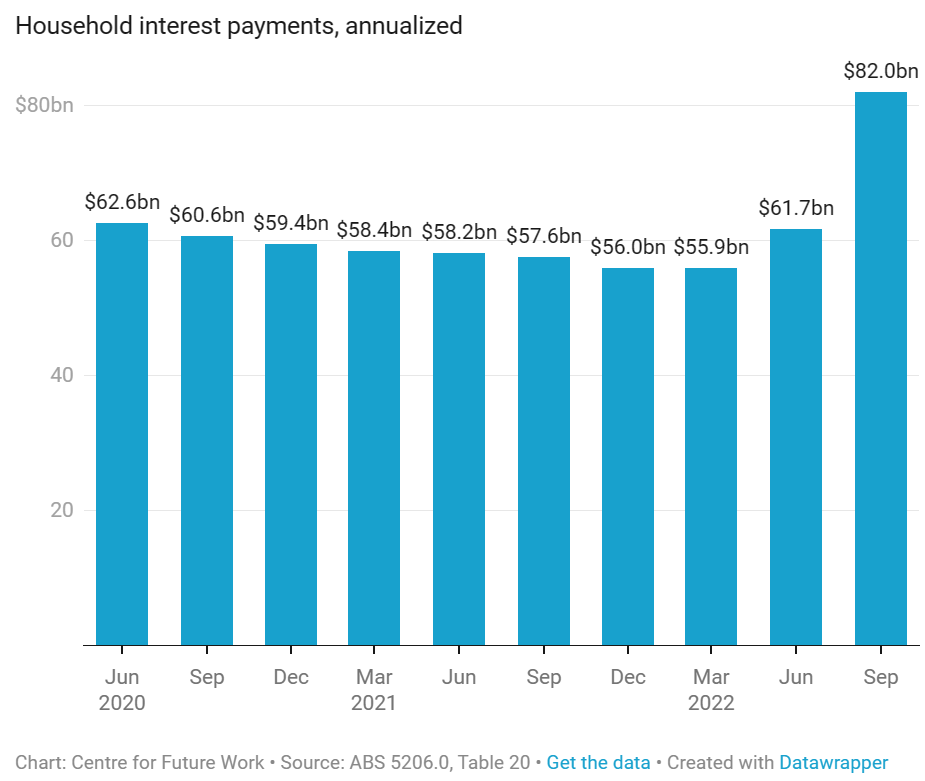
From the March quarter (when the RBA began hiking rates) to the September quarter (the latest data available), interest payments by households surged by $26 billion, or 47%:
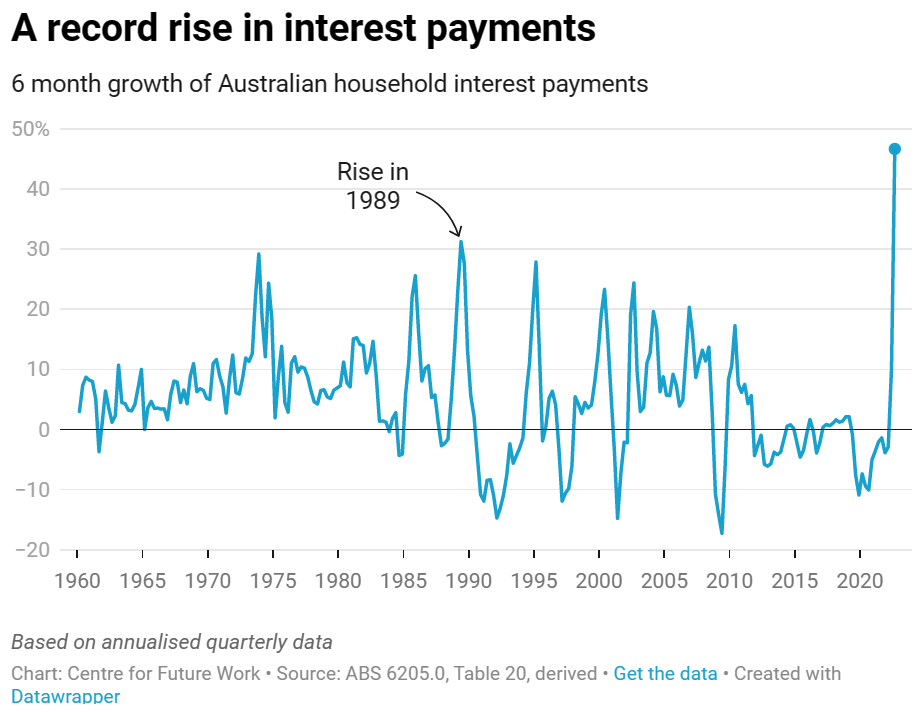
That is by far the largest 6-month rise in interest costs in Australia’s history:
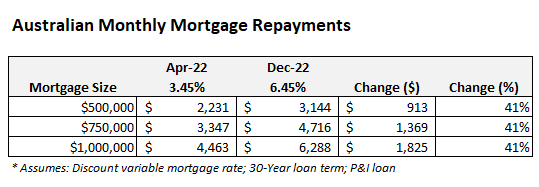
Obviously, this data does not capture the additional 0.75% of rate hikes over the three months to December. Combined, the RBA’s 3.0% of monetary tightening since May has lifted average variable mortgage repayments 41% above their pre-tightening level, adding around $900 in monthly repayments to a typical $500,000 mortgage:
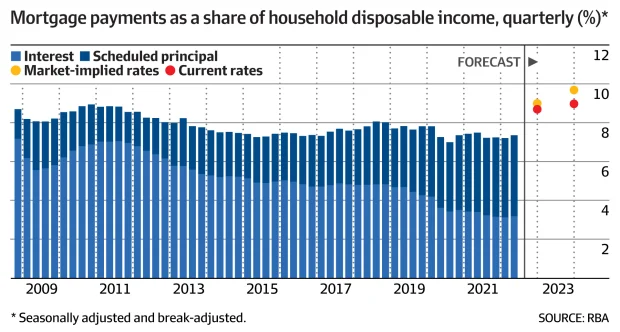
RBA data also shows that aggregate mortgage repayments will rise to around 9% of household disposable income by the end of 2022, beating the previous high recorded 12 years ago:
Commenting on the result, Jim Stanford noted that Australian households are especially exposed to rising interest rates because:
- Australia’s ratio of household debt-to-GDP (117% in the September quarter) is the second highest in the world.
- The structure of Australian debt (especially mortgages) is highly sensitive to changes in interest rates because the overwhelming majority of debt is on floating rates. Indeed, “Australia ranked third among all OECD countries in 2022 (behind Finland and Norway) in reliance on variable-rate mortgages”, according to Stanford.
Stanford warns that “higher interest costs have already reduced the disposable spending power of Australian households by over 1% of GDP”. Moreover, “that’s just the tip of the iceberg” given “interest rates rose further in the last quarter of 2022 (and likely will rise further still in 2023)” and “previous rate hikes have not yet fully filtered through into renewed mortgages and other debts”.
Stanford adds that consumer spending is likely to “shrink in the coming months as a result of this interest shock”. And because “consumer spending makes up over half of the Australian GDP, that alone could cause a recession next year”.