SQM Research’s Boom and Bust report forecasts that the housing market could rebound if the Reserve Bank of Australia (RBA) puts interest rate increases on hold.
The central bank is widely tipped to pause the rate rise cycle by mid-2023 and leave the cash rate unchanged for the rest of the year.
SQM Managing Director, Louis Christopher, says this could potentially spark a ‘soft’ housing market recovery. House prices in Sydney could rise by 5%-9% per cent in 2023, although other capital cities would most likely record more subdued growth in dwelling prices.
“I believe the markets can recover, and they’ve been showing some signs of recovery, such as the modest rise in auction clearance rates and asking prices, even while we’ve had these cash rate increases,” Louis Christopher said.
“If the RBA were to hold it below 4%, given the surge in the economy that accelerated wage increases, I believe that will create grounds for a housing market recovery, albeit a soft one where we would see some single-digit house price rises occur in 2023, or at the very least, a situation where the housing market would stop falling.”
“Sydney is expected to lead the recovery driven by the surge in underlying demand for residential property and its diverse economy,” Christopher said.
“Sydney is capturing the lion’s share of net overseas arrivals, people are coming back from the regions and returning into the office environment and the taxation changes made by the NSW government will encourage first-time buyer activity.”
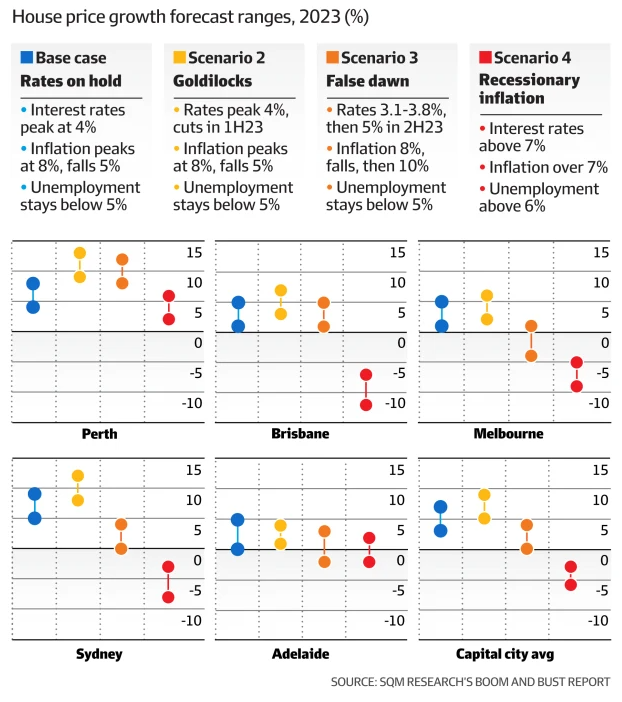
Base Case: Sydney to lead rebound in 2023.
Personally, I cannot see property prices rebounding materially until the RBA starts cutting rates, which I think will occur in the second half of 2023 as the economy teeters on recession.
I believe calendar year 2023 will be another down year for property values with most of the falls occurring in the first half.
Then 2024 will register a solid rebound on the back of falling mortgage rates, strong immigration, constrained supply, etc.