
RBA rate hikes to kill Christmas retail sales
This week’s two consumer sentiment reports suggest that Australian households plan to slash Christmas retail spending.
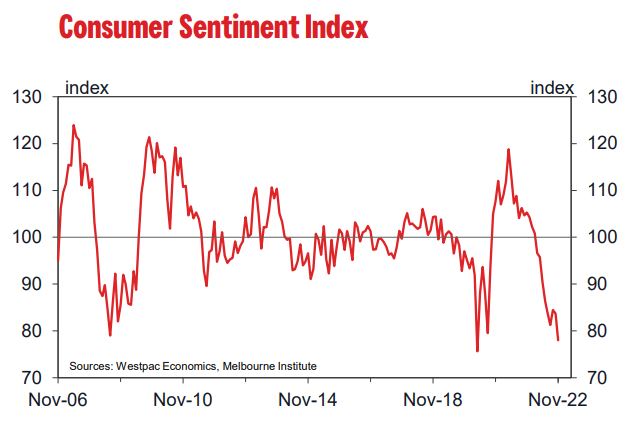
First, Westpac’s consumer sentiment index plunged to its lowest level since the beginning of the pandemic, “pointing to a spending slowdown”:
Of particular note is the below extract stating that nearly 40% of consumers plan to spend less on Christmas gifts this year:
The November sentiment print is particularly important given the lead-in to the Christmas shopping season. To expand on this, our November surveys include an additional question about Christmas spending intentions, asking consumers whether they plan to spend less, the same or more on gifts than last year.
Not surprisingly, Christmas spending plans are very subdued this year. Nearly 40% of consumers expect to spend less on gifts this year – the highest proportion planning cutbacks since we started asking the question in 2009, the average being 33%.
The ‘time to buy a major household item’ sub-index – which correlates most strongly to consumer spending – declined 4.3% to 81.4. This is well below the long run average of 126 and, outside of the initial COVID shock in 2022, was the weakest monthly read since the GFC.
According to Westpac, “attitudes towards major household purchases continue to show a clear sensitivity to rising prices and interest rates”.
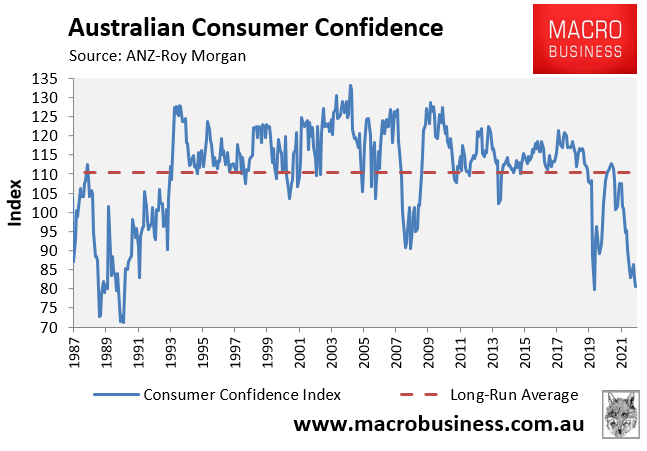
The ANZ-Roy Morgan consumer confidence survey was equally pessimistic, also crashing to its lowest level since the beginning of the pandemic:
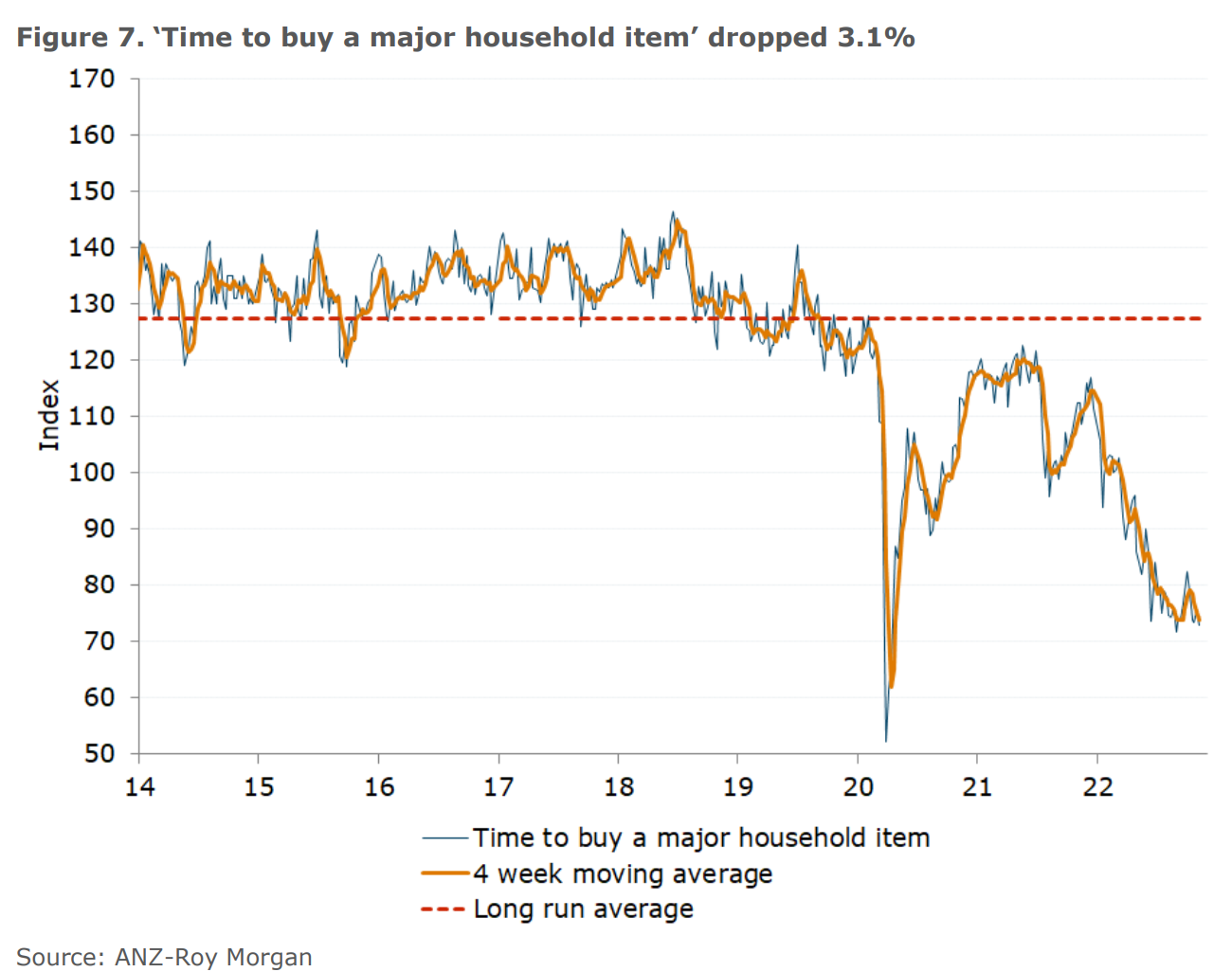
Its ‘time to buy a major household item” also plunged to its lowest level outside the beginning of the pandemic:
Based on these surveys, the RBA’s aggressive interest rate increases are beginning to bite.
Given the inherent 2-3 month lag in monetary policy, alongside further expected rate hikes from the RBA, discretionary consumer spending is facing a sharp slowdown over Christmas and into the new year.
This slowdown in discretionary spending should worsen further next year as piles of cheap fixed rate mortgages originated over the pandemic are reset to double or triple their current rates.
