The Housing Industry Association (HIA) has released new home sales data for October, with sales collapsing another 28% month-on-month. This follows the 15.8% national decline in the three months to September:
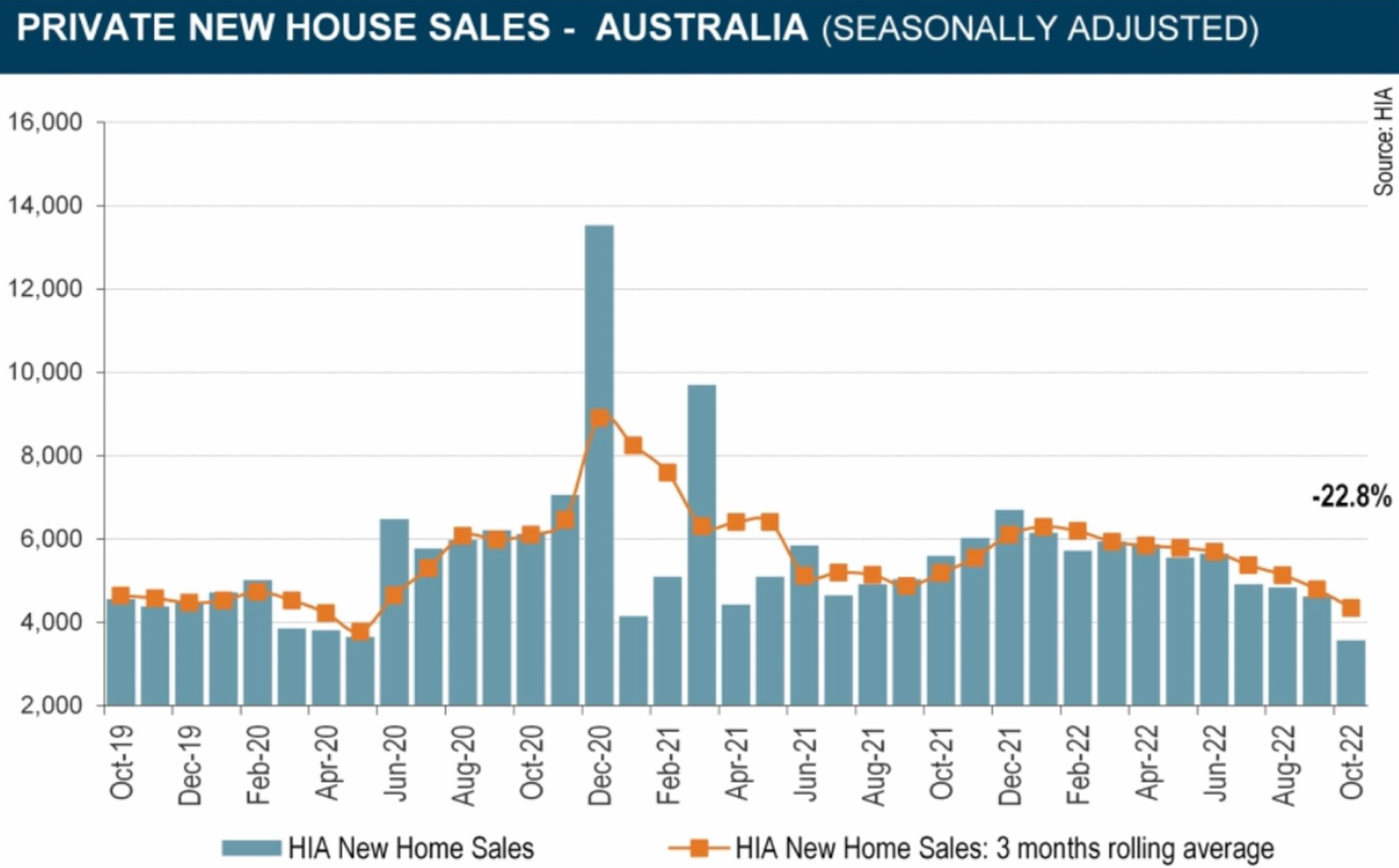
According to the HIA, “sales fell sharply in all regions for October”, with the “increase in interest rates compounding the rise in the cost of new home construction and further reducing the capacity of borrowers to finance the build of a new home”.
RPM Group’s latest Greenfield Market Report also shows that land sales in Australia’s city-fringe housing estates have plummeted 66% over the past year, sending sales to their lowest level in three years:
These growth corridor markets recorded just 2,695 vacant lot sales for the quarter, down 41% from the previous three-month period.
With 19,292 sales on a 12-month rolling basis, sales are down 66% year-on-year.
“Buyers are facing a host of challenges, from increasing construction costs through to the rising cost of living, reducing borrowing power and higher mortgage repayments, which is causing them to delay their decision making,” said Luke Kelly, managing director of project marketing at RPM.
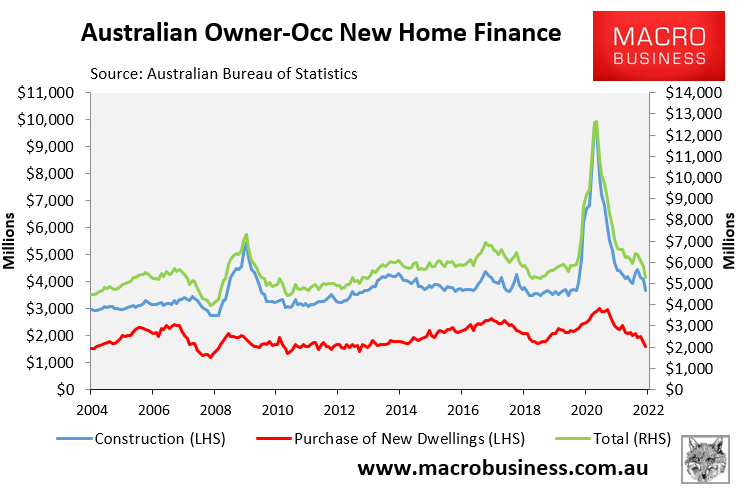
The latest Australian Bureau of Statistics (ABS) new home construction lending data also reported a 22% decline year-on-year:
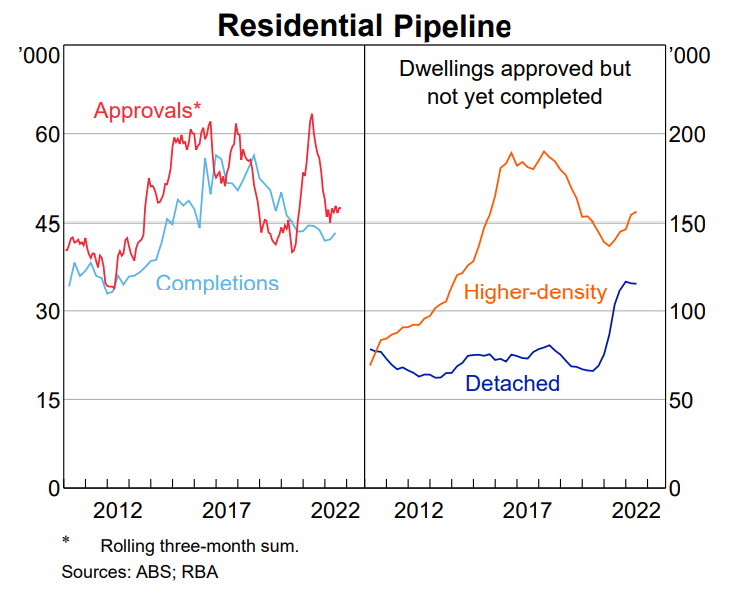
The one bright spot for the housing industry is that there is still a huge pipeline of homes yet to be built from the Morrison Government’s HomeBuilder stimulus:
Indeed, a record high 242,000 homes were under construction across the nation in the June quarter, according to the ABS:
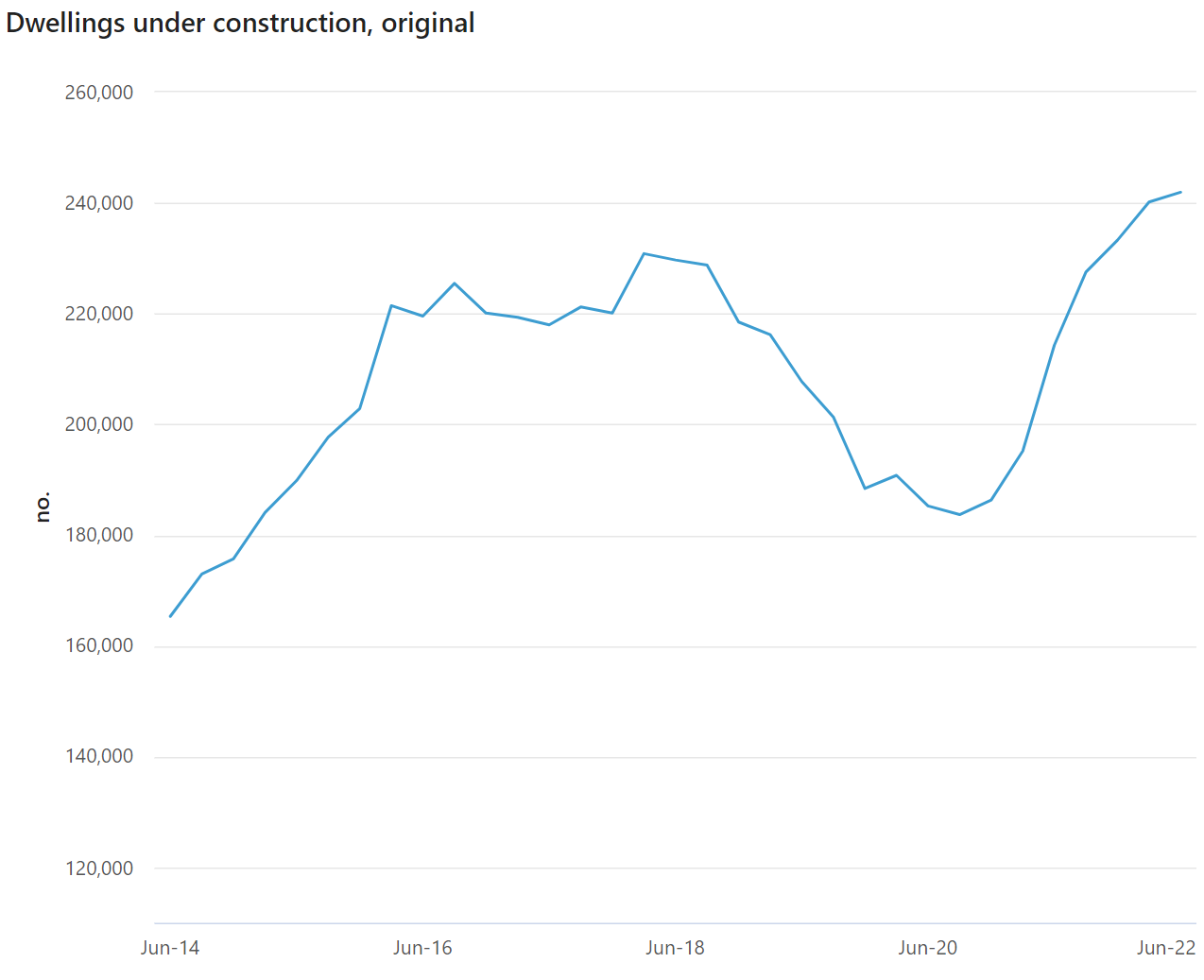
This pipeline will ensure that construction levels hold up in 2023.
However, 2024 is facing a hard landing, with the HIA noting that “the full effect of the November 2022 increase in the cash rate is not likely to flow through to new home sales fully, until June 2023”. Accordingly, “the fastest increase in the cash rate in almost 30 years will see detached home building activity slow to its lowest level in a decade by 2024”.
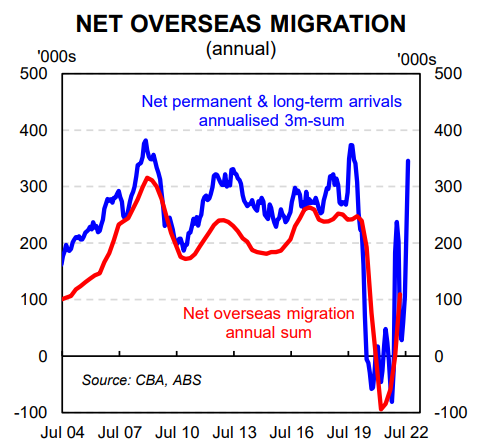
The longer-term implications are worrying given it will leave Australia with a shortage of homes given the federal government intends to ramp immigration (housing demand) to record levels:

As shown above, nearly one million net migrants are officially forecast to arrive in Australia over the next four years, with net overseas migration already rebounding to pre-pandemic levels:
It’s a disaster in the making, especially for vulnerable Australians suffering in the chronically under-supplied rental market.