Housing Industry Association (HIA) Senior Economist Nick Ward has cautioned the Reserve Bank of Australia (RBA) against further rate hikes claiming that demand for new homes is collapsing:
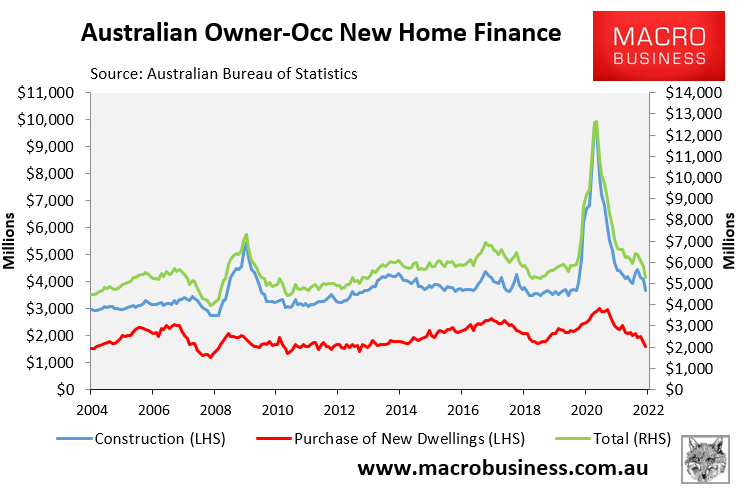
“Lending for the purchase or construction of a new home fell 9.3 per cent in the month of September to its lowest level since April 2019”…
“The RBA’s tightening is weighing heavily on demand for housing and the full impact will not emerge until the second half of 2023”…
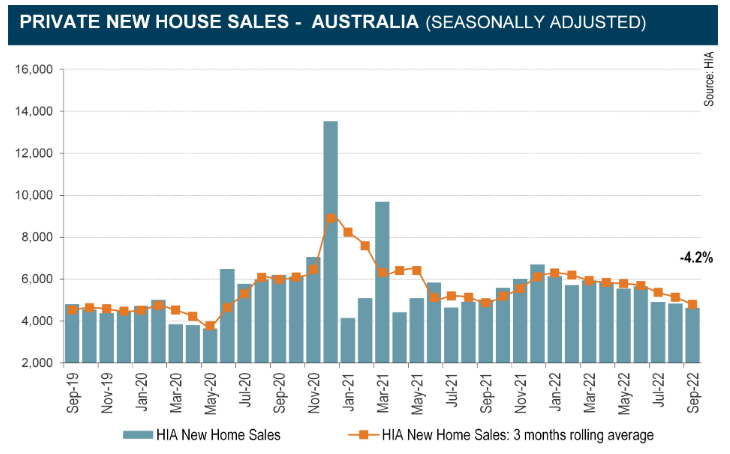
“This slowing in housing finance data is consistent with other leading indications, such as HIA’s New Home Sales Survey, which have fallen more than 15% in the September quarter”.
“If these trends are sustained, which is expected, then the 2.75 per cent increase in the cash rate so far will have brought this boom to an end”.
“There is still a significant volume of work under construction that is sustaining employment across the economy. This is helping to keep the unemployment rate at exceptionally low levels. When this pool of work is completed, the full impact of this rate rising cycle on employment will emerge”.
“There is a risk that this volume of work on the ground is obscuring the adverse impact of rising interest rates”.
“These treacherous lags that characterise this housing cycle could result in the RBA weighing too heavily on households and businesses and jeopardising the housing industry’s future soft landing. Patience is required to see the full effect of rate increases to date”.
Nick Ward isn’t wrong with respect to new home demand.
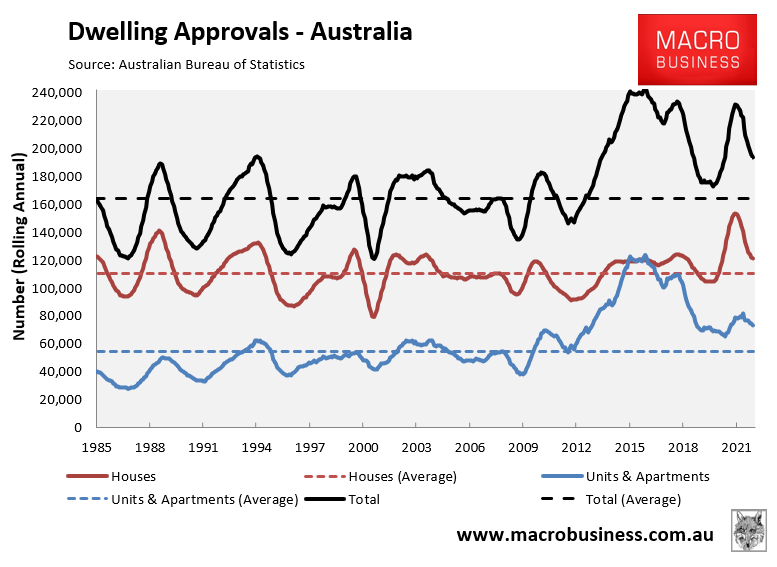
Dwelling approvals have fallen sharply, down 13.0% year-on-year:
Loans for construction are also down 22% year-on-year:
New home sales have also plunged:
That said, the RBA will be concerned by the sharp rise in new home prices, which surged 21% in the year to September and was the biggest source of domestic non-tradable inflation in Q3:
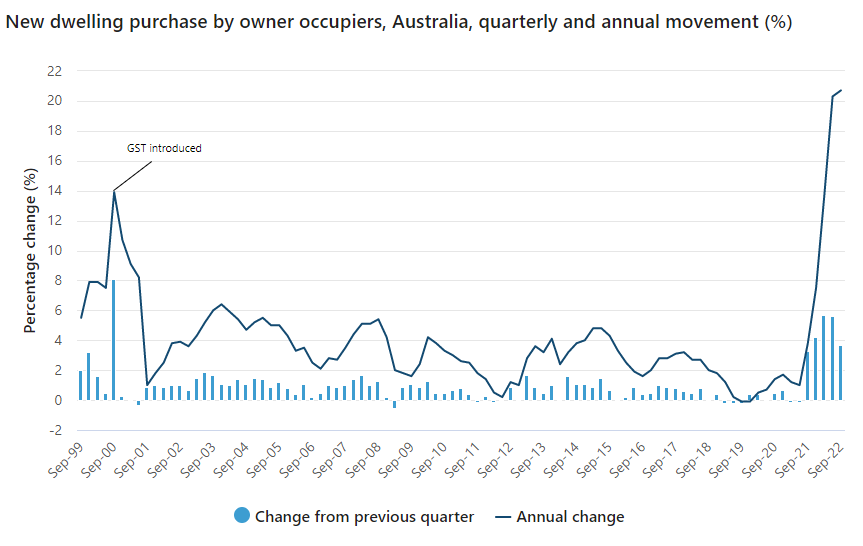
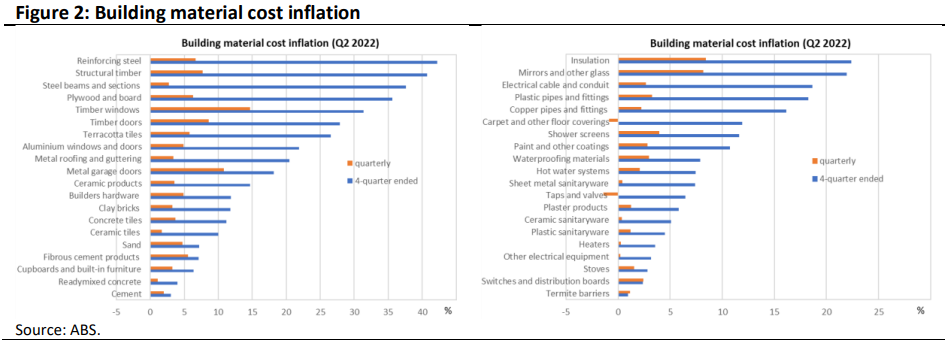
This new home inflation was driven by soaring materials costs, most of which are imported or energy impacted:
My bigger concern is that the decline in new housing supply next year will coincide with soaring immigration.
Last week’s federal budget projected that nearly one million net overseas migrants will arrive over the next four years:

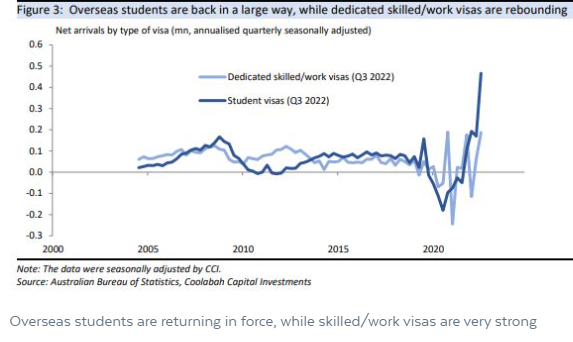
Already these forecasts are looking pessimistic given record numbers of students are already arriving in Australia:
Rising housing demand amid falling construction rates is a bad omen for the nation’s rental market, which is already in crisis.
Where will the hundreds of thousands of new arrivals live when there is already a dire shortage of homes for the existing population?