AMP Capital chief economist Shane Oliver last week posted the below chart on Twitter showing how the “2012 and 2019 housing upswings did not start until rates fell”, which he believes is still some time off:
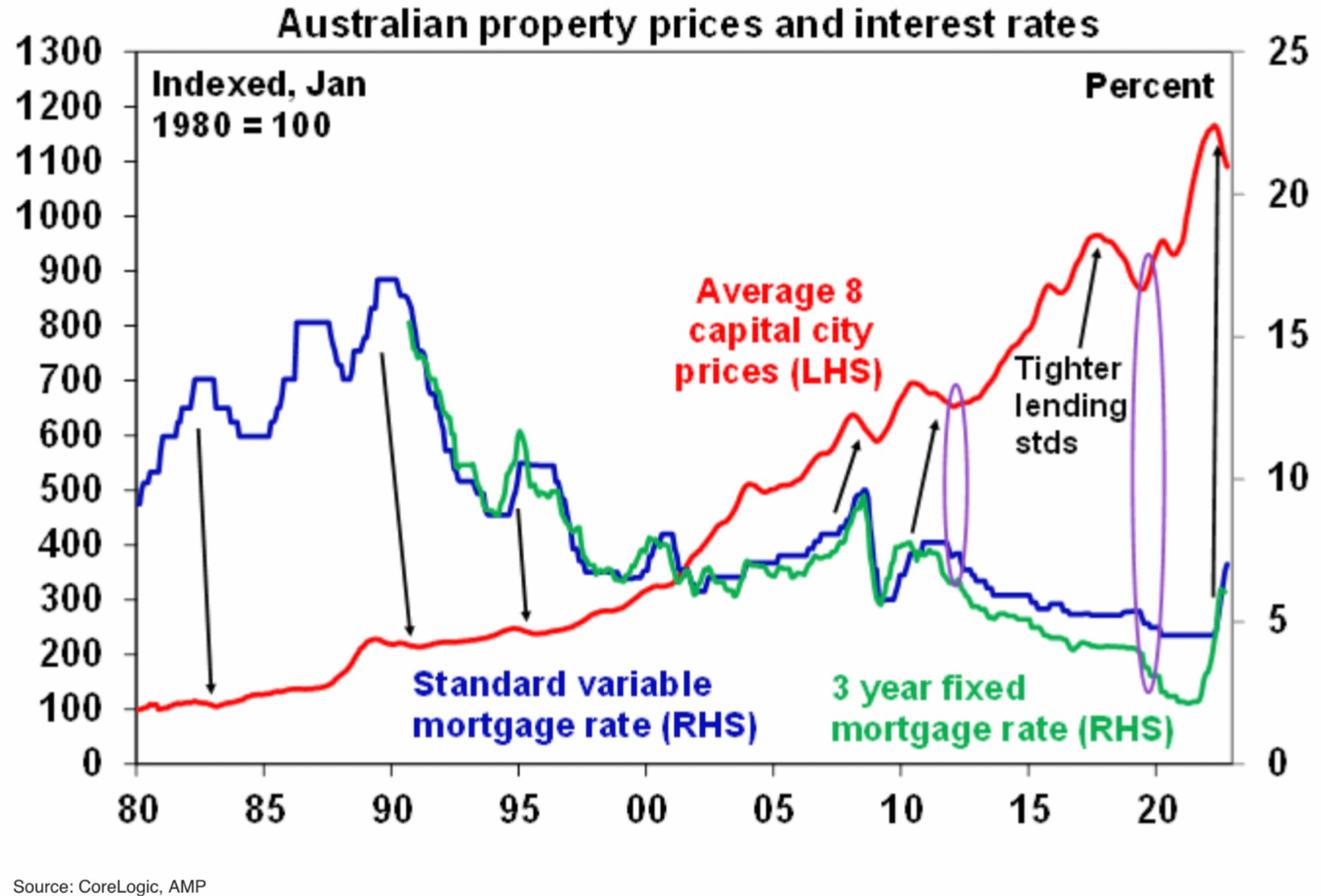
Oliver’s observation is also intuitive, given rising/falling interest (mortgage) rates decrease/increase borrowing capacity and ergo buyer demand.
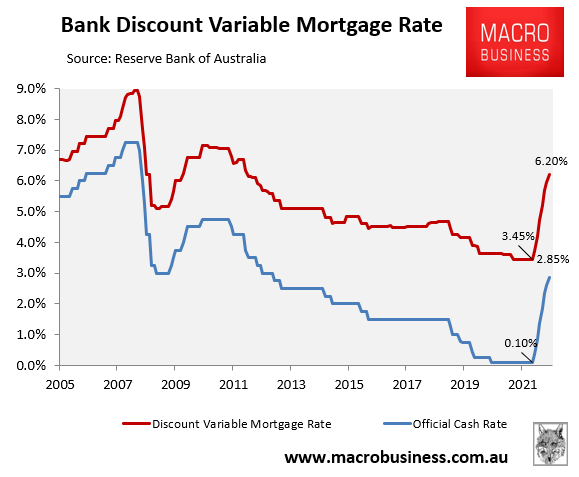
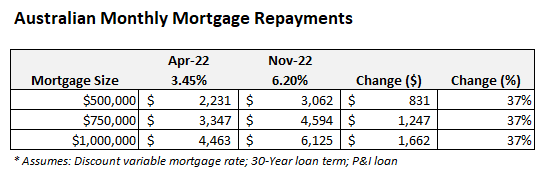
The 2.75% of monetary tightening delivered by the RBA since May has lifted average discount variable mortgage rates from 3.45% to 6.20%. In turn, average variable monthly mortgage repayments have soared by 37%, adding around $830 in monthly repayments to a typical $500,000 mortgage:
This sharp increase in mortgage rates is why mortgage demand has collapsed:
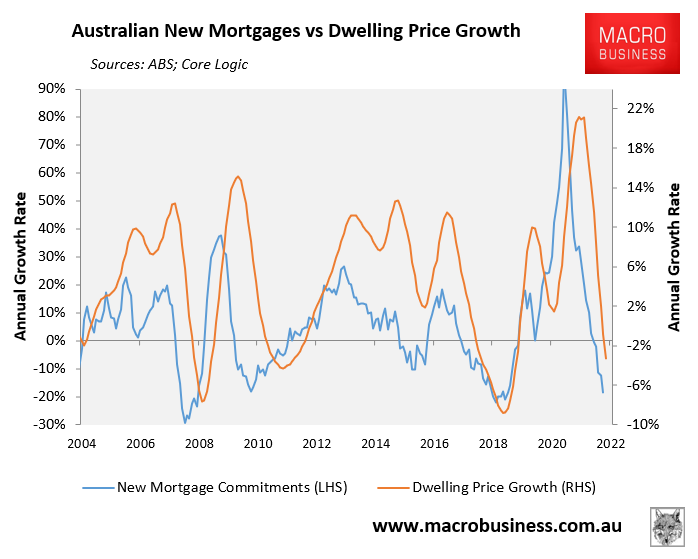
And it is the primary reason why Australian dwelling values have declined at their fastest pace on record:
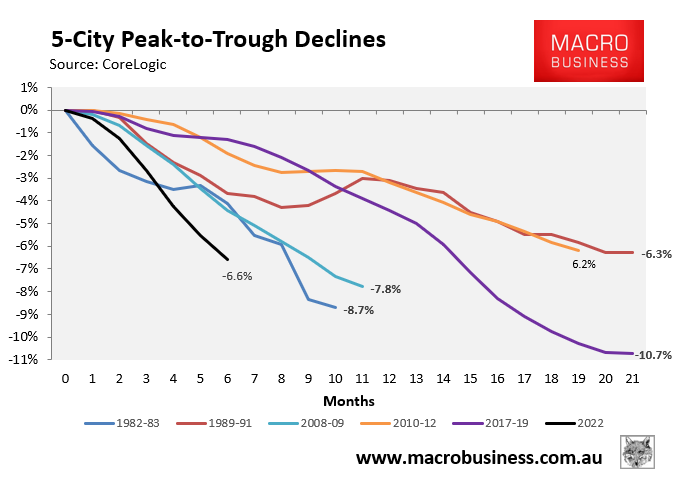
Given the Reserve Bank of Australia (RBA) is expected to lift rates further in the months ahead, borrowing capacity and ergo house prices will continue to fall.
Ultimately, Australian house prices won’t return to another growth phase until the RBA changes track and begins cutting rates.
My best guess is that this will occur in the second half of 2023 as the world enters recession, Australia’s growth slides and unemployment rises. The RBA will then come to the realisation that it has gone too far with its monetary tightening and will slash rates to ward off recession.
That is when Australian house prices will enter the next growth phase, with the strength of the rebound dependent on how far the RBA cuts rates.
But there is a lot of water to go under the bridge until then, with Australian housing still facing its biggest price correction on record.