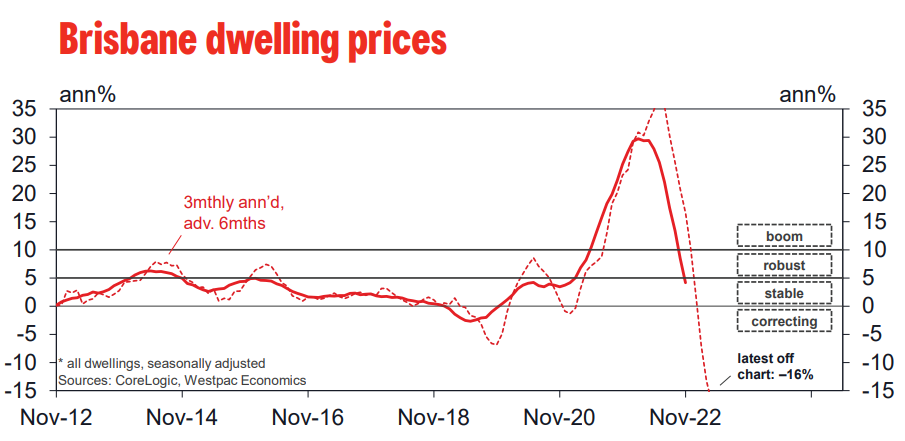
Below is Westpac’s analysis on Brisbane’s housing market, which has switched “abruptly from a vigorous boom that was still in full-swing back in Q1 to steep declines in turnover and prices in the second half”.
However, while Brisbane’s house price falls are currently leading the nation, Westpac believes values will hold up better over the cycle as “supply-demand pressures come back to the fore”.
Westpac has, therefore, tipped only a 4% cumulative decline over the 2022 and 2023 calendar years versus a 14% cumulative decline at the combined capital city level.
________________________________________________________________________________________
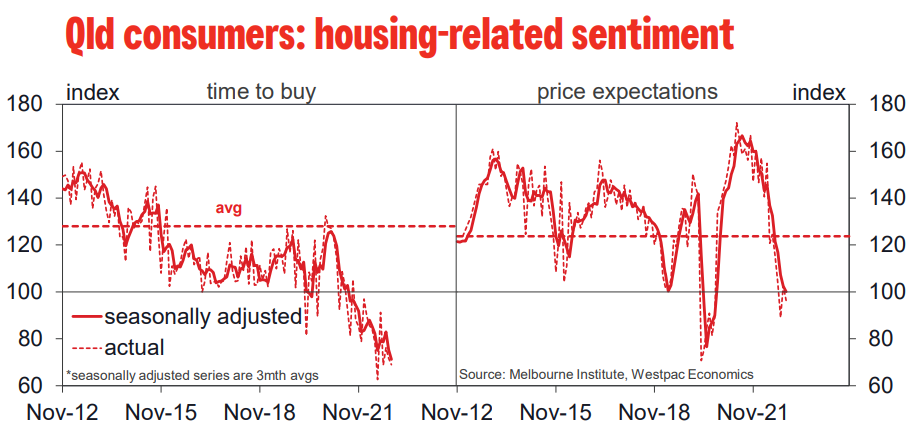
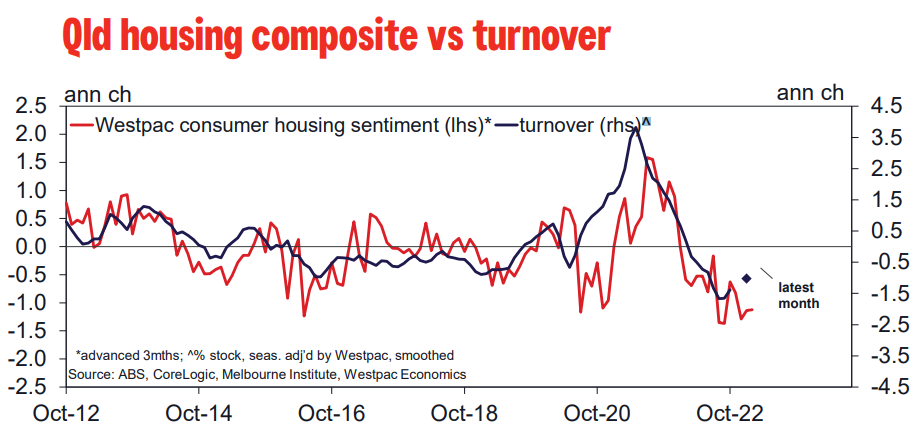
Qld’s housing market has been the big mover this year, switching abruptly from a vigorous boom that was still in full-swing back in Q1 to steep declines in turnover and prices in the second half. Turnover is off 10%, albeit still around long run avg levels. Prices have been much weaker, gapping 5.4% lower in Jul-Oct, having just stalled flat over the previous 3mths. Sentiment has turned sharply weaker as well, although some of this looks to reflect concerns about proposed changes to state government land tax that have now been abandoned. The main tension is between this sharply weaker price and sentiment situation and what still looks to be a super tight supply–demand balance.
The price detail continues to show weakness centred on houses and ‘top tier’ segments of the Brisbane market, the resilience of ‘units’ and lower tier segments suggesting tight supply is supporting demand in more affordable segments.
The sub-regional picture points to bigger price hits in Brisbane’s North and South, and in the Sunshine and Gold Coasts – all of which outperformed through the upturn. Notably, Brisbane’s correction has spread to a much wider range of suburbs.
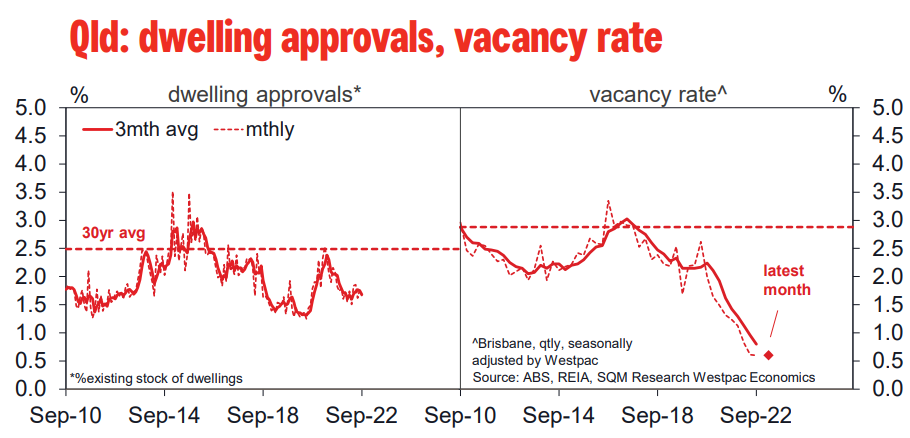
As noted, the supply–demand picture remains extremely tight, sales still running well ahead of new listings in Brisbane and the stock of unsold homes very low for both houses and units. Rental vacancy rates remain sub-0.5%, indicating that there is barely a ‘frictional’ level of rental stock available.
The Qld Consumer Housing Sentiment index suggests the downturn will track a similar pace through Q4 and into early 2023. However, we suspect that supply-demand pressures could come back to the fore quite quickly, especially once the interest rate tightening cycle ends and migration inflows start to add more to the demand side.