Goldman states the obvious.
China launched its latest policy easing cycle in late 2021, but this appears quite different from previous ones, as zero-Covid policy remains in place, the property sector has continued to contract sharply, and policy stimulus has been subject to various constraints.
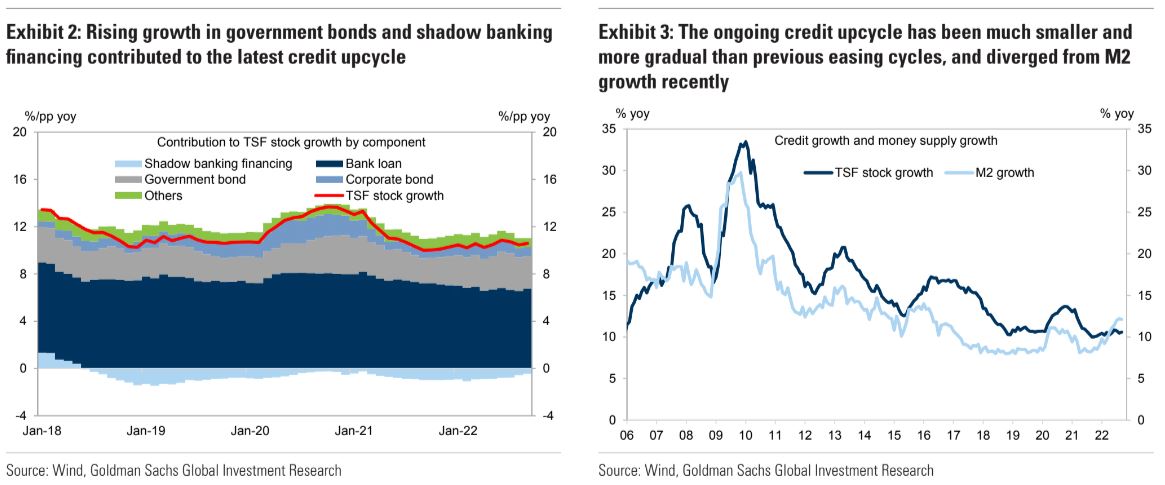
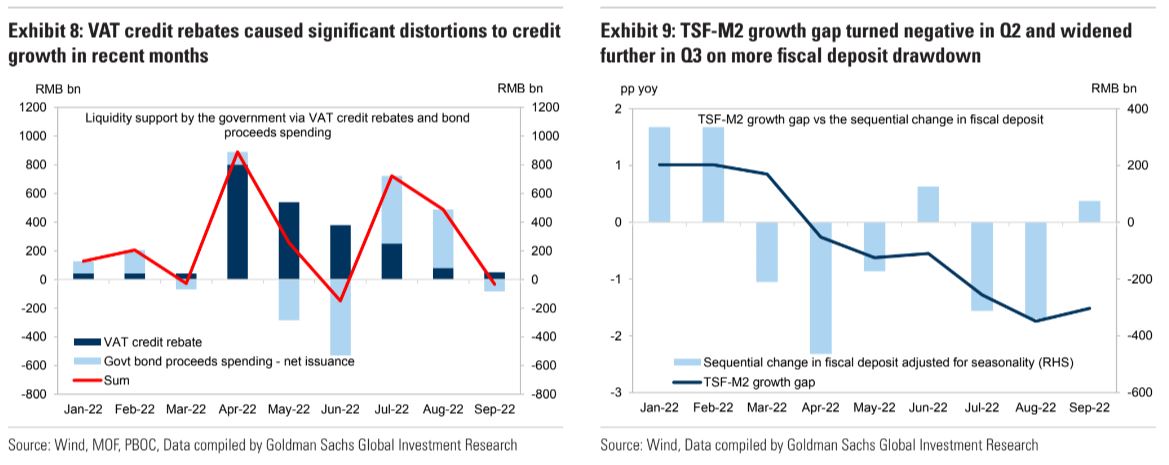
The ongoing credit cycle has featured much less acceleration in credit growth than previous easing cycles, and in recent months TSF stock growth and M2 growth have diverged. Although TSF stock growth has become a more crucial quantitative credit measure than M2 growth, it has also faced some major distortions this year.
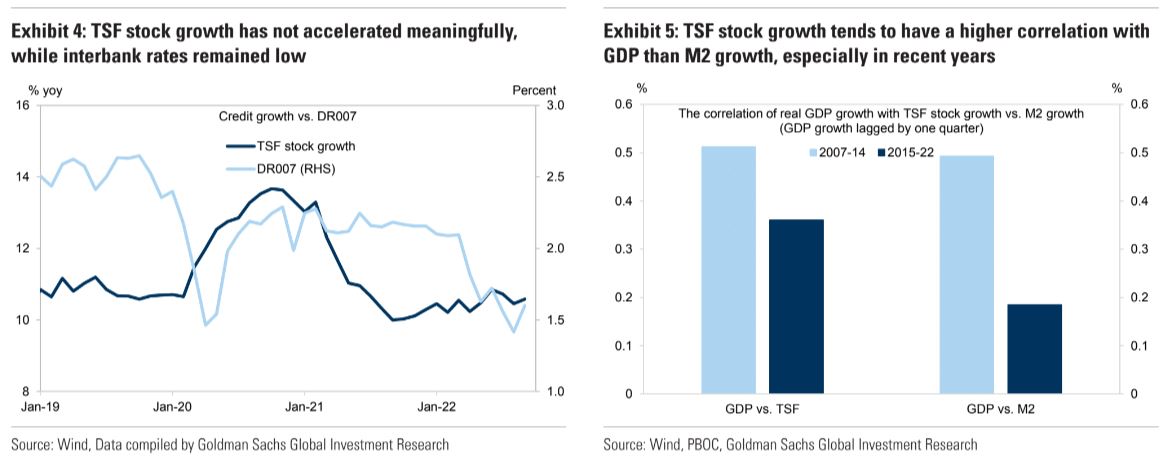
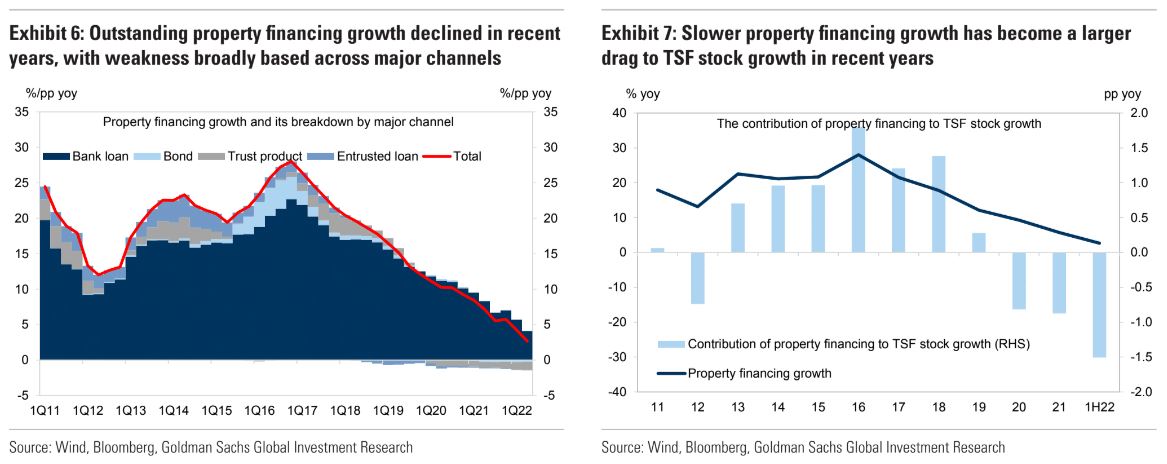
Besides the prolonged drag from Covid restrictions and policymakers’ reluctance to launch a massive stimulus package, two factors – the sharp property downturn and the large-scale tax rebates/deferrals – have weighed on headline TSF stock growth by a combined 2pp yoy this year, based on our estimates. In other words, policy easing may not have resulted in a sharp acceleration in credit growth, but it has likely prevented a meaningful slowdown in a time of various headwinds.
Moreover, the unique fiscal policy this year led to more fiscal deposit drawdown in Q2-Q3 than previous years and partly contributed to the wider divergence between TSF and M2 growth. If the distortion subsides in coming months, their divergence could narrow to some degree (as suggested by the Septembermoney and credit data).
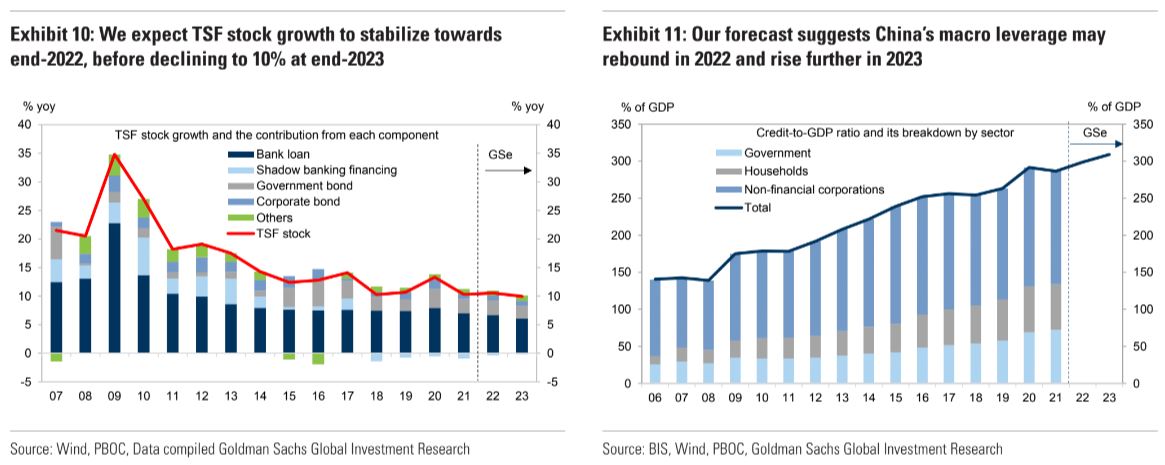
We expect TSF stock growth to rise slightly to 10.5% yoy at end-2022 from 10.3% at end-2021, before declining to around 10% at end-2023. Our forecast suggests macro leverage should rebound this year and rise further in 2023, leaving the task of deleveraging for the future.