
What we all know is coming as Albo’s cowards betray their own. And here was I thinking that full employment was a desirable goal.
A question for Goldman. If the Aussie labour market is about to return to the immigration-led glut of post-2014, and commodity prices are going to fall in the period as well (given they can’t really go higher) then how is that the RBA will be able to sustain a 3% cash rate?
In a similar post-2011 period it ran negative interest rates for most of the time and still couldn’t find a wages and inflation pulse.
Australia’s labour market is very tight. In early 3Q2022 the official number of job vacancies (480k) exceeded the number of unemployed workers (470k) for the first time since national conscription during the Vietnam war.
Looking forward we see three factors that should see the labour market start to loosen in 1H2023 and then return to ‘balance’ by end 2023.
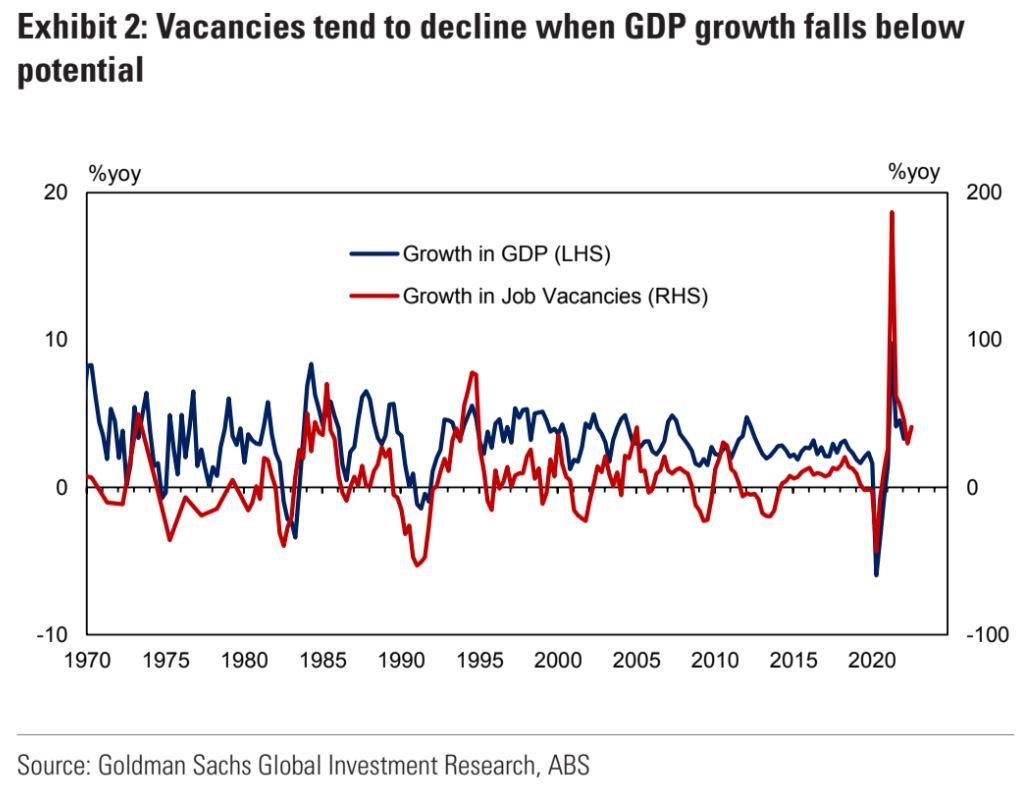
Firstly, a slowdown in quarterly annualised GDP growth from almost 4%currently to 1¾% next year will reduce aggregate labour demand.
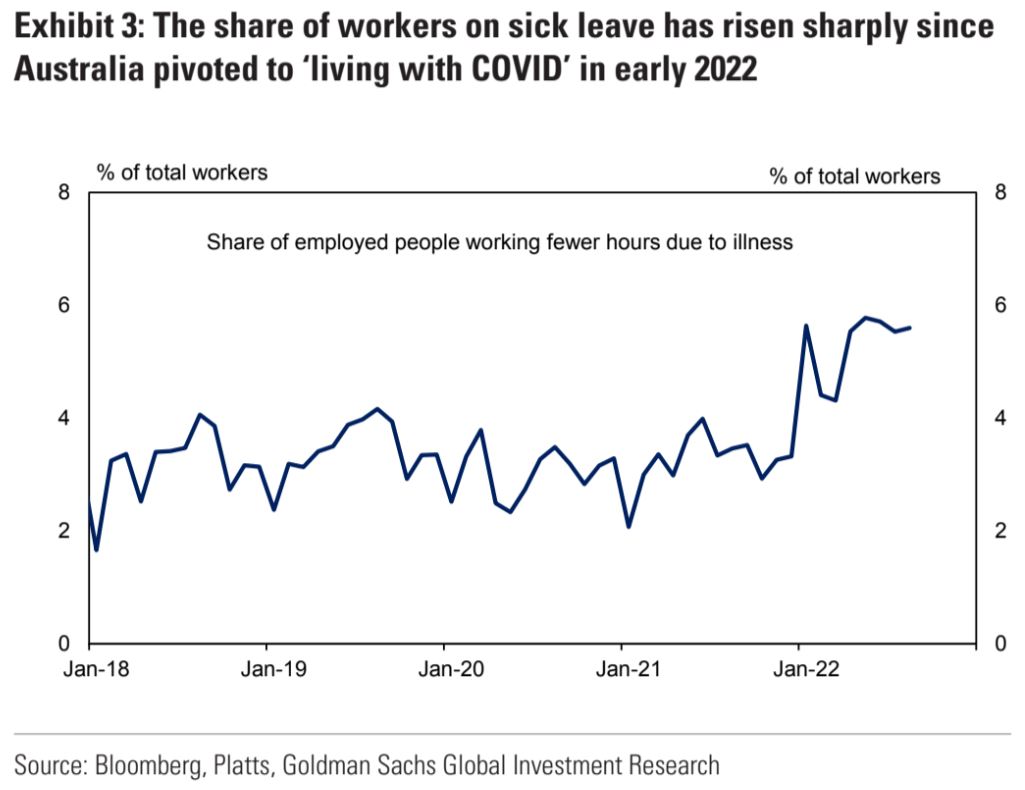
Secondly, the abolition of COVID isolation requirements should reduce worker absenteeism and help to ease labour shortages.
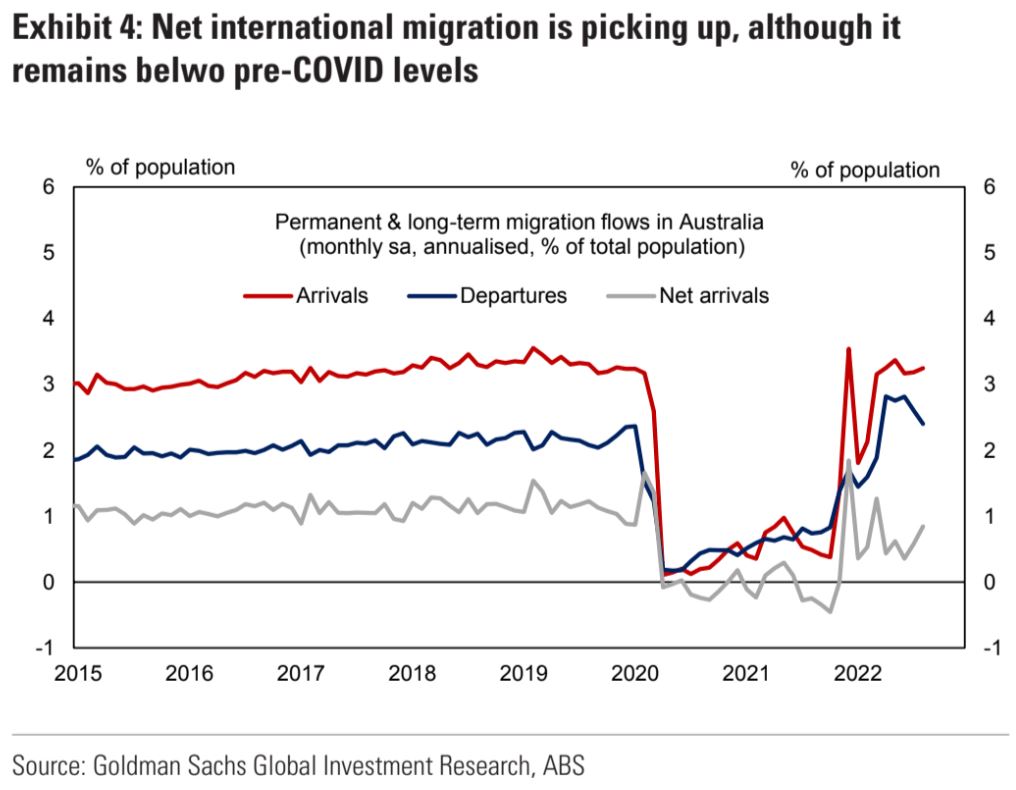
And thirdly, the normalisation of international migration flows and changes to student visa regulations should boost labour supply relative to labour demand in several key sectors.
Overall, we expect these dynamics to roughly halve the number of job vacancies between now and 4Q2023, with the unemployment rate rising 50bps to 4.0%over the same period. Base wages growth is likely to continue to accelerate over the next 12 months before stabilising around 3½-4%yoy.
While the RBA is likely to remain hawkish in the near term, these dynamics should allow the cash rate to be lowered to a more ‘neutral’ level in 2024. As a result, we now expect the RBA to lower the cash rate from 3.6% to 3.0% over 2H2024.
