
CBA: Australia’s low wage growth tempers rate hikes
By Gareth Aird, head of Australian economics at CBA:
Key Points:
- The RBA Minutes today indicate the Board debated the case to raise the cash rate by either 25bp or 50bp in October. The Board settled on 25bp because of the risks to global and domestic growth and the potential for inflation to subside quickly.
- The Minutes note that the full effects of higher interest rates were yet to be felt in mortgage payments and the increases in the cash rate were close to the interest rate buffer applied when many current borrowers took out their loans.
- The RBA is not particularly concerned about the exchange rate – the Minutes note that the Australian dollar has appreciated slightly on a trade-weighted index (TWI) basis in 2022 and the TWI has a greater bearing on imported inflation than bilateral rates.
- We expect the RBA to raise the cash rate by 25bp at the November Board meeting and we retain our base case that the terminal rate will be 2.85% (although the risks still sits with a higher terminal rate of 3.10%).
- The CBA Wage Indicator appeared for the first time in official RBA communication – Deputy Governor Michele Bullock made reference to our wage indicator in her speech on Policymaking at the Reserve Bank.
RBA Minutes contain critical information on why the Board chose to increase the cash rate by 25bp in October
The October Board Minutes indicate that the Board debated the case to raise the cash rate by either 25bp or 50bp in October (no other options were considered).
Recall that the 25bp hike in October was in line with our call but not in line with the market median forecast (the consensus among economists was a 50bp rate increase and the market had priced ~44bp heading into the meeting). As such, the RBA’s move to slow the pace of tightening in October was a surprise to the market.
Ahead of the October Board meeting we had ascribed a 60% chance to a 25bp hike and a 40% chance to a 50bp hike (see here). The discussion presented in today’s Minutes around whether to raise the cash rate by 25bp or 50bp in October broadly marries up with our ascribed probabilities.
The case to raise the cash rate by 50bp in October “stemmed from the inflationary environment and risks to inflation expectations”. The Board acknowledged that being the first major central bank to reduce the size of rate rises “might in turn prompt an unhelpful reaction in inflation expectations and financial markets, if the community came to question the Board’s resolve to reduce inflation.”
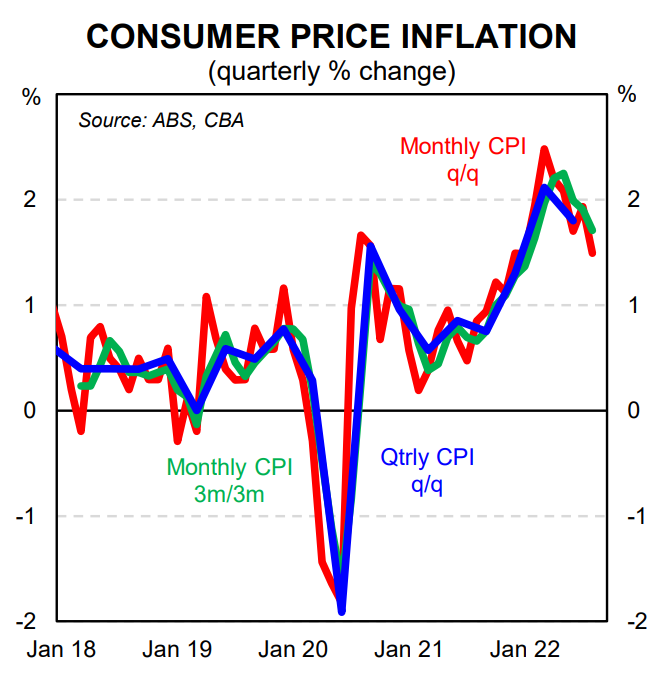
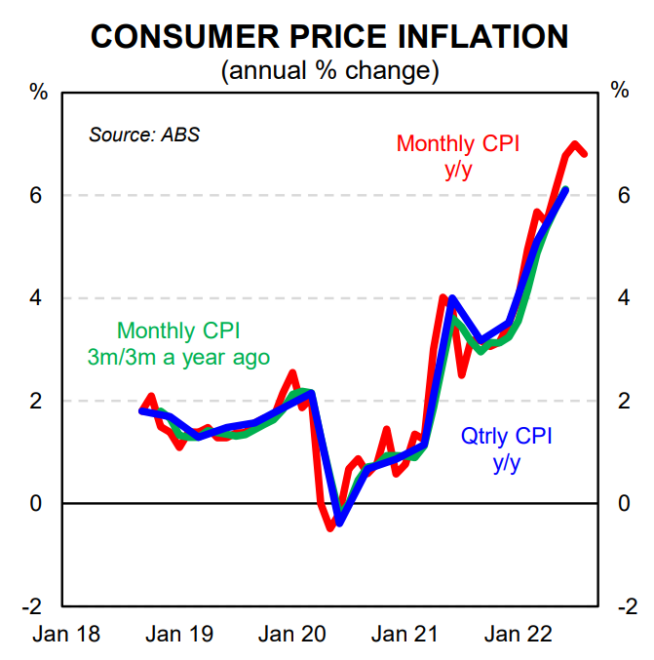
These are valid concerns. However, these potential costs were outweighed by the case to raise the cash rate by 25bp. Indeed the subsequent paragraph that makes the case for 25bp is worth unpacking:
- “The arguments for a 25 basis point increase rested on the risks to global and domestic growth, and the potential for inflation to subside quickly.” The RBA is cognisant that the rapid tightening of monetary policy by most major central banks will lead to a material slowdown in global demand, which puts downward pressure on global and by extension tradeables inflation.
- “The cash rate had risen by a significant amount in a short period of time. While consumption had so far held up, monetary policy operated with a lag and there was a risk that household spending might adjust by more than expected.” The lags between a change in the cash rate and the impact on home borrower cash flow are very important; we have written about them previously. There is on average a three month lag between an RBA rate hike and when CBA borrowers on standard variable rate mortgages experience an increase in their loans repayments.
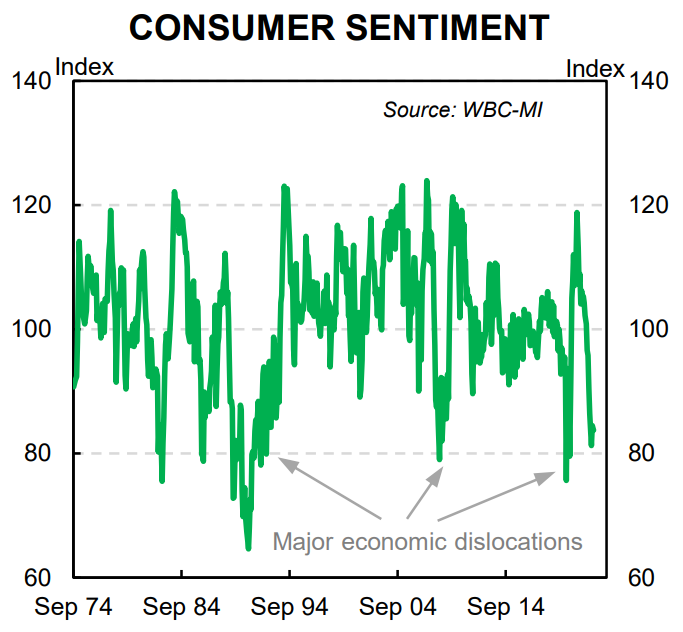
- “Higher interest rates, alongside higher inflation, were putting pressure on household budgets and consumer confidence had fallen.” Consumer sentiment currently sits deeply in the pessimistic zone. It has tracked over recent months at levels historically consistent with a major negative economic shock or recession.
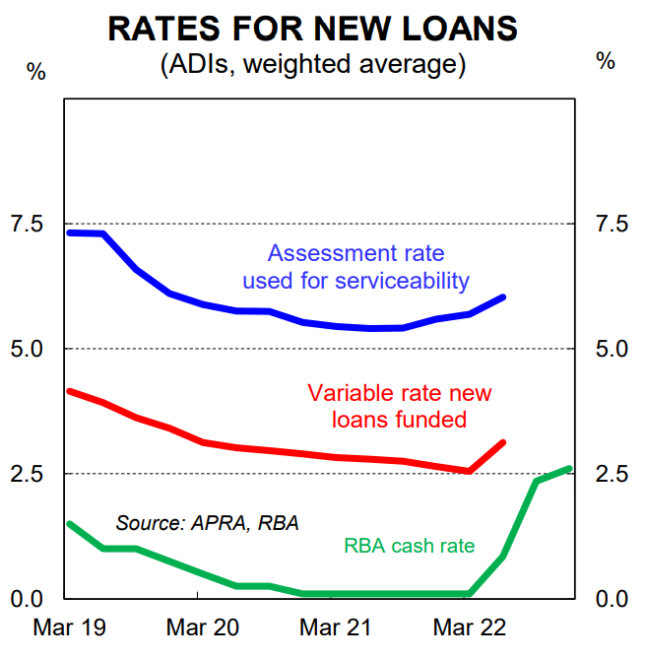
- “The full effects of higher interest rates were yet to be felt in mortgage payments and the increases in the cash rate were close to the interest rate buffer applied when many current borrowers took out their loans.” The minimum interest rate buffer that banks used when assessing the serviceability of home loan applications was 250bp above the loan rate until late last year (APRA increased the minimum interest rate buffer by 50bp to 300bp in late 2021). The RBA has increased the cash rate by 250bp so far since May 2022 which means further rate hikes from here breach the serviceability buffer applied for many recent borrowers.
- “The tightening of monetary policy was having a clear effect in the housing market, where prices had declined after earlier large increases, and the demand for housing loans had also fallen. Previous episodes of lower housing prices and turnover had seen a large effect on consumer spending, in part through the wealth channel of transmission.” National home prices have fallen at a pace of ~1.5%/mth over the past three months and turnover has fallen. The RBA does not target home prices. But the housing market needs to be considered in the context of the broader economy. The Board is clearly mindful of the impact that the housing market has on consumption and by extension employment.
The RBA Board today hosed down the idea that the level of exchange rate will feed into their decisions on how high to take the cash rate. More specifically, the Minutes noted, “the Australian dollar had depreciated further against the US dollar, but had appreciated slightly over 2022 on a trade-weighted basis. Members noted that the trade-weighted exchange rate typically has a greater bearing on imported inflation than bilateral rates.”
This is something we covered explicitly in our RBA preview ahead of the October Board meeting. Indeed we arrived at very much the same conclusion as the RBA did today. Namely that the TWI matters the most for imported inflation and the AUD has held up on a TWI basis.
Finally the Minutes today note, “the increases in the cash rate prior to the October meeting, required housing mortgage payments as a share of household income were expected to increase to around levels last seen in 2010”.
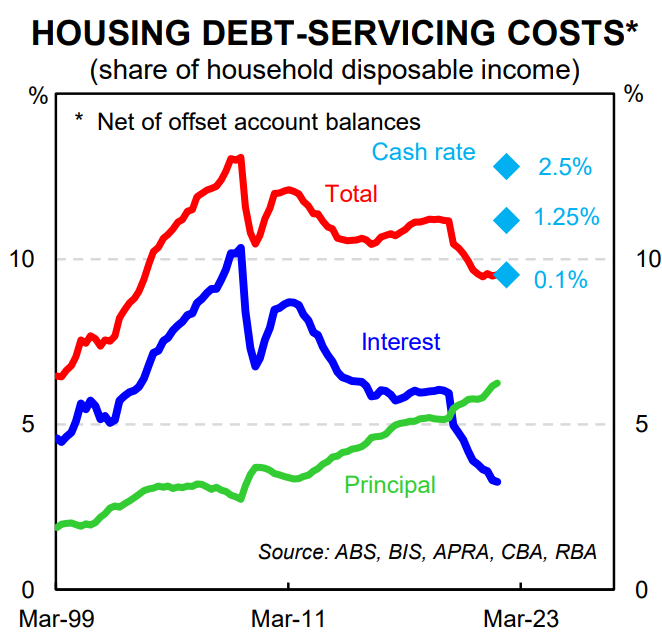
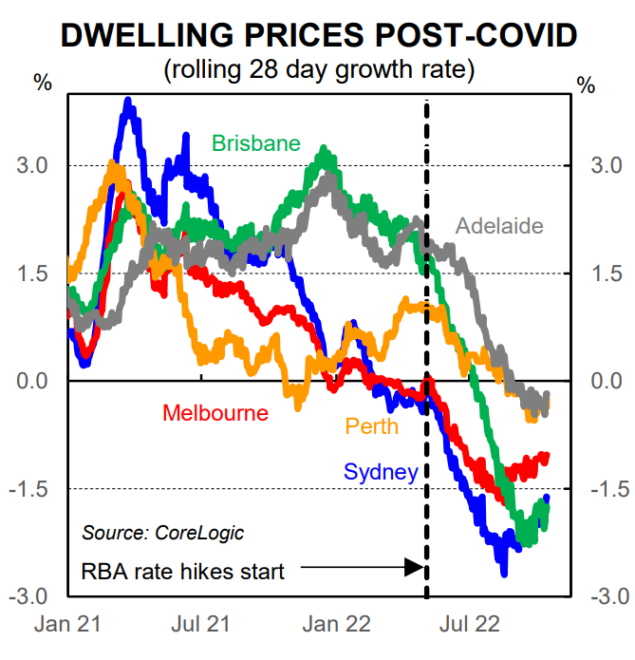
This comment very much lines up with our work on the debt servicing ratio. We would add that the levels last seen in 2010 were a previous record high. This is a key reason why we believe a cash rate setting of 2.60% is not neutral, but rather it is restrictive.
Deputy Governor Michele Bullock’s speech and the CBA Wage Indicator
The RBA Deputy Governor Michele Bullock today delivered a speech on Policymaking at the Reserve Bank at the Australian Finance Industry Association (AFIA) Annual Conference in Sydney.
The speech provided interesting details on how the Bank and the Board come to decisions on monetary policy.
The Deputy Governor spoke about the RBA’s assessment on wages growth and the outlook. In doing so the Deputy Governor made reference to the CBA Wage Indicator. This is the first time the RBA has made reference to our monthly indicator on wages, which very accurately maps the WPI.
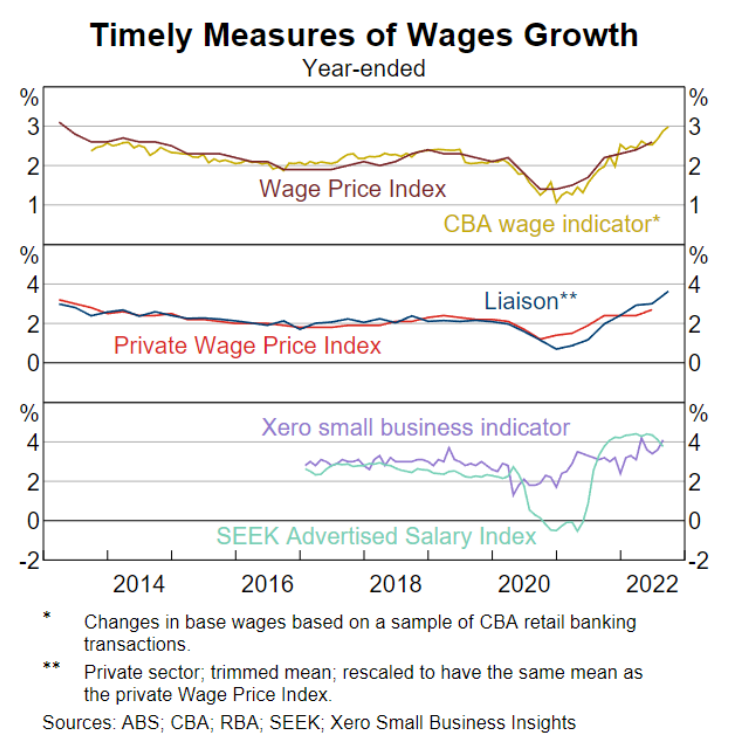
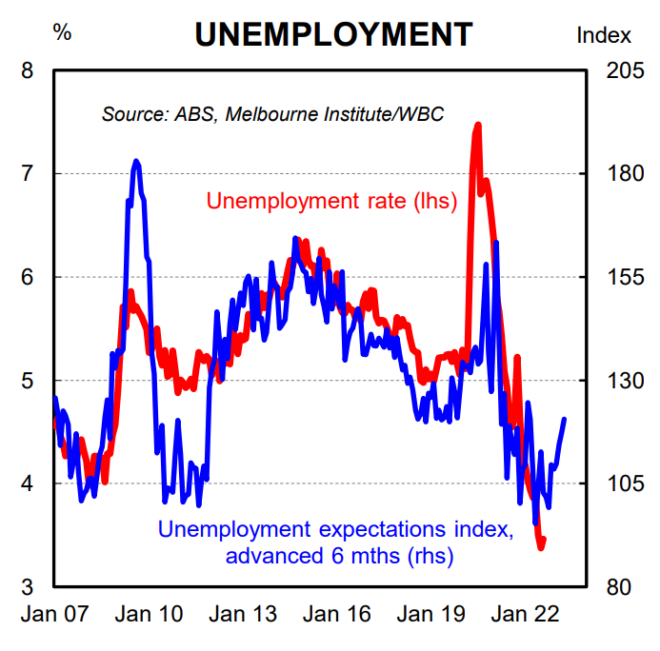
The CBA Wage Indicator suggests wages pressures in the economy have taken time to emerge. Indeed our data more accurately captures what is happening in the economy than business surveys and business liaison as it measures actual dollars paid into a matched sample of ~275k CBA bank accounts.
We are able to track wages inflation because we apply a strict criteria to the accounts we include in our sample each month to account for people moving jobs, receiving a bonus or modifying hours worked in any material sense. We also take into account changes in tax rates or levies.
Our data indicates that wages growth was travelling at 3.0%/yr in September. Australia is not facing a wage price spiral like is being observed in some other jurisdictions. This is a key dynamic that gave the RBA comfort to slow the pace of tightening down at the October Board meeting.
Monetary policy outlook
We expect the RBA to raise the cash rate by 25bp at the November Board meeting and we retain our base case that the terminal rate will be 2.85% (although the risks still sits with a higher terminal rate of 3.10%). There is a lot of important economic information to be released ahead of the November Board meeting. They key data is the September labour force survey (20/10), 2022/23 Commonwealth Budget (25/10), Q3 22 CPI (26/10) and September retail sales (31/10).
