CoreLogic has released interesting analysis examining how much further dwelling values would have to fall before they erase the price gains over the pandemic.
Dwelling values nationally rose 28.6% from trough to peak over the pandemic. Values have since declined 4.8% between May’s peak to the end of September:
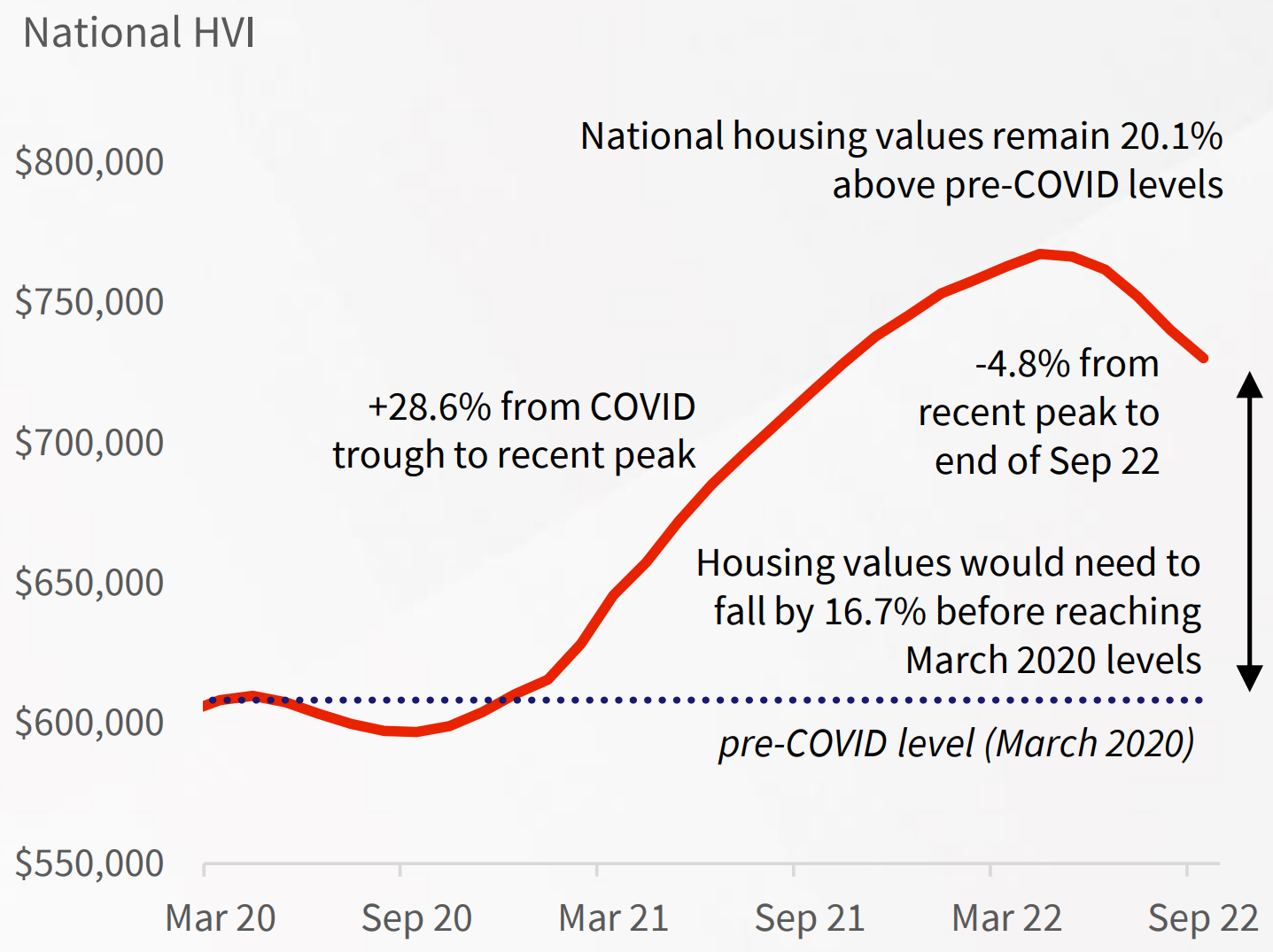
CoreLogic calculates that dwelling values would need to decline another 16.7% from September before reaching March 2020 levels.
Most forecasts for peak-to-trough declines range from around 15% to 25% across the combined capital cities, and CoreLogic notes that:
- A 15% drop from the peak in April 2022 would take CoreLogic’s combined capital cities index back to roughly March 2021 levels.
- A 20% drop in values would see the index 2.2% lower than the onset of the pandemic in March 2020.
- A 25% drop in capital city dwelling values would take the index 8.3% below March 2020 levels; a similar reading to August 2016.
The next chart shows the amount that each housing market would need to fall in order to surrender all of their pandemic gains:
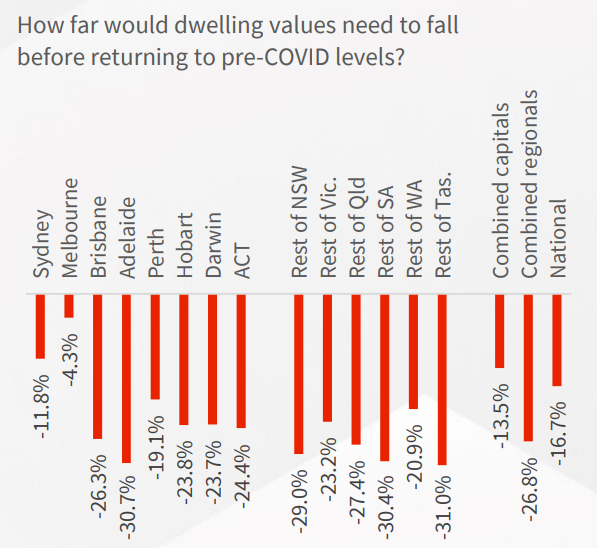
As you can see above, Melbourne’s housing market is most exposed because it did not experience as bigger boom over the pandemic.
The next chart shows that the 5.5% 5-city aggregate decline to the end of September was the steepest in records dating back to 1980:
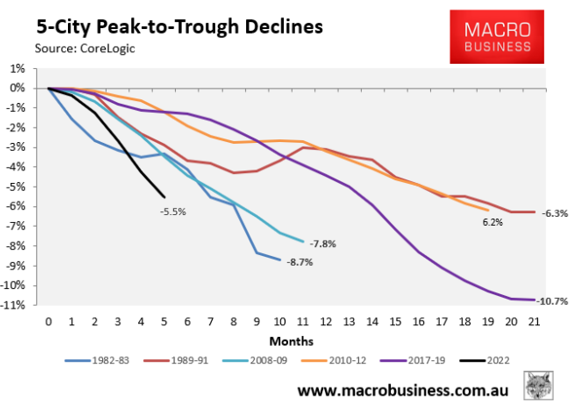
However, it was only halfway to matching the record 10.7% peak-to-trough decline experienced between 2017 and 2018.
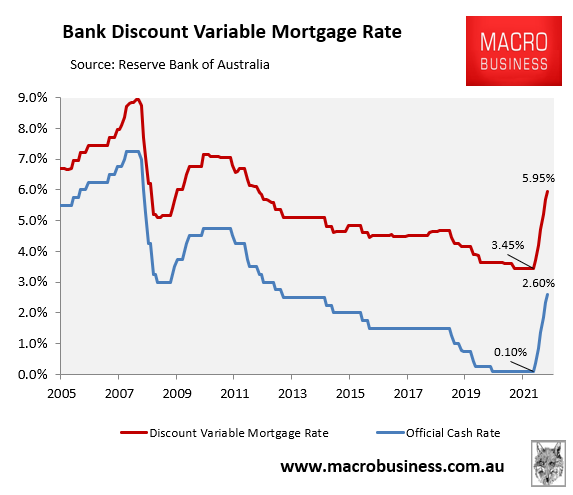
Given the Reserve Bank’s 2.5% of interest rate hikes are the steepest in the nation’s history, with more to come. It seems certain that this downturn will become the nation’s largest on record.
Price falls are very likely closer to the beginning than the end.