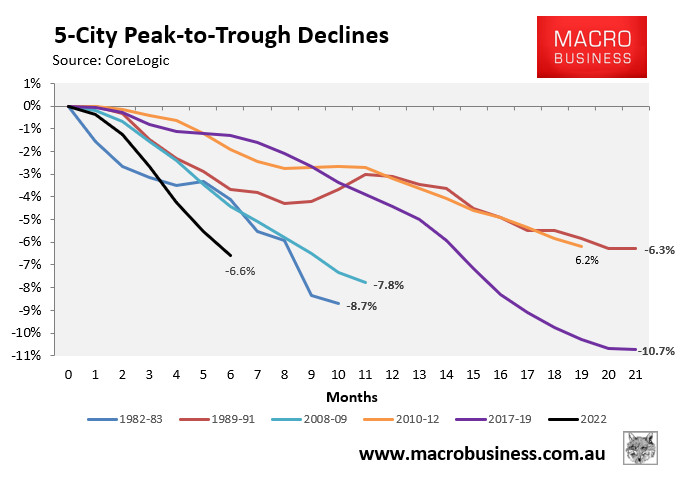
CoreLogic’s daily dwelling values index has fallen 6.6% from its May peak across the five major capitals, which is the fastest pace of decline in records dating back to 1980:
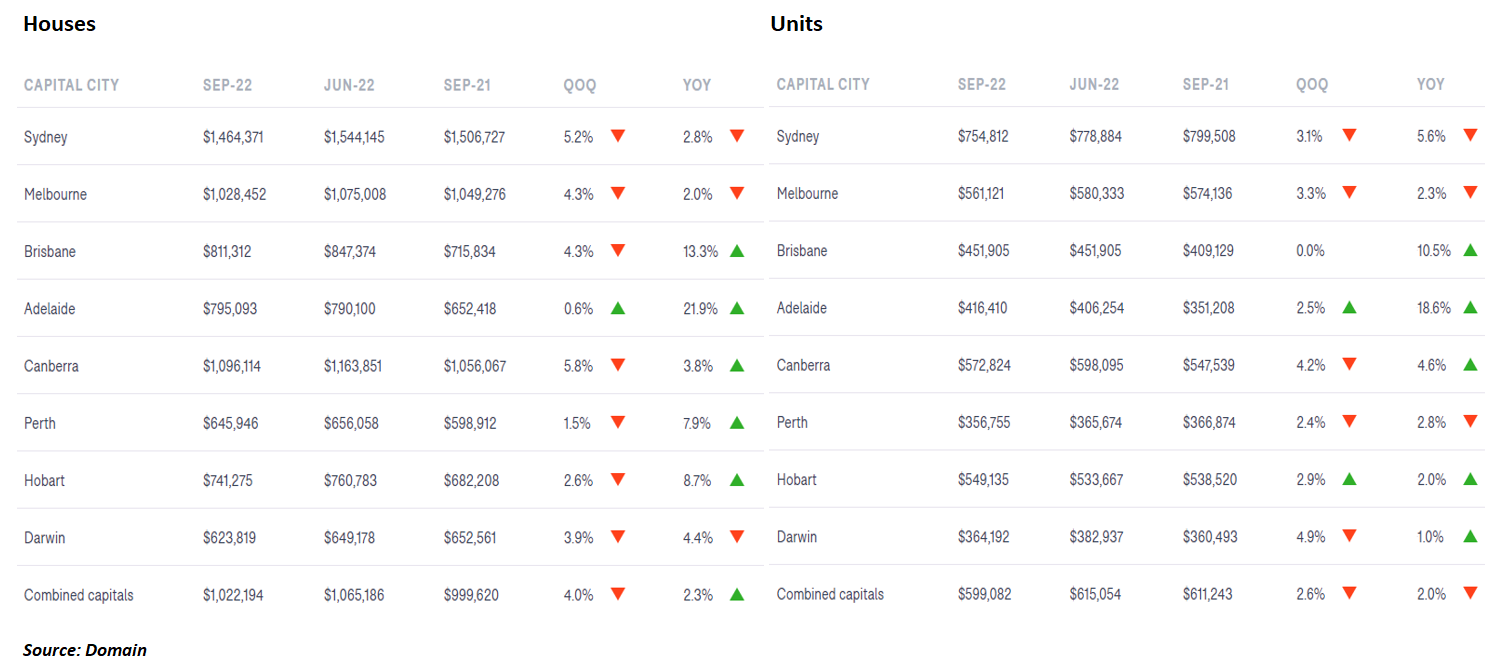
Now Domain has released its house price results for the September quarter, which has recorded the fastest ever price declines across Sydney, Melbourne, Brisbane, Canberra and the combined capitals:
Advertisement
Below is a summary of house price movements across capitals:
- Sydney’s housing market downturn gathered significant momentum over the September quarter with house prices falling at their fastest rate on record. House prices are now 8.3% below the March 2022 price peak, down by about $132,000. Despite the fast pace of the falls this quarter, house prices are sitting substantially higher than what they were before the pandemic property boom – prices are still $326,000 higher – and would need to fall by a further 22.3% to erase all the growth seen.
- Melbourne’s housing market downturn gathered significant momentum over the September quarter, with house prices now falling at the fastest pace in the city’s history and it marks the first annual decline since mid-2019. House prices are now 6% below the December 2021 price peak, down by about $66,000. Despite the rapid pace of the falls this quarter, house prices are sitting substantially higher than what they were before the pandemic property boom – prices are still about $147,000 higher – and would need to fall by a further 14.3% to erase all the growth seen.
- Brisbane’s housing market slowdown gathered momentum over the September quarter, with house prices falling at their fastest quarterly pace in the city’s history. House prices are now 4.3% below the June 2022 price peak, down by about $36,000. Despite the fast pace of the falls this quarter, house prices remain 13.3% higher than a year ago but annual gains are the slowest since mid-2021. This is a significant turnaround that puts the brakes on the steepest house price upswing the city had seen in almost two decades.
- Adelaide is the only capital city market in Australia to record positive growth in house and unit prices over the September quarter and reach new record highs.
- Perth’s housing market is now unanimously on the downward slide as house and unit prices both declined over the September quarter. House prices are now 1.5% below the June 2022 price peak, down about $10,000. This is the steepest quarterly decline in three years for house prices. Despite the pace of the falls this quarter, house prices remain 7.9% higher than a year ago.
- Canberra’s housing market slowdown gathered significant momentum over the September quarter, with house prices now falling at their fastest rate on record. House prices are currently 6% below the December 2021 price peak, down about $70,000. Despite the fast pace of the falls this quarter, house prices are sitting substantially higher than what they were before the recent pandemic property boom – prices are still $320,000 higher – and would need to fall by a further 29.2% to erase all the growth seen.
- Hobart’s house prices declined for a second consecutive quarter for the first time since 2014. This is the weakest outcome in a single quarter and the slowest annual pace of house price growth since mid-2020. House prices are now 3.3% below the March 2022 price peak, down by about $25,000. Despite the fast pace of the falls this quarter, house prices are sitting substantially higher than what they were prior to the recent pandemic property boom – prices are still $238,000 higher – and would need to fall by a further 32% to erase all the growth seen.
- Darwin house and unit prices were on the decline again over the September quarter, reversing all of the previous quarter’s growth. This is the steepest decline in prices since the onset of the pandemic. House prices dropped 3.9% over the September quarter and unit prices were down by 4.9%.
Domain expects house prices to fall further amid rising interest rates, although it believes the September quarter could be a peak quarterly decline.
Advertisement