The first hammer that will drop over the next six months is interest rates. Households have barely been touched by the extreme rate hikes to date, as CBA explains:
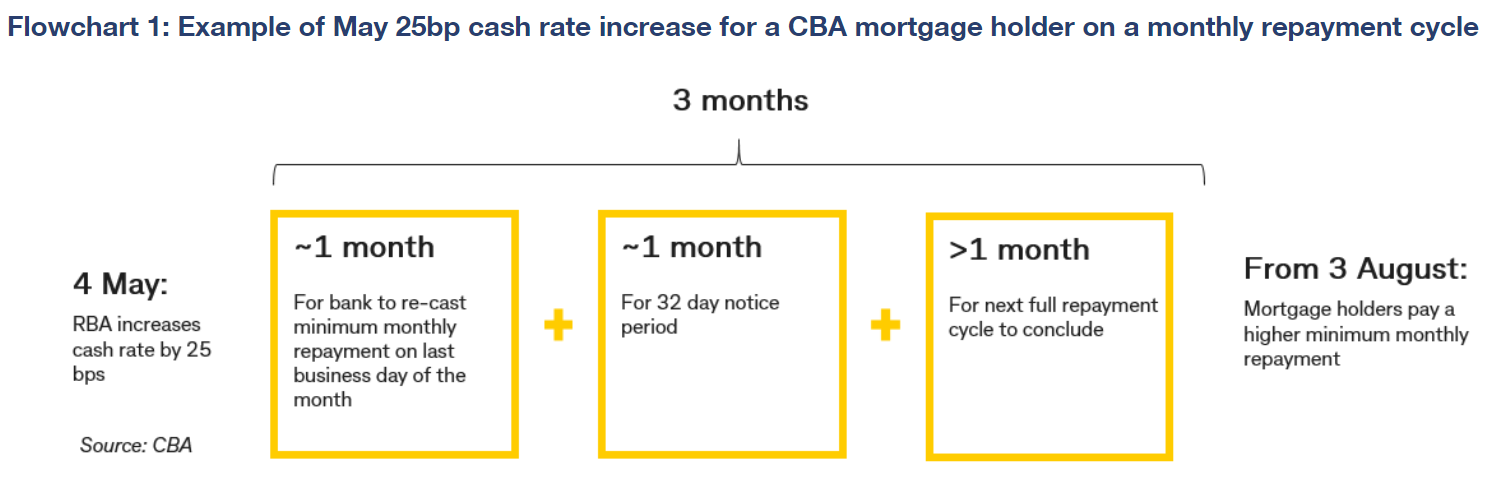
The flow chart below illustrates the delay in pass-through from the RBA’s first 25bp rate hike in May to a CBA borrower on a standard variable rate with a monthly repayment schedule (~75% of people).
Interest accrues from a lenders effective rate change date, which is typically ~2 weeks after the RBA increases the cash rate. This interest is added to a borrower’s outstanding debt. But from a cash flow perspective the impact is not felt for three months on average for a CBA customer.
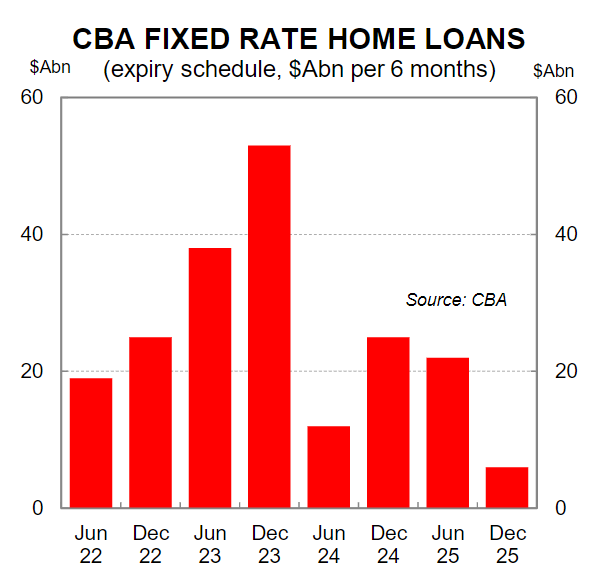
This hammer will be turned much heavier as the fixed-rate mortgage roll-off begins in earnest for 40% of mortgage holders:
Advertisement
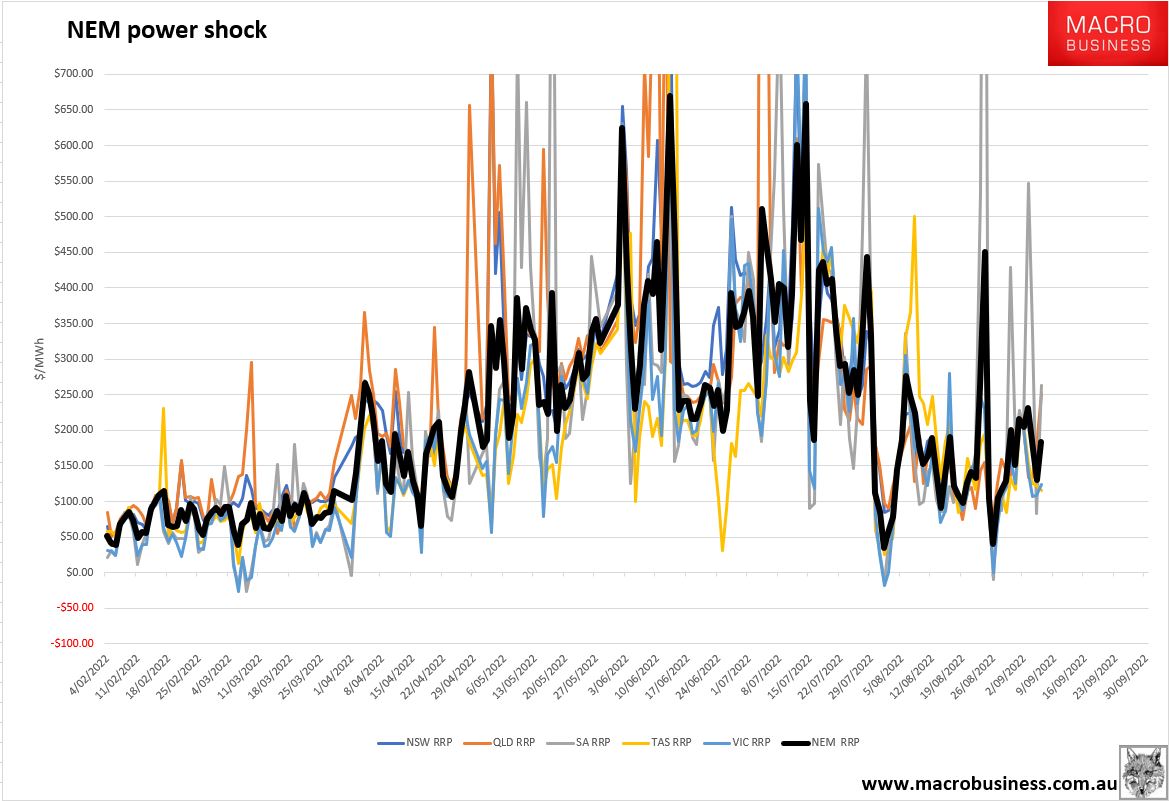
The second hammer to fall is energy prices. Consumers have barely seen the gas and electricity bill shock because the vast majority of households are on quarterly renewed contracts. These will begin the flow though as the Q3 and Q4 resets transpire. This is still a shock to real incomes in the realms of $50bn to be paced over a year:
Together, the combined energy shock and rate hikes are approaching $100bn of lost purchasing power by households over the next year.
Advertisement
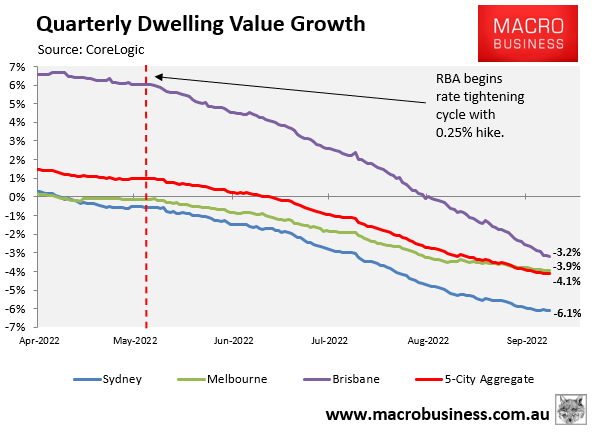
The third hammer we all know well. It is the crash in asset values surrounding house prices. So far, the impact has been small with some $300bn of value disappearing into the ether:
But by year-end, it will be $1tr and still growing.
Advertisement
That’s a combined income and balance sheet shock worth the equivalent of half of the economy. All of it focused on households.
Consumers are about to be pancaked and the economy with it.
David Llewellyn-Smith is Chief Strategist at the MB Fund and MB Super. David is the founding publisher and editor of MacroBusiness and was the founding publisher and global economy editor of The Diplomat, the Asia Pacific's leading geo-politics and economics portal.
He is also a former gold trader and economic commentator at The Sydney Morning Herald, The Age, the ABC and Business Spectator. He is the co-author of The Great Crash of 2008 with Ross Garnaut and was the editor of the second Garnaut Climate Change Review.