Roy Morgan Research has modelled the direct impact of the existing 2.25% lift in the Official Cash Rate (OCR), as well as further expected rate increases of 0.5% during each of the next two months.
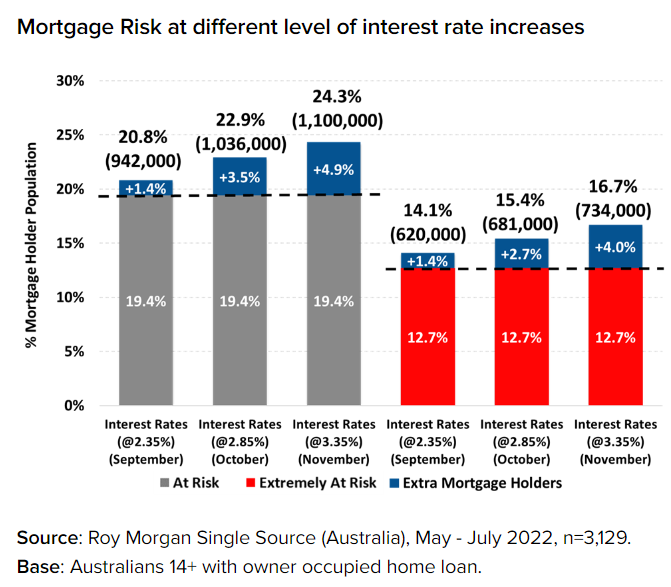
This modelling suggests that around one quarter of Australian mortgage holders would be classified as ‘At Risk’, meaning their mortgage repayments would be greater than a certain percentage of household income (i.e. 25% to 45% depending on income and spending).
This would be the highest share of mortgage stressed households since July 2013:
The interest rate increases already made by the RBA mean that 20.8% of mortgage holders, 942,000, would now be classified as ‘At Risk’ – an increase of 88,000 on the original figure of 854,000 (19.4%) and the highest number of mortgage holders classified as ‘At Risk’ for over three years since May 2019.
If the RBA increases interest rates by 0.5% in each of the next two months this would mean 24.3% of mortgage holders, 1,100,000, would then be classified as ‘At Risk’ – an increase of 246,000 on July 2022. This would be the most mortgage holders classified as ‘At Risk’ since July 2013 just over nine years ago.
Advertisement
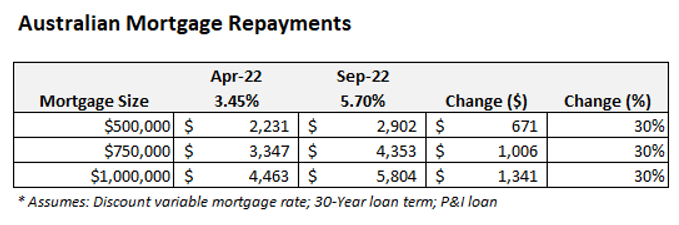
As illustrated in the next table, average variable mortgage repayments have already lifted by 30% versus their level in April immediately prior to the RBA’s first interest rate hike:
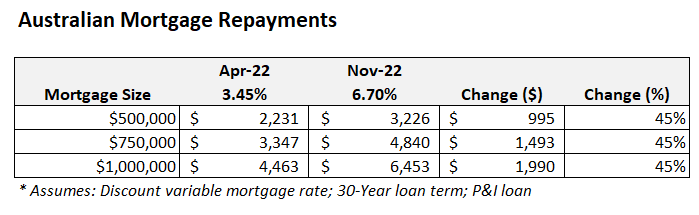
If the RBA was to hike another 1.0% over the next two months, then this would lift repayments a further 15% to 45% above their pre-tightening level:
Advertisement
Around 40% of mortgages taken out during the pandemic were fixed at rock bottom rates of around 2.25%. A large chunk of these mortgages will expire over the next year and will revert to roughly double mortgage rates, pushing many more borrowers into stress.
Given the sheer size of recent Australian mortgages, it makes sense that many will fall into stress on the back of the RBA’s aggressive rate hikes.
Leith van Onselen is Chief Economist at the MB Fund and MB Super. He is also a co-founder of MacroBusiness.
Leith has previously worked at the Australian Treasury, Victorian Treasury and Goldman Sachs.