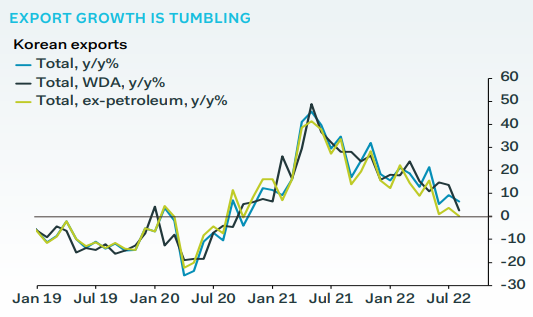
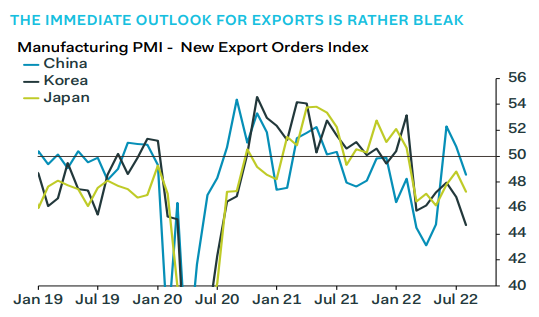
The renminbi is weakening once again, in the face of dollar strength, but that’s not the full story. The currency’s ability to defy gravity is fading, and this reflects the growing impotence of the PBoC. The liquidity trap is closing tighter, creating an asymmetric profile of outcomes for monetary policy.
Pantheon with the note:
________________________________________________________________________________________________
The renminbi has come under renewed pressure in recent days. The primary cause is dollar strength, so the renminbi is hardly alone, but this will be of scant comfort to policymakers. The main worry is the threat of capital flight that accompanies persistent currency weakness, as expectations of further depreciation form a self-fulfilling prophecy. The PBoC will be even less willing to ease policy, as a result.
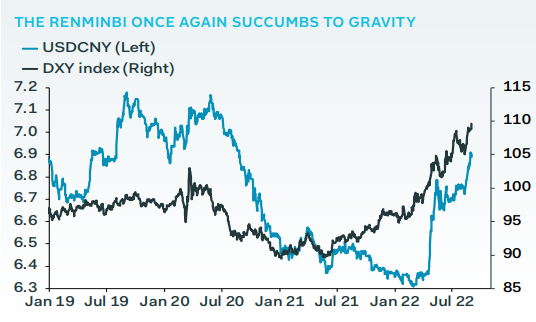
China’s exchange rate has breached the 6.9 level against the dollar repeatedly over the last week, with a sharp depreciation—by Chinese standards—from mid-August, after an extended period of relative stability around the 6.70 to 6.75 range. To a large extent, this reflects catch-up to the dollar, which has been on a tear this year. We have been here before; the renminbi weakened suddenly—and more dramatically—in April this year, in another dollar recoupling.
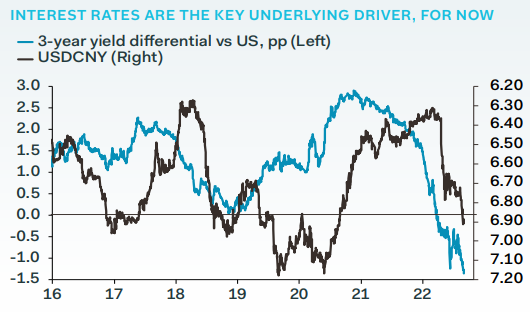
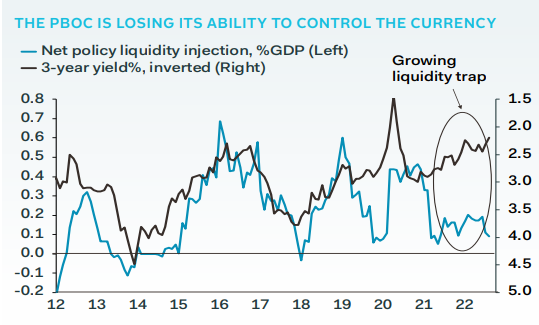
In April, as now, the dollar was supported by moves in interest rate differentials. In another parallel, the renminbi exchange rate had resisted the pull of those differentials for some time. On this occasion, however, the currency was unable to defy gravity for as long, as shown in our first chart.
The recoupling with the dollar—or the return to reality—has on both occasions been driven by disappointing data, and accompanying modest monetary stimulus. In April, it became clear how damaging the spreading Omicron lockdown was likely to be, and the PBoC delivered a very begrudging 25bp cut to the RRR. Similarly, mid-August saw small MLF and LPR rate cuts, as it became clear the post-lockdown rebound had already run out of steam.
The seemingly inevitable response of the currency to monetary policy easing gives the PBoC yet another reason to avoid further accommodative moves. We have argued before that monetary stimulus at this point is ineffectual at best, given weak loan demand. At worst, it can be actively harmful, given its potential to imperil financial stability by forming new asset bubbles, and by weakening the currency.
Historically, we see a good relationship between PBoC liquidity provision and Chinese government bond yields, shown in our chart above. So if rate differentials are a source of pressure on the currency— as they are now—the PBoC should shy away from further easing, for fear of exacerbating the problem.
What is interesting, however, is that this relationship has broken down over the last year and a half, at least partially. PBoC easing still pushes yields lower, but tightening is no longer reflected in higher rates.
It could be that we are missing additional measures of PBoC liquidity, such as the assorted relending programmes announced this year. But similar policies do not seem to have caused a breakdown in the relationship in past periods of economic stress.
Instead, we think the change reflects the growing liquidity trap China finds itself in. If the private sector is unwilling to borrow, this essentially releases financial sector liquidity. Banks still need to lend those funds to make a return, so they turn to the only borrower that remains, the public sector. This also explains the seemingly outsized response of Chinese currency and bond markets to small tweaks in monetary policy; any extra liquidity now ends up almost entirely in public sector debt.
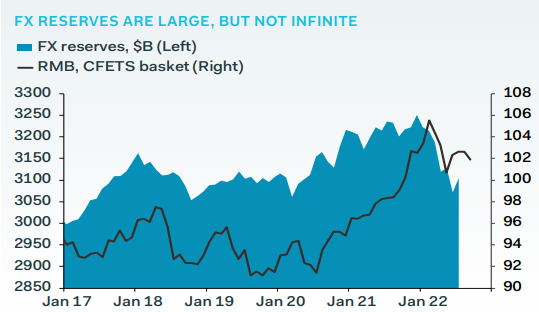
China’s liquidity trap is closing ever tighter around the PBoC. The central bank is increasingly powerless to effect economic policy. It cannot stimulate growth, and it is struggling to contain currency weakness. The main tool that remains now is outright intervention, through use of its FX reserves.
Data out this week should show a renewed fall, given the certainty that the central bank leant against depreciation in August, evidenced by the appreciation of the CFETS currency basket. Some of this intervention has reportedly come through commercial bank operations, as is normal, but we expect some role for the PBoC, all the same. Dollar strength, and
the bond market sell-off, can also be expected to erode the value of China’s FX reserves.
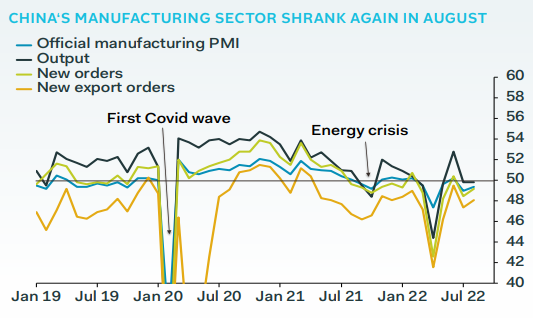
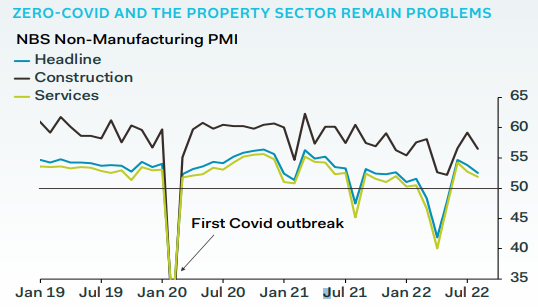
The PBoC will continue to battle depreciation, even if a weaker currency might help export performance at the margin. Any impression that the currency has entered freefall risks sparking a wave of capital flight, putting additional stress on a domestic financial system which is already creaking under the strain of the property downturn. Smaller banks, in particular, are evidently in trouble, amidst bank runs, corruption scandals, and mortgage boycotts. A repeat of the 2015 capital flight episode at this point would be disastrous.
As a result, we remain sceptical that the PBoC can or will ride to the rescue of China’s economy this year. Monetary easing increasingly looks likely to do more harm than good. The central bank will probably still come under pressure from Beijing to act, and so deliver some more small easing measures under duress. But this will only hasten the renminbi’s
decline, without delivering any great impetus to economic growth.