
Australian home builders smashed by ‘shrinkflation’
The AIG Performance of Construction Index is out and shows that Australia’s construction sector contracted for the third straight month on the back of the Reserve Bank of Australia’s aggressive rate hikes, alongside rapid cost inflation.
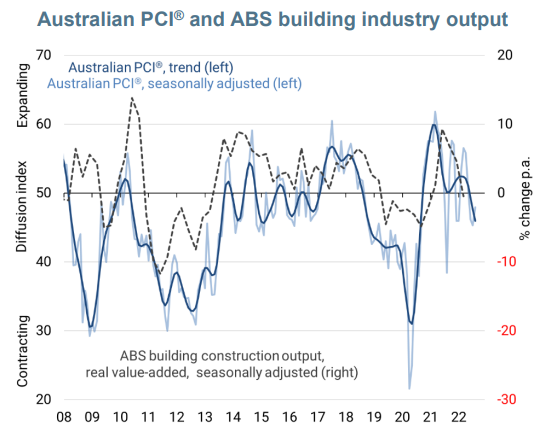
Construction index falls into recession.
Construction sector activity: Activity declined for the fourth month in housing; and apartments fell from stability to contraction. The rate of deterioration eased in commercial construction; engineering was positive as it grew and improved.
Construction prices: The input prices index eased again (dropping slightly to 92.6) but remained very high in August after reaching a series peak in June (seasonally adjusted). Input prices have been extremely elevated for over a year with few signs of easing. The selling prices index eased but marked twenty-two months of growth following a peak in July.
Construction concerns: Builders reported lower customer demand due to higher interest rates and increased uncertainty in August. Respondents to the Australian PCI® continued to report labour shortages, supply delays and high input costs. While remaining positive the selling prices index fell to its lowest level in a year as fewer businesses were able to pass on input cost increases.
The next charts show that the house building sub-sector is looking especially weak with both activity and new orders contracting:
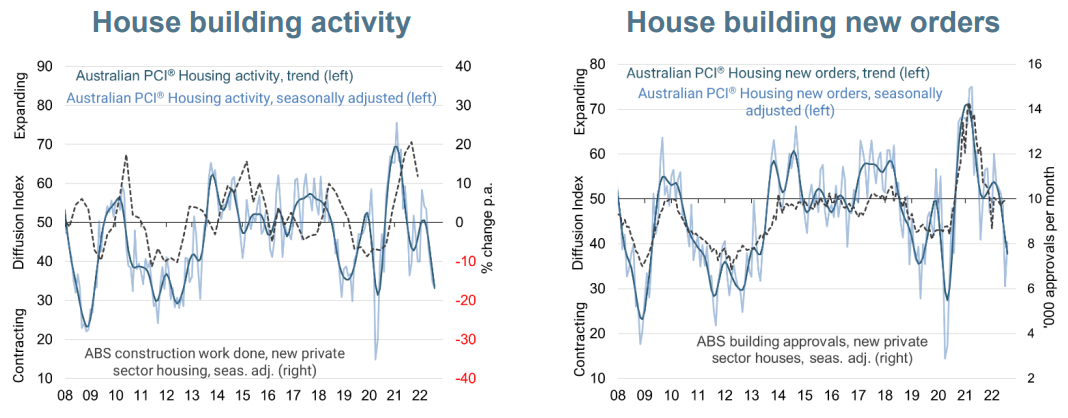
House building sub-sector contracting hard.
Last month, the Australia Bureau of Statistics released Consumer Price Index data showing that new dwelling prices soared by a record 20% in the 2021-22 financial year off surging input costs:
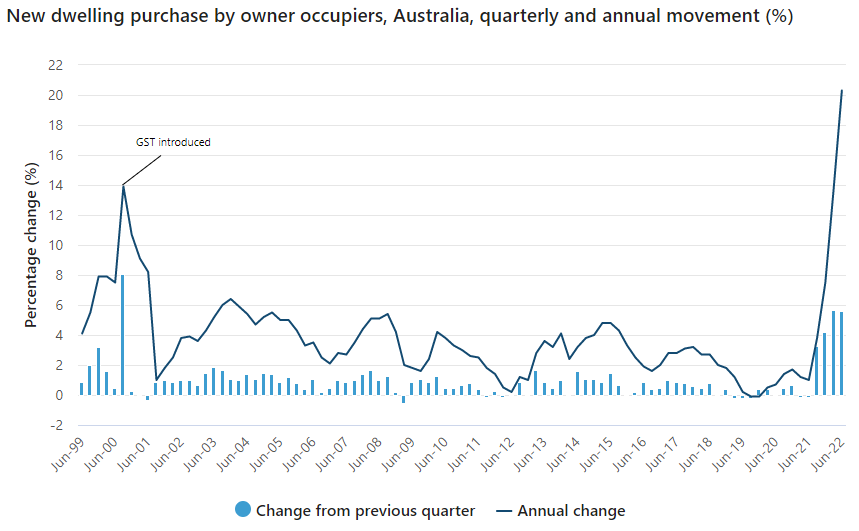
Extreme cost inflation drives new dwelling prices higher.
The upshot is that while the home building industry is still busy, activity is fading. Worse, many builders are going broke because the cost of key building materials such as steel and timber have skyrocketed, sending builder margins into negative.
That’s why it has been dubbed a “loss-making” boom for the industry.
The longer-term implications are concerning given it could leave Australia with reduced building capacity at the very same time as the Albanese Government ramps-up immigration (housing demand) all-time record levels.
The end result will be chronic housing shortages, soaring rents, and increased homelessness. It is a disaster in the making.
