
CoreLogic has released its dwelling values results for August, which shows that values fell 1.6% nationally over the month – the fourth consecutive monthly decline:
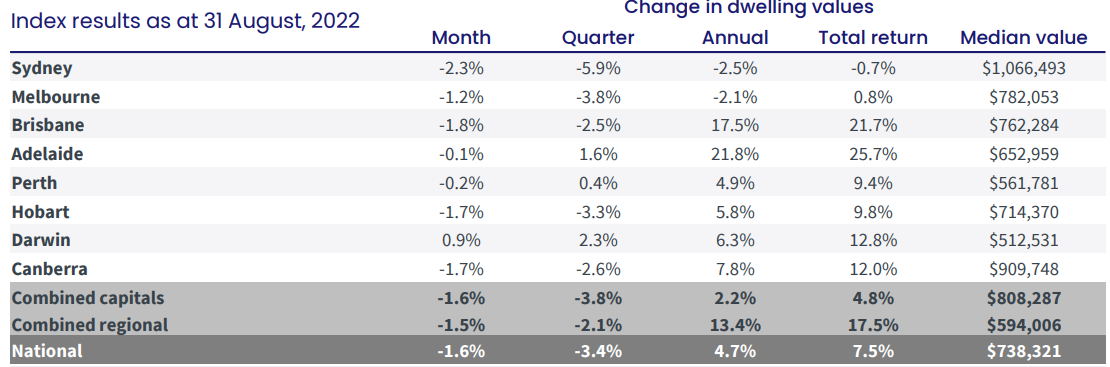
Dwelling values fell across seven capital cities and the combined regions, with Sydney (-2.3%), Brisbane (-1.8%), Hobart (-1.7%), Canberra (-1.7%) and Melbourne (-1.2%) experiencing the sharpest price falls.
The quarterly rate of decline rose to 3.4% nationally, driven by falls across Sydney (-5.9%), Melbourne (-3.8%), Canberra (-2.6%) and Brisbane (-2.5%):
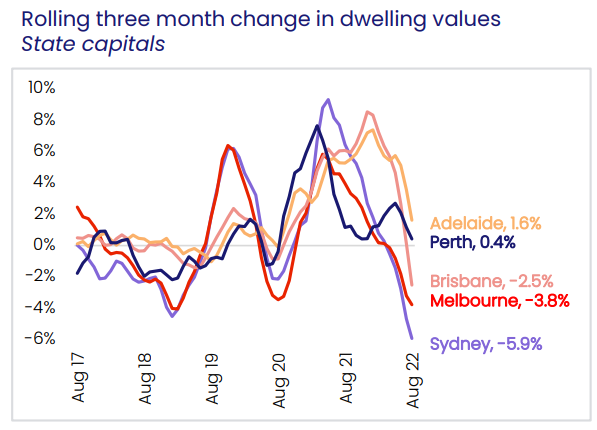
The rate of quarterly decline across the combined regions (-2.1%) is fast catching-up with the combined capital cities (-3.8%):
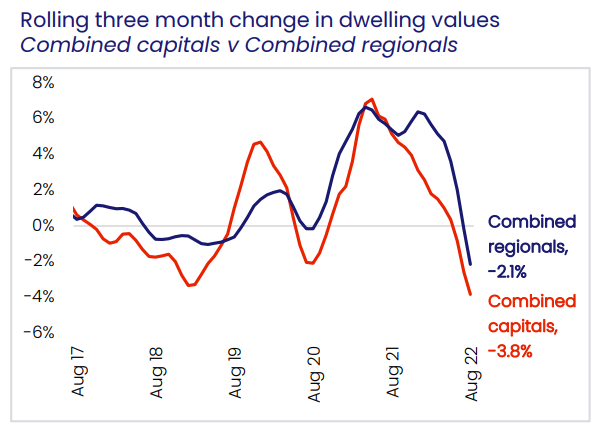
It was the sharpest rate of quarterly decline since 1983 at the combined capital city level and across Sydney, whereas Melbourne’s quarterly decline was the fastest since February 2019 and Brisbane’s since 2008.
The next chart plots the cumulative decline across the three major capitals, based on the daily index to 30 August (the latest data available):
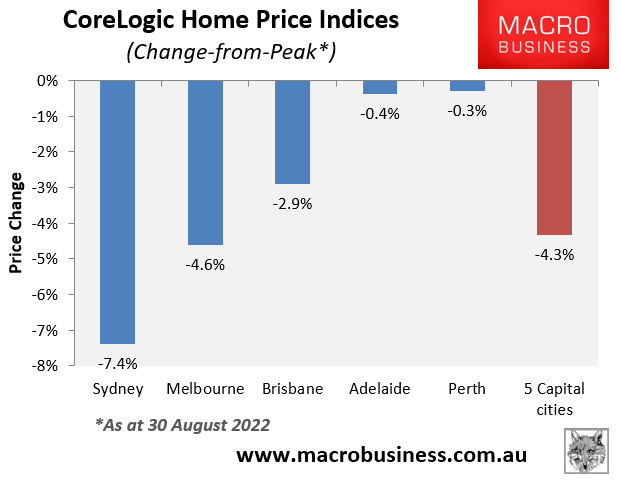
Sydney’s dwelling values have fallen by 7.4% from their mid-February peak, whereas Melbourne’s are down 4.6% and Brisbane’s are 2.9% lower. Adelaide (-0.4%) and Perth (-0.3%) have only just begun their descent.
With the Reserve Bank of Australia (RBA) poised to hike rates by another 0.5% next week – the fifth consecutive increase – Australia’s housing correction will continue.
Ultimately, how deep the correction goes will depend on how aggressive the RBA goes with its monetary tightening. If it hikes rates as aggressively as some of the more bullish economists and the financial market are tipping (i.e. an official cash rate between 3.25% and 4%), then Australian house prices will experience its biggest crash in living memory.
But if the RBA soon stops hiking, then price falls will moderate before stabilising.
The ball’s in the RBA’s court.
