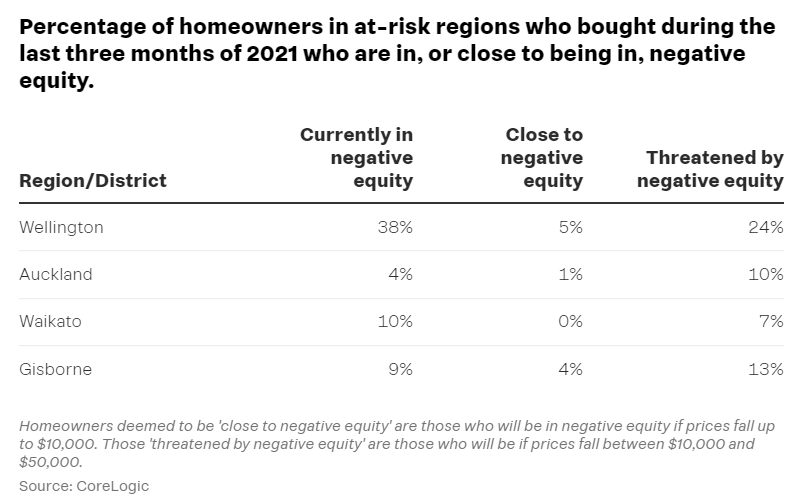
CoreLogic analysis shows that pockets of negative equity are beginning to emerge across New Zealand.
Wellington has the greatest share of first home buyers (FHB) in negative equity, with 38% of FHBs that purchased during the final three months of 2021 currently underwater.
This is followed by Waikato (10%), Gisborne (9%) and Auckland (4%).
Advertisement
Significant numbers are also “close to negative equity” (if prices fall by $10,000) or “threatened by negative equity” (if prices fall by between $10,000 and $50,000).
For example, in Auckland, the proportion in negative equity would rise to 15% if prices fell by an additional $50,000, representing only a 5% decline in values.
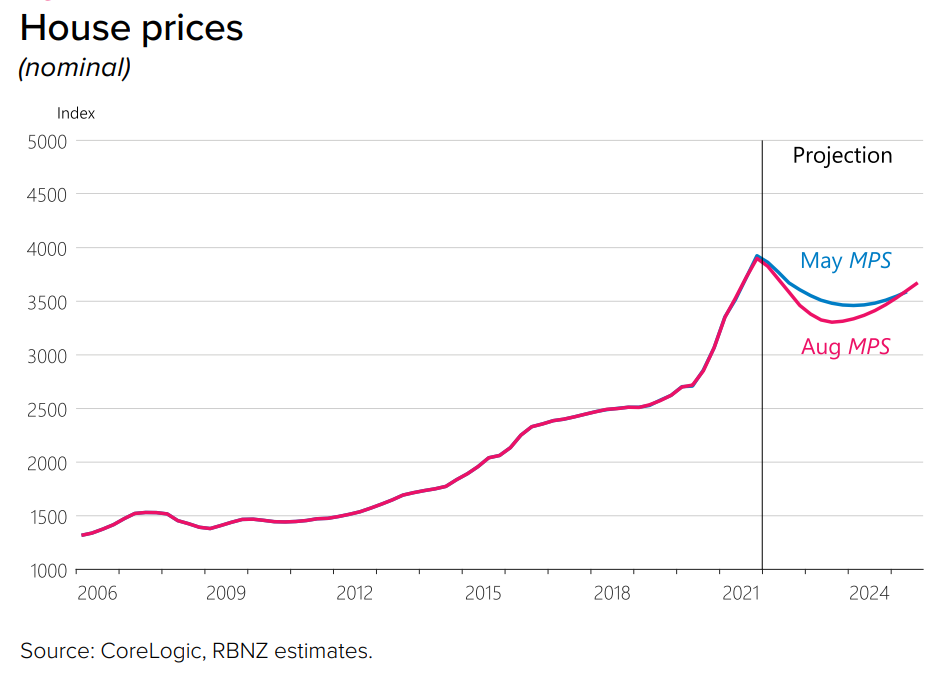
In its latest Statement on Monetary Policy, the Reserve Bank of New Zealand (RBNZ) downgraded its house price forecasts. It now tips a 15% peak-to-trough decline in national dwelling values by the September quarter of 2023:
Advertisement
The central projection assumes that prices will continue to decline until the September 2023 quarter. This would result in a total decline of 15 percent from the December 2021 quarter peak, slightly more than assumed in the May Statement:
The RBNZ also warned that recent homebuyers will be hardest hit, noting “there is a portion of recent home buyers who are most vulnerable to rising interest rates, notably those who borrowed for the first time in 2021”.
In short, the RBNZ’s aggressive interest rate hikes are likely to result in a sharp decline in New Zealand dwelling values, which will plunge a significant proportion of recent buyers into negative equity at the same time as their monthly mortgage repayments soar.
Advertisement
It will be a bitter pill to swallow for those whom leveraged heavily at rock bottom rates to gain a foothold in the market.
Leith van Onselen is Chief Economist at the MB Fund and MB Super. He is also a co-founder of MacroBusiness.
Leith has previously worked at the Australian Treasury, Victorian Treasury and Goldman Sachs.