Yesterday’s shocking retail sales data has economists worried that New Zealand is heading into recession.
To recap, the volume of retail sales plunged 2.3% over the June quarter, badly missing consensus expectations of 1.7% growth.
The result has raised the prospect that New Zealand’s economy may already be in recession, given the economy shrank 0.2% in Q1:
ANZ senior economist Miles Workman said while the retail sales data are only a small share of total production GDP (around 7%), they do tend to provide a relatively good signal on overall GDP growth.
“On its own, today’s data present downside risk to our forecast for a 1.0% [quarter on quarter GDP] rebound. In fact, on face value, today’s data suggest the economy may have been in a technical recession in the first half of the year”…
A consumer-led recession cannot be ruled-out given Tony Alexander’s latest Spending Plans Survey revealed that a net 18% of Kiwi households plan to slash their consumption spending over the next 3 to 6 months in response to soaring interest rates and inflation, as well as plunging house prices:
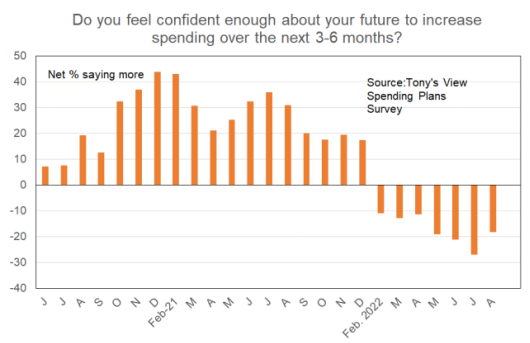
New Zealand households plan to cut back spending.
New Zealand consumer confidence has also fallen to recessionary levels, with mortgaged Kiwis especially pessimistic. Most tellingly, the “good time to buy a major item” sub-index – which correlates strongest with consumption – is firmly negative:
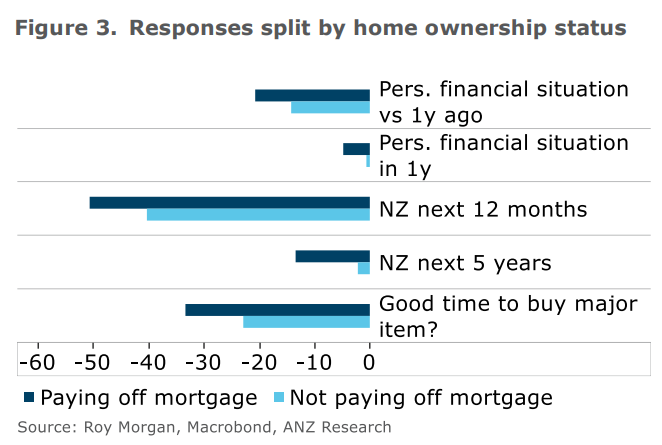
Kiwis with mortgages are more pessimistic.
In a similar vein, ASB’s latest Housing Confidence Survey plummeted to a 13-year low on the back of record high interest rate expectations. A net 31% of respondents expected house prices to fall in the three months to July, with a net 9% of respondents also believing it is a bad time to buy a house:
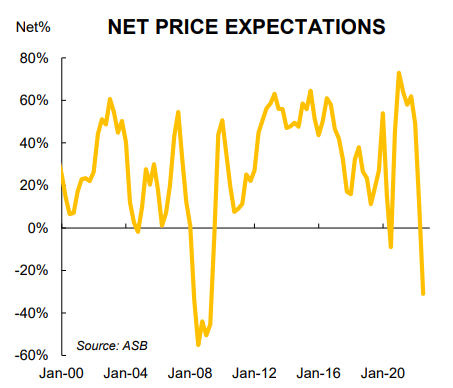
Kiwi house price expectations crash to 13-year low.
Finally, the 10th annual National Construction Pipeline Report by BRANZ and Pacifecon forecast that New Zealand residential construction would fall by more than one-third, or $11 billion, to $19.6 billion per year over the next five years:
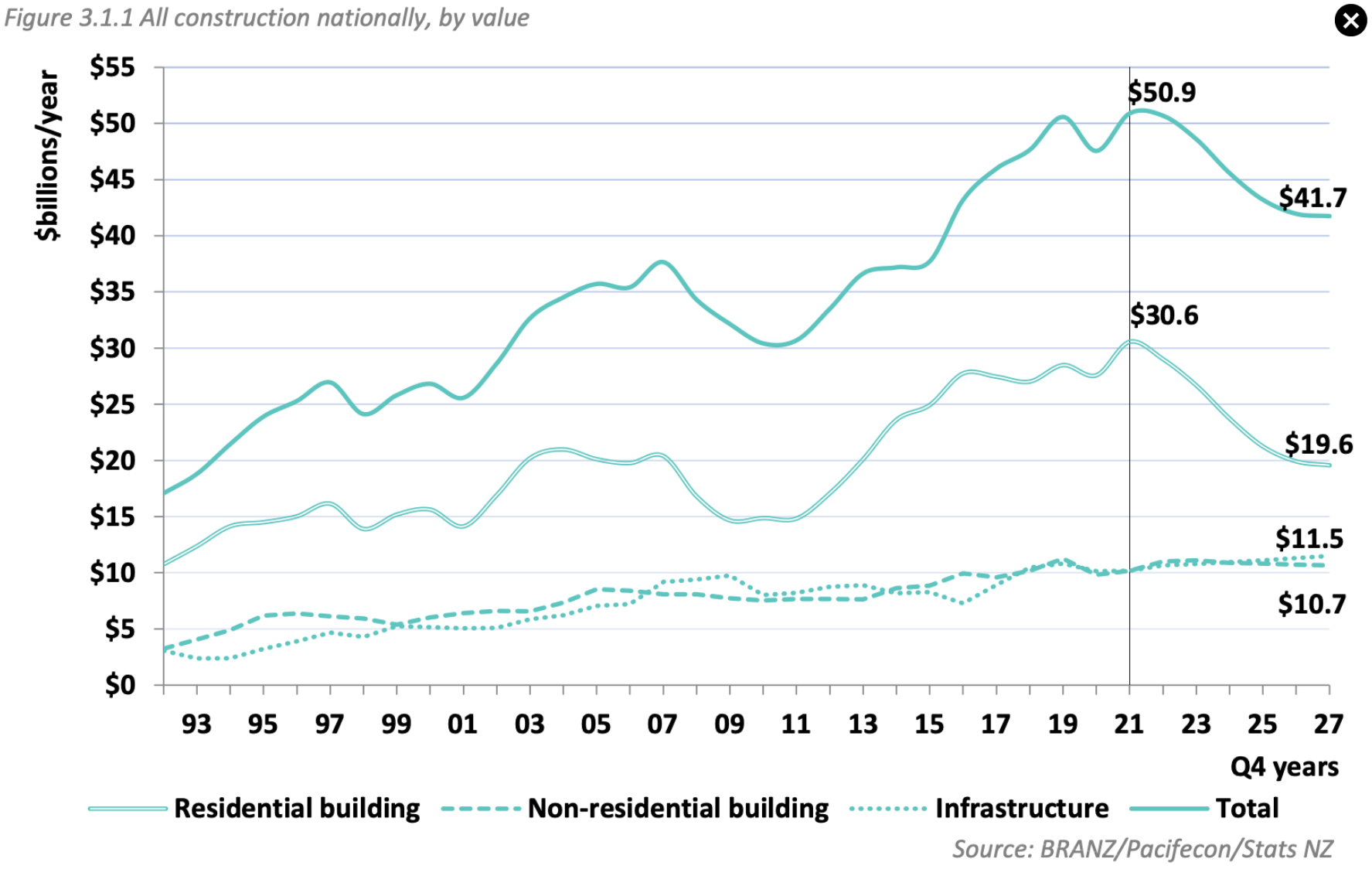
New Zealand residential construction to tank.
In summary, the Reserve Bank’s aggressive monetary tightening looks likely to drive a hard landing for New Zealand’s housing market, with both prices and construction headed for big busts.
In turn, the New Zealand economy is facing recession on the back of falling household consumption – the economy’s main growth driver – alongside plunging residential construction activity.