
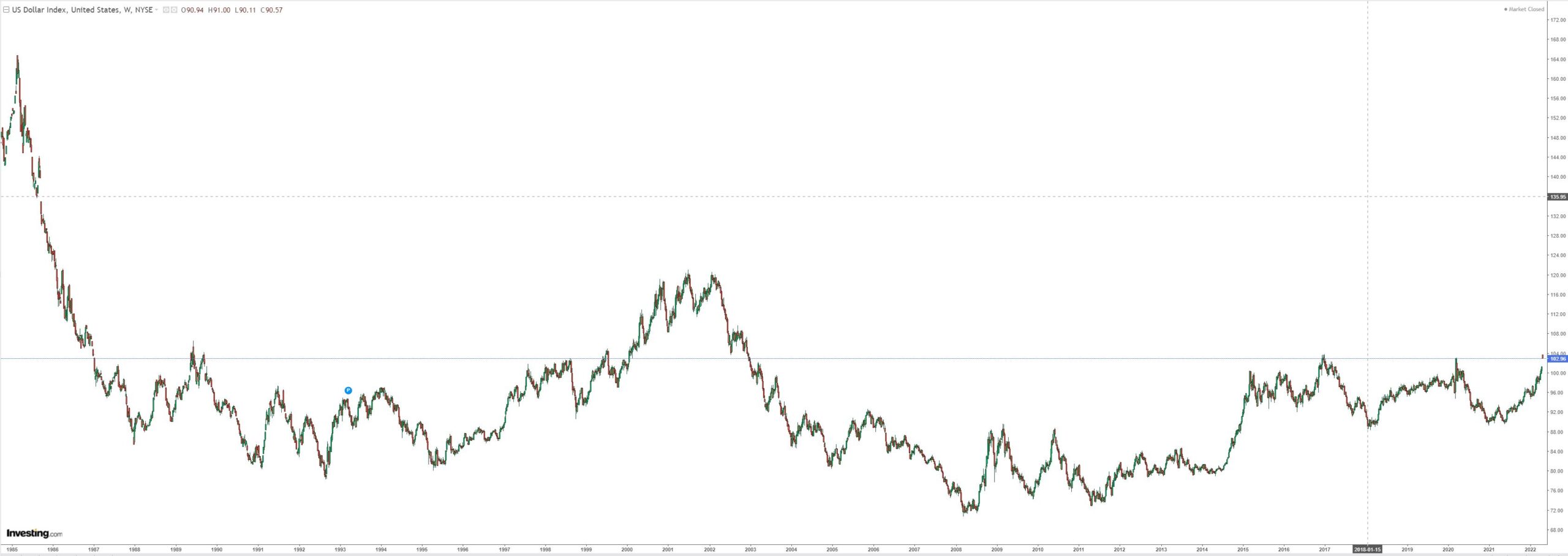
The extraordinary DXY move finally flamed out Friday night. I still see more ahead as the former 20 year resistance levels turns support:
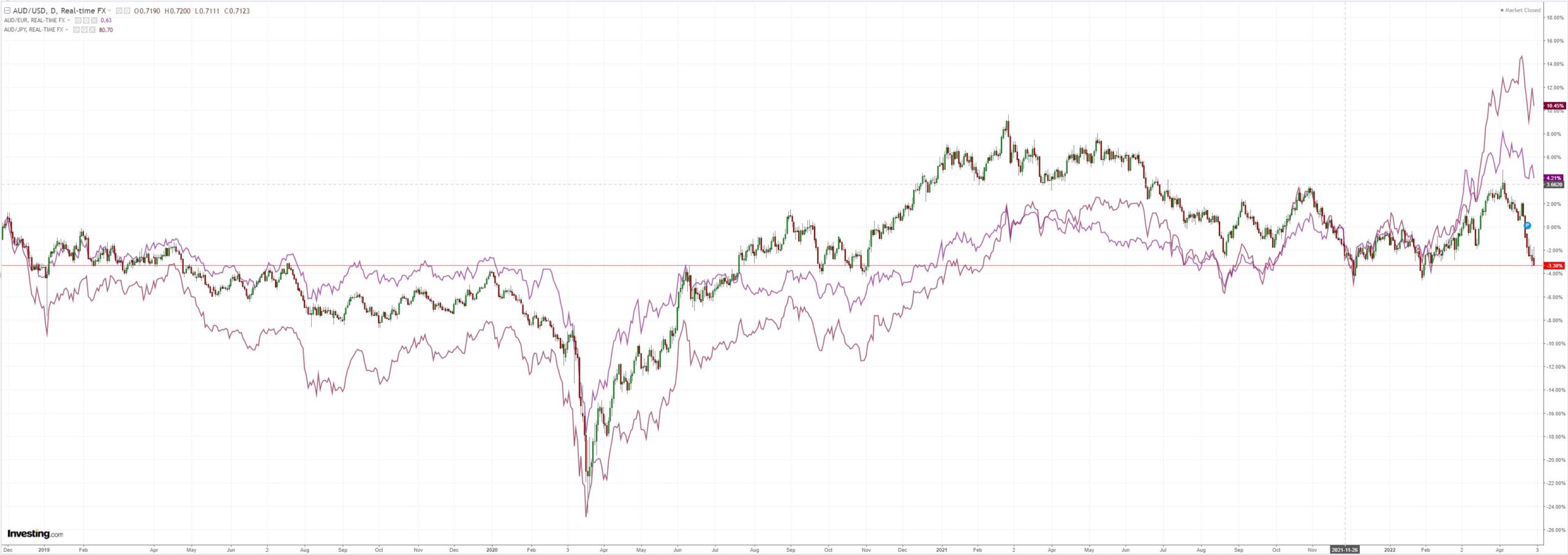
AUD was smashed. 70 cents is now the last stop before a free fall into the bottomless pit.
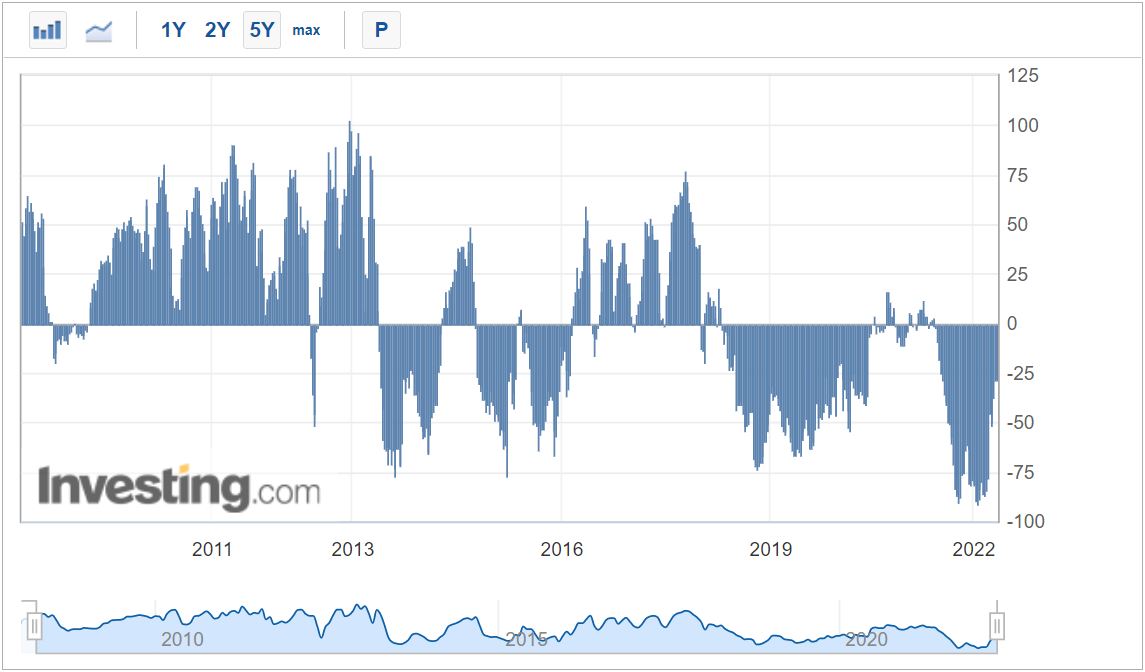
CFTC holdings show plenty more room for bears to flog the battler:
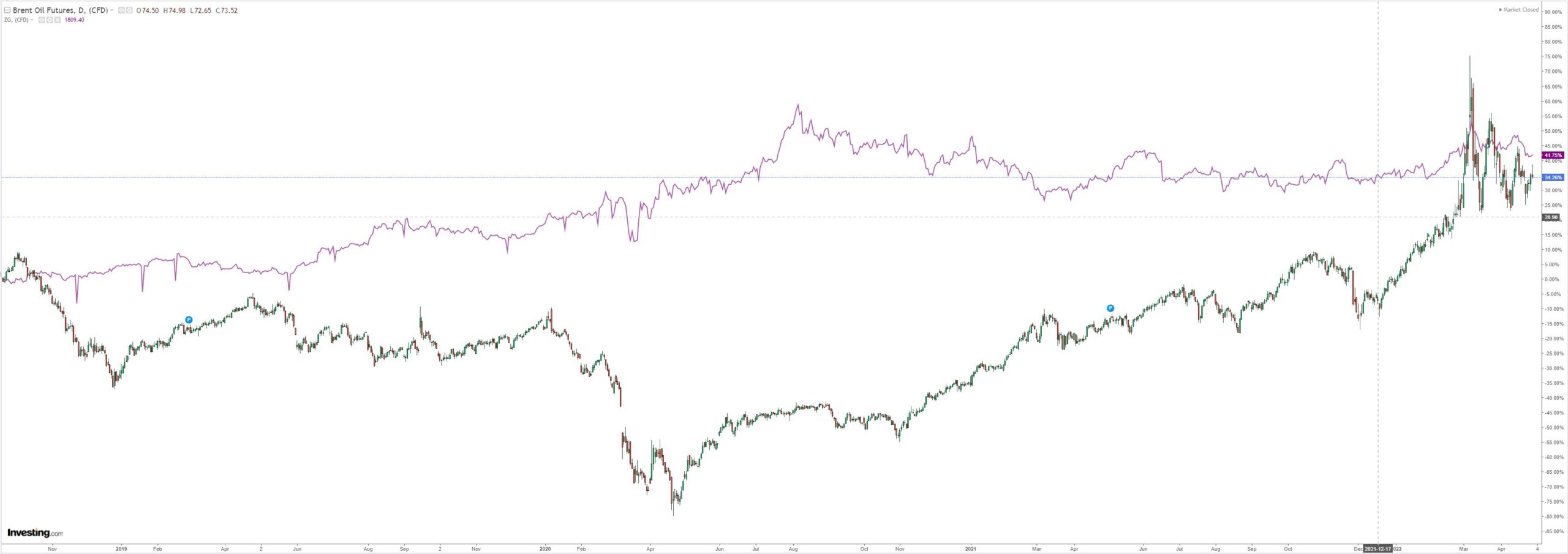
Brent held but I still think the move is down:
Metals faded again:
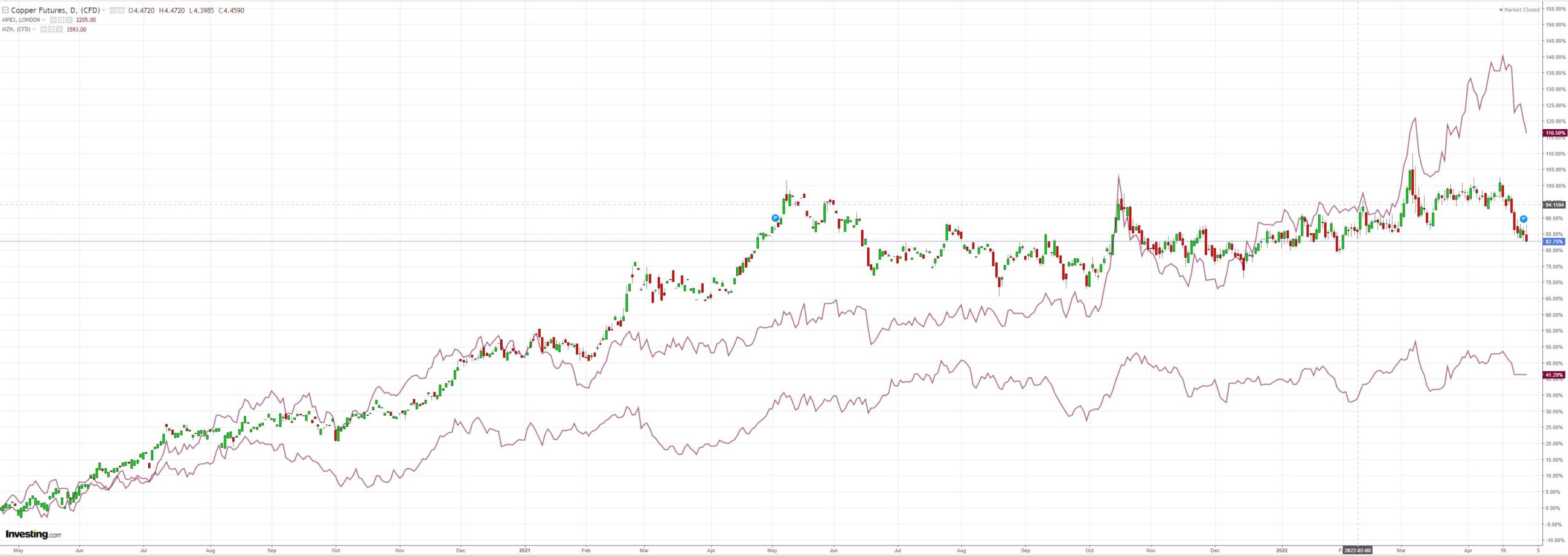
Miners wre mixed:
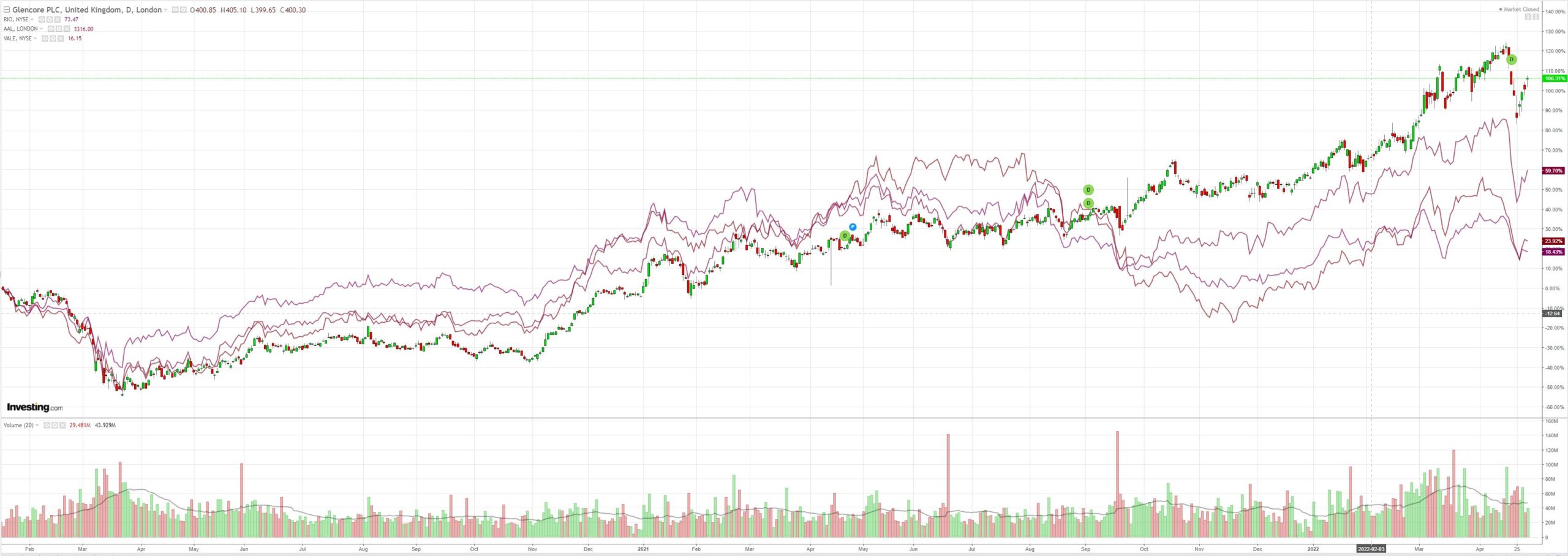
China saved EMs for a day:
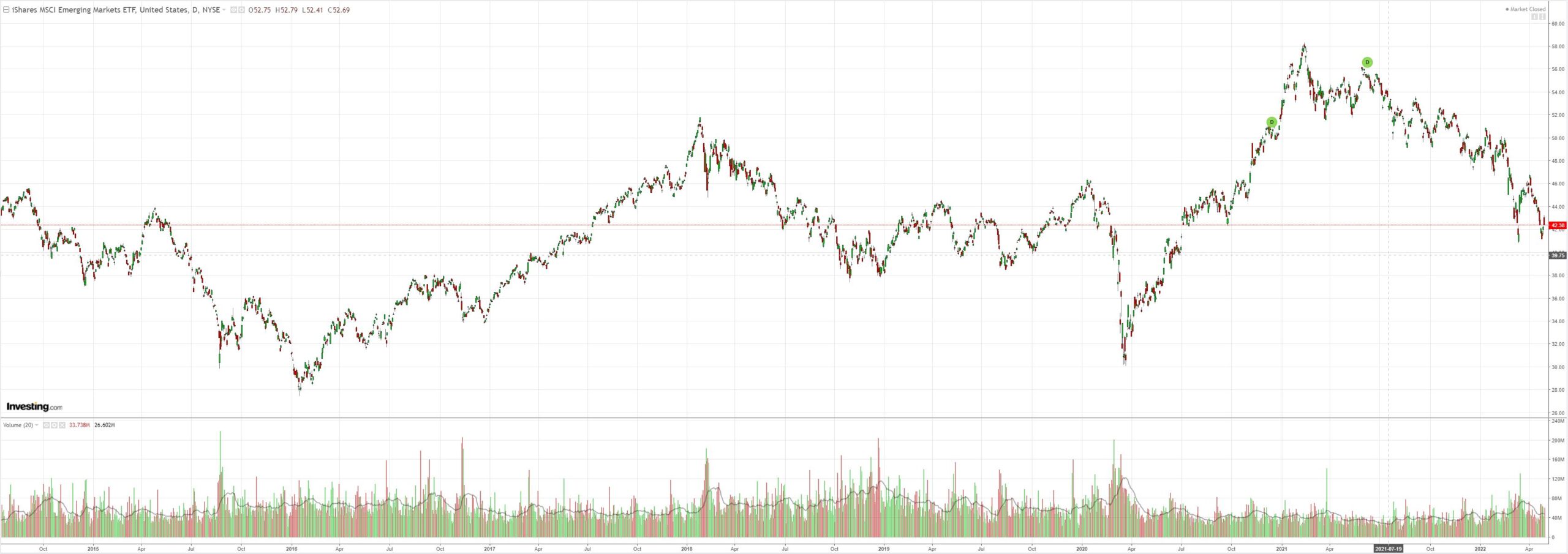
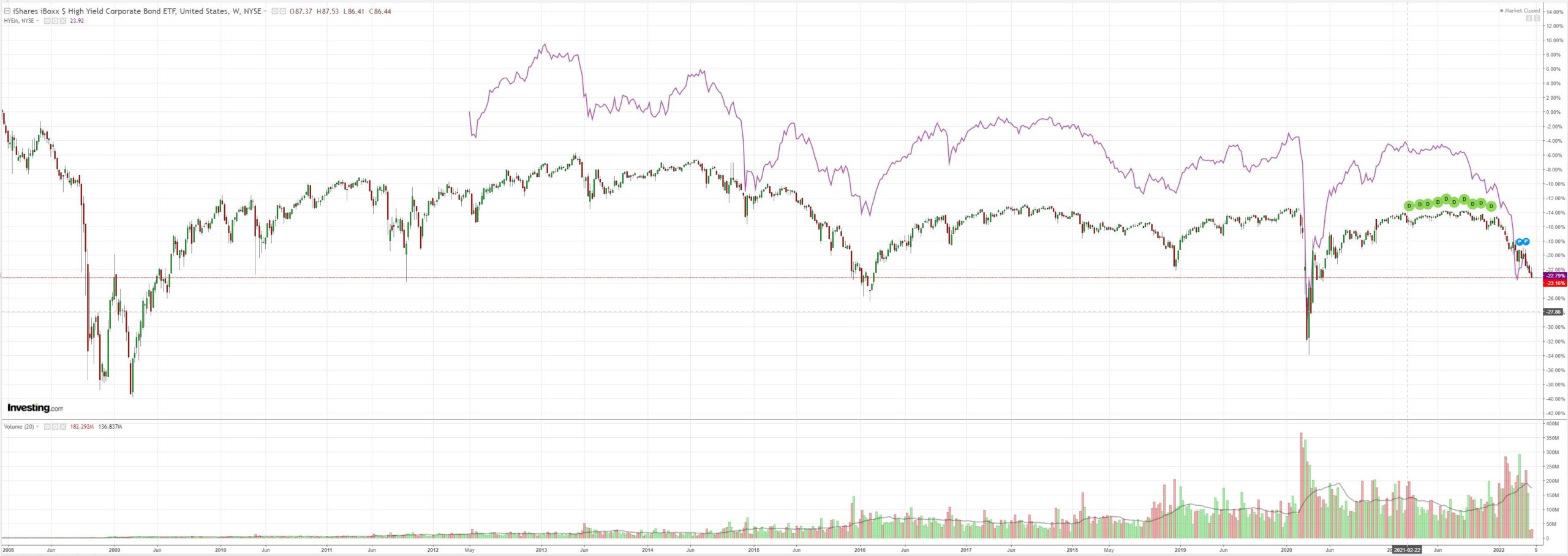
But not junk. I’m looking for a move to the March 2020 levels before this is over:
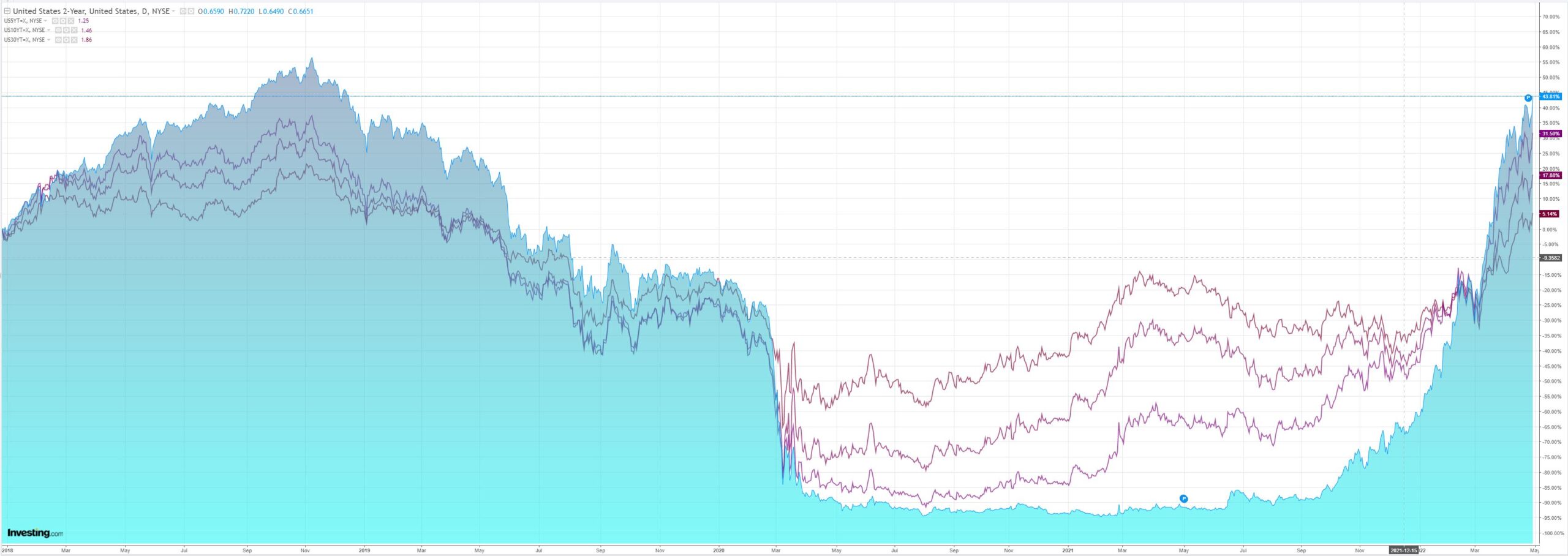
Yields broke higher but the curve flattened again:
Stocks were murdered and closed at new lows for the move:
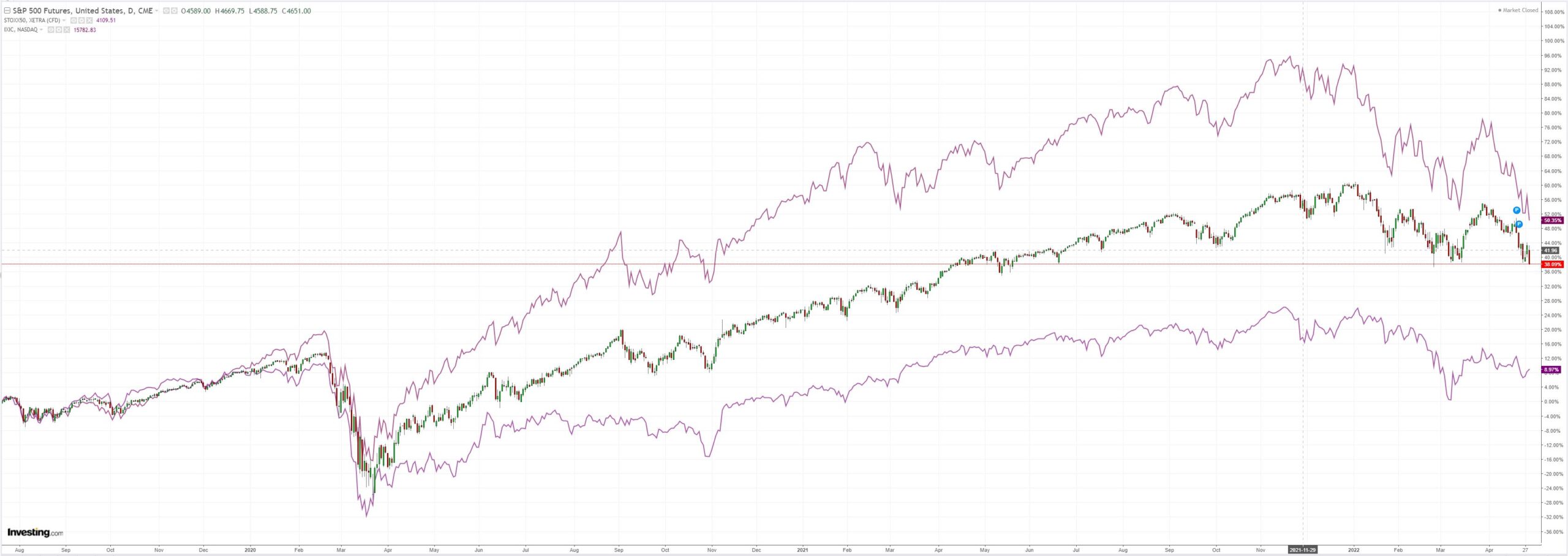
Needless to say. it looks like risk assets are under intensifying pressure as central banks tighten the screw. It’s still all about the Fed leading the way, and although others are now moving, they won’t keep pace. Credit Agricole:
The RBA will raise rates a little earlier than we expected. Current PM Scott Morrison has given the RBA his consent to raise rates during the election campaign by saying th decision should be independent of politics, which makes things easier for the RBA next week. Indeed, the central bank’s key measure of underlying inflation, the trimmed mean, is running at 3.7% YoY and well above its 2-3% target range and the unemployment rate at a series low of 4%. So it is past time for the RBA to begin lifting the cash rate from its record low of 0.10%. So we now expect the RBA to raise rates by 15bp in May and another 25bp in June, after expecting the RBA to wait until June to hike rates by 40bp. While the earlier rate hike is good news for the AUD as it lends some credibility to the market’s aggressive pricing for future rate hikes, we think the AUD will struggle to move higher against the USD. The RBA is being outgunned by the FOMC and while China is pledging support for its economy including looser fiscal policy and a big infrastructure spend up, it will take longer than usual for this to give the economy a boost while the government pursues its zero-Covid strategy and lockdowns. Indeed, our China economist has lowered her forecast for China’s economic growth in 2022 from 4.9% to 4.5%. Iron ore prices are still struggling to stage a large rally post China stimulus announcement.
In terms of the coming week, the focus for the AUD and NZD will be the RBA and FOMC meetings. The market is pricing in a small chance of a 40bp rate hike by the RBA next week, so a hike of that magnitude would give the AUD a boost, but given the concerns about China’s growth and the Fed outstripping the RBA in terms of rate hikes, it would be an opportunity to sell the currency. The RBA’s rhetoric may also not match the market’s aggressive market pricing for follow-up rate hikes. Governor Philip Lowe will reassure the public the RBA will be mindful of the stresses households are facing with the rising cost of living and mortgage payments when raising rates. The RBA will also make a decision on its balance sheet next week and we expect it will allow assets to begin rolling off the balance sheet naturally, starting in July. Our estimations suggest as a share of Australia’s GDP, under these circumstances, the RBA’s balance sheet rundown will be roughly equivalent to the Fed’s.
Chinese growth is going to be much worse than that, I’m afraid. The stimulus is pushing on a string amid the property and OMICRON shocks. Add Europe’s fast-developing recession on the war and energy shocks and the US inflation and looming rates shock, and I can only see a higher DXY, lower CNY, more pain for junk debt, increasing pain for commodities and EMs.
That’s what’s killing equities and they lead rather than follow our financialised business cycles these days.
Until either war ends, China figures out how buggered it is, or the Fed relents, AUD is on the escalator to hell.
