
Arguably the biggest benefit of the working from home (WFH) phenomenon is that it eliminates the need for time consuming and costly commutes.
According to FUELtrac, petrol prices across Australia’s capital cities have doubled from their pandemic low, nearing $2.20 a litre across many of Australia’s capital cities:
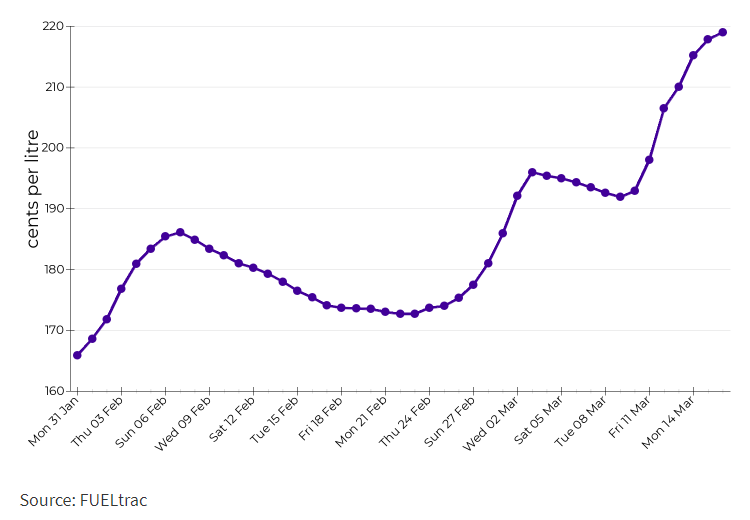
Average petrol prices hit $2.20 a litre in Melbourne this week.
These soaring petrol prices are adding to households’ financial strain just as employers and governments are trying to summon workers back to the office after more than two years of remote work.
In light of rising petrol costs, employers would be wise to allow ongoing flexibility on WFH. Those who can work from home should be allowed to do so in order to reduce national petrol consumption and to reduce the impact on those workers who cannot work remotely.
By easing workers’ cost-of-living pressures by encouraging WFH, employers are also likely to see smaller wage demands from their employees, thereby reducing wage cost pressures.
The pandemic started the WFH phenomenon. Rising petrol prices will entrench it.
That’s a good thing for both workers and the environment.
